ERRORS IN THE ANALYSING OF PERFUMERY RAW MATERIALS 29 ERRORS IN APPLICATION OF INSTRUMENTATION TO THE ANALYSIS OF PERFUMERY RAW MATERIALS Y.-R. NAVES, Dr. Sc.* .Presented at the Symposium on Perfumery, organised by the Society, at Cheltenham, Glos., on 14th November 1962. Problems encountered in the gas chromatographic analysis of perimnery raw materials as opposed to, for example, petroleum products are quite different. The former are complex mixtures in varying proportions of substances differentiated by functional groups, polarity and volatility. Olfactory examination of effluents is frequently desirable, non-destructive detectors being necessary. Inadequate equipment and techniques are responsible for many errors in identification and evaluation. Too many publications in this field are unreliable. GAS CHROMATOGRAPHY has rapidly become one of the most used methods of investigating perfumery raw materials, and for controlling their quality. The apparent simplicity of the application of gas chromatography conceals from many analysts the numerous possibilities of error. They are led to rash conclusions by some misunderstanding of the physical phenomena involved, as well as by their impatient enthusiasm. That is why, like others, I am taking this opportunity of issuing a new warning, knowing that you will respond to the statements made hereunder. I maintain that techniques which are of great service, for example, in the petroleum and natural gas industries, do not necessarily apply to the perfumery raw materials industry. The suppliers of gas chromatography apparatus either are not aware of, or prefer to ignore, this situation. There exists today an extensive range of apparatuses, very few of which are satisfactory or even almost satisfactory for the analysis of these products. As a result the industry is too often equipped with inadequate apparatus, and the work is carried out with unsuitable techniques. Essential oils, intermediates which are made from them for the pro- duction of synthetic perfumes, and natural perfumes, are mixtures of many constituents in widely different proportions the components differing in their volatihty and chemical nature. Constituents present in low proportions can determine the quality of the odour as do impurities in synthetic perfumes. *Givaudan, S.A., Vernier--Geneva, Switzerland.

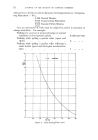
30 JOURNAL OF THE SOCIETY OF COSMETIC CHEMISTS There does not exist, however, a chromatographic technique which is suitable for all the constituents in these mixtures, as explained below. The forces which are brought into play during chromatography are of varying types. One molecule of the substance being analysed (A) is in dilute solution in the liquid phase (S), it is surrounded only by molecules of the solvent exercising on it various forces which are, as is known, the dis- persion forces of London, the induction forces of Debye, and the orientation forces of Keesom. The energy to be overcome to achieve freedom is, broadly speaking, the sum of the energies Ze^s and the relative volatility of the two substances A and B is measured by the difference Ze^s--•eBs •. The various energies involved are determined by the chemical nature of the substance and the liquid phase, and by a large number of factors acting in different ways. Naturally, the analytical problem can be restored to a simpler level by submitting not the whole product to gas chromatography, but only fractions isolated by physical or chemical means which group together components of similar behaviour. These techniques, however, which are acceptable and even highly recommended in research, are usually too uneconomical of materials, time and money to be suitable for technical control. This handicap can be overcome in certain cases by the use of a pre-column, which retains certain types of constituents, or of a micro-reactor which changes them into substances of different behaviour. If logarithmic graphs of the relative polarities of the charges of the columns against the relative retention times are established, it can be seen that non-polar substances give horizontal lines whilst other substances give slopes which are more or less inclined, according to the polarity 2. Depending on the polarity of the column, the constituents of a mixture will be more or less separated and will appear in the elute in different orders. It will therefore be apparent that according to the nature of the charge, certain constituents can be confused or overlooked. Thus the first rule for pre- venting errors can be established. It is desirable that the analysis of a mixture is carried out comparatively with charges of different polarities. With this objective, the use of Rohrschneider's method, starting from definite constituents, can render the greatest services. On this subject, the excellent study of Klouwen e! al a dealing with the separation of terpenes with columns of different polarities may be consulted. The polarity of a column can change under the influence of time, the heating and cooling to which it is submitted, and by being maintained at elevated temperatures for long periods. The loss or the alteration under- gone by the stationary phase can explain observed anomalies, but the effect of repeated heating and cooling is less easily accounted for 4. We find an illustration of the advantage of using comparative columns
Purchased for the exclusive use of nofirst nolast (unknown)
From: SCC Media Library & Resource Center (library.scconline.org)