260 JOURNAL OF THE SOCIETY OF COSMETIC CHEMISTS CHANGE OF ADDRESS (1) Allow 6 weeks to make the change (2) Send change to Editorial Assistant, 2758 Pine Hill Dr., Birmingham, Michigan (3) Print name and new address--includ- ing postal zone number. Give old address--if possible return addressed portion of the envelope in which your last Journal was mailed.

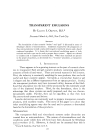
ODOR AND ISOMERISM IN OLFACTIVE CHEMICALS By E. H. EscuN^s, PH.D.* Presened February 25, 1963, Meeting, New England Chapler ABSTRACT This paper describes some typical cases of odor variations as functions of isomeric changes in certain known species of olfactive chemicals. Selected examples are used to illustrate the theoretical and practical importance of the isolation and stereo- specific synthesis of pure odorant compounds. The oilactive evaluation of essential oils, isolates and aromatic chemicals leads quite often to divergent and sometimes conflicting results for the organic chemist working in this field of challenging problems. In- deed, few are the chances of encountering the same absolute odor likeness in different samples of the same essential oil or isolate. Variation due to geographic origin, seasonal changes and different means of extraction, handling and preparation of the essential oils and their related products are chief contributors to odor variance. Major differences in odor found in similar isolates of varying origin have been traced to the presence of different minor constituents originally present in their respective parent oils. The complete removal of these so-called impurities from the isolates is often difficult and seldom even desirable. In other instances, however, odor variations could be related to fluctuations of some specific stereoisomeric oilactive species. With the remarkable progress made in analytical and preparative tech- niques in chemistry, especially in the field of gas-liquid chromatography, it became possible, in the last decade, to prepare isolates and synthetic com- pounds of unusual chemical purity. The use of preparative chromato- graphic columns, equivalent to fractionadng columns having an efficiency of more than thousand plates, afforded for the first time a practi- cal and rapid separation of pure stereoisomers. The availability of chem- icals of reliable structures contributed to a greater measure of objectivity and reliability in their oilactive evaluation. As a result, the study of the relationship between odor and chemical structure advanced a step further and helped, in some instances, to dramatize the effect of isomerism on odor variations. * The Givaudan Corp., Delawanna, N.J. 261
Purchased for the exclusive use of nofirst nolast (unknown)
From: SCC Media Library & Resource Center (library.scconline.org)