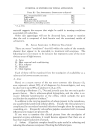
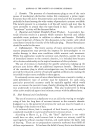
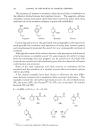
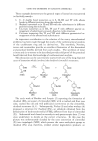
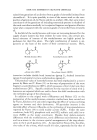
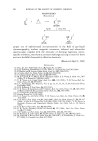
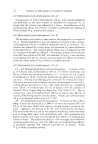
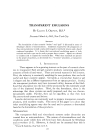
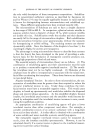
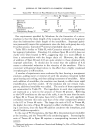
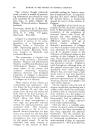
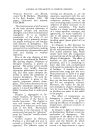
262 JOURNAL OF THE SOCIETY OF COSMETIC CHEMISTS The existence of isomers in aromatic chemicals and their contribution to the oilactive distinctiveness has long been known. The eugenols, safroles, menthols, ionones and many others have been known for quite some time, and their use in the aromatic industry is quite well established. OH O-- k ...!.• Eugenols Saoeroles Menthols Ionones Continuing advances in the gas-liquid chromatographic techniques have made possible the resolution and separation of many pure isomeric species and simultaneously promoted the search for new stereospecific methods of synthesis. Although the nature of the relation between odor perception and chemical structure remains as complex as ever (1), some measure of comfort is taken from the knowledge that real progress can be achieved in this field with research now carried out with absolutely pure oilactive chemicals of known conformation and structure. Some of the odor variations and their relation to isomerism will be reviewed and the synthesis of a number of pure oilactive isomeric species will be described. A few typical examples have been chosen to illustrate the odor differ- ences between isomers and to emphasize their economic importance. The examples include the citronellyl and rhodinyl series (I), the methylionones (II), the irones (III), the Netones ©* (2) (IV), the rosenoxides (V) and the hexenols (VI and VII). R = H,,,HOH, O, HO Acyl. R• -- H, CHa o o --'• (II) (III) (I) (IV) (vi) (wi) (v) * Neronc is a registered trademark of The Givaudan Corp.

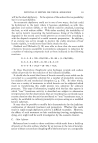
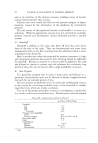
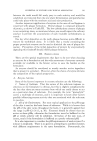
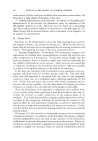
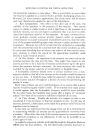
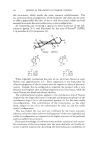
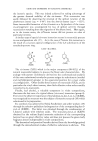
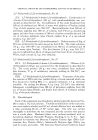
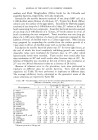
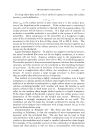
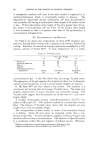
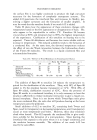
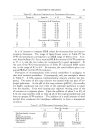
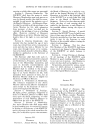
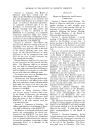
ODOR AND ISOMERISM IN OLFACTIVE CHEMICALS :263 These examples demonstrate the general types of isomerism encountered in this field, namely: 1. C--C double bond isomerism as in I, II, III and IV with alkene bonds in different position along the molecule 2. Skeletal isomerism as in II and III with the substituents in different positions along the molecule 3. Cis-trans isomerism as in III, IV and V with different spatial ar- rangement of substituents around a fixed or cyclic structure 4. Cis-trans isomerism like VI and VII with different geometrical ar- rangement of the alkene bond substituents An important contribution to the solution of the many stereochemical problems has been made through the study of the conformational analysis of the cyclohexane ring and its derivatives. The menthols, Nerones, irones and rosenoxides provide an excellent illustration of the theoretical and practical benefits derived from such studies. The synthesis of (neo) a-irone and cis-a-nerone to be described provide solid proof of the practical benefit derived from the knowledge of conformational analysis. This discussion can be conveniently started with one of the long disputed cases of isomerism which involved the rhodinol-citronello] structures. HO ' HO + HO (VIII) Rhodinal Citronellal LiA1H• (IX) LiA1H, / (X) / Rhodinol Citronellol Isopulegols (XI) (XII) (XVIII) The early work of Barbier and Loquin (3) reporting the formation of rhodinol (XI), an isomer of citronellol (XII) with a marked and finer rose odor, started the old and well publicized controversy on the citronellol- rhodinol structures (4, 5). Subsequently, Verley (4) and other workers (6) proposed a structure for rhodinal (IX), an aldehyde obtained from the dehydration of hydroxycitronellal (VIII), different from that of citronellal (X). Substantial work based on ozonolysis and spectroscopic data (7) was since undertaken to decide on the correct structures. In this case the picture was unfortunately clouded by the easy conversion of citronellal (X) into isopulegols (XIII) which possess the same methylenic group as rhodinal (IX) and, therefore, yielded similar degradation products on
Purchased for the exclusive use of nofirst nolast (unknown)
From: SCC Media Library & Resource Center (library.scconline.org)