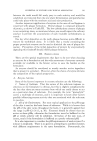
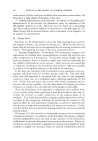
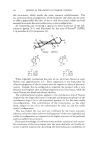
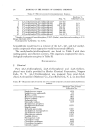
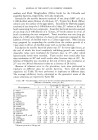
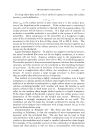
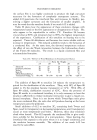
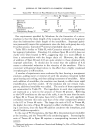
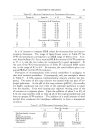
250 JOURNAL OF THE SOCIETY OF COSMETIC CHEMISTS cellular protein to a form that is completely insoluble and extremely refractory to enzymatic degradation. Synthesis of this "new" protein form takes place in the active basal layer, with a period of "curing" required as the cells migrate toward the periphery. The keratin precursors are stabilized and made three dimen- sionally rigid by virtue of the inter- and intra-molecular disulfide linkages so abundant in the keratin product. The degree of rigidity and, therefore, the ability of the molecule to withstand enzymatic hydrolysis, is directly correlated with the number of disulfide linkages present, as well as with the extent of hydrogen bond formation between protein chains. Table I shows the half-cystine content of several keratins and that found in several "typical" soluble proteins. Hair and nails are examples of so-called "hard" keratin and represent the type of material most refractory TABLE I.--CoMPARISON OF HALF-CYsTINE CONTENT OF SEVERAL KERA'rINS WITH TI•AT FOUND IN SEVERAl. SOLUBLE PROTEINS Half-Cystine Content, Moles per 105 g. Protein Keratin Wool* 92-114 Human Hair* 138-150 Epidermis* 19-32 Collagen• 0 CaseiM- 3 OvalbumiM- 13 * (1, p. 32). t (2, p. 278). to hydrolysis and having the highest content of stabilizing disulfide groups. "Soft" keratin is represented by epidermis and is said to contain about 20% of a water-soluble protein which is electrophoretically identical to keratin. The higher half-cystine content of hard keratin is indicated by the sulfur content of approximately 5(•, whereas it is only approximately 1% in the case of soft keratin (2). The epidermis is the origin of accessory structures known as skin ap- pendages, i.e., hair, sebaceous glands, sweat glands (apocrine and eccrine) and nails. In 1961, 40% of the dollar volume (3) spent on toilet goods was devoted to products designed to maintain, retain, diminish or glorify these accessory appendages. In addition, almost one fifth of all diseases of the skin seen by dermatologists were diagnosed as ache (4), a syndrome associated primarily with hair follicles and sebaceous glands. The approximate composition of sebum, the secretion of the sebaceous gland, is given in Table II. The predominantly lipid nature of this

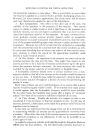
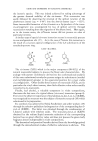
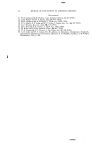
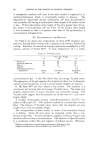
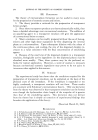
POTENTIAL OF ENZYMES FOR TOPICAL APPLICATION 251 TABLE II.--THE APPROXIMATE COMPOSITION OF SEBUM • Free, unsaturated fatty acids Triglycerides Fatty acid esters Cholesterol (free & combined) Hydrocarbons, including squalene 20% 25% 25% 5% 15% * (5, p. 362). material suggests the enzyme that might be useful in treating conditions associated with seborrhea. Other skin appendages will not be discussed here, except to mention that the nail is composed of hard keratin and the associated cuticle of soft keratin. II. AREAS AMENABLE TO ENZYME TREATMENT There are many "conditions" that Fall within the realm of the cosmetic chemist that appear to be amenable to treatment with enzymes. The following list is not meant to be inclusive but represents some of the more obvious areas of high interest. A. Ache B. Hair removal and conditioning C. Skin softener D. Dandruff E. Oral hygiene Each of these will be examined from the standpoint of availability as a substrate for known enzyme systems. AI. .4cne Based on a recent survey of the ten most common skin diseases (4), acne represents almost 20% of all diagnoses by dermatologists, and may be observed in up to 80% of adolescents (6, p. 273). According to Rothman (7), "Natural juvenile acne has two main patho- genetic factors. One is sebaceous-gland hyperplasia, and the other is ex- cessive follicular keratinization at the orifice, which occludes the pore and hinders the expulsion of sebum." In addition to the varying quantities of sebum present in the coinedones, one usually finds keratinized cellular debris. Usually the clinical picture is complicated by secondary bacterial infections brought about by squeezing, scratching, etc. Frequently sub-surface papules associated with increased inflammatory exudate are present (8). If one were to examine this clinical picture from the standpoint of potential enzyme substrates, it would become apparent that there are at least four major focal points of attack. 1. Sebum. A lipolytic complex should be quite useful in softening and reducing the sebaceous component blocking the follicular pore.
Purchased for the exclusive use of nofirst nolast (unknown)
From: SCC Media Library & Resource Center (library.scconline.org)