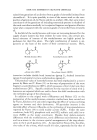
272 JOURNAL OF THE SOCIETY OF COSMETIC CHEMISTS 4,4'-Melhylen ebis (2,3,6-trichlorophen ol), No. 42 Condensation of 2,3,6-trichlorophenol (50 g.) with paraformaldehyde was performed in the same manner as described for compound No. 2, except that the mixture was refiuxed for 4 hours. Crystallization of the crude material (46 g.) from 150 mi. of ethylene dichloride with addition of Filtrol yielded 34 g. of white, fine needles. $,3'-Methylenebis(2,4,6-trichlorophenol), No. 40 ]'he procedure was similar to that used for the preparation of compound No. 2. Paraformaldehyde (5.6 g.) was added to a mixture of 70 g. of 2,4,6- trichlorophenol, 150 ml. of ethylene dichloride and 35 g. of oleum. The mixture was refiuxed for twenty hours and processed by steam distillation ,as described above. The crude bis-phenol (64 g.) was crystallized fi-om 250 ml. of toluene with addition of Filtrol. A low purity product which softened from 190 ø and melted at 198-200 ø was obtained (37.6 g.) it was therefore recrystallized from 145 ml. of acetic acid and then fi'om 120 ml. of ethylene dichloride which yielded 9.1 g. of white, crystalline powder. 3,3'-Melhylenebis( 2,s/ ,5-trichlorophenol) , No. 65 I71. 3,3'-Methylenebis(6-bromo-2,4,5-trichlorophenol). A mixture of 105 g. of 6-bromo-2,4,5-trichlorophenol, 200 ml. of ethylene dichloride, and 105 g. of oleum was stirred and heated to 75 ø. A slurry of 5.5 g. of para- formaldehyde in 50 ml. of ethylene dichloride was added over a period of one hour. Stirring and refluxing were continued for twenty-four hours. The batch was processed as before recovery of unchanged 6-bromo-2,4,5- trichlorophenol amounted to 33 g. The crude material was crystallized from 730 ml. of methanol plus 175 ml. of dioxane with the addition of Nuchar © (West Virgina Pulp and Paper Co., New York, N.Y.) The re- sulting 61 g. were recrystallized from 960 ml. of toluene plus 100 ml. of dioxane, Filtrol being used for decolorization. A light, tan-colored product (48 g.) was obtained with a m.p. of 275-278 ø. lB. 3,3'-Methylenebis(2,4,5-1ric/./orophenol). A solution of 48 g. of IA in 400 g. of potassium hydroxide and 2000 ml. of water was heated to 85 ø and 105 g. of zinc dust added with vigorous stirring during a period of two hours. Agitation and heating at 85--90 ø were continued for five hours. The mixture was filtered, and ice was added to the tiltrate, which was made acid to Congo Red paper with hydrochloric acid. The precipitate was filtered, washed with water and crystallized from 699 ml. of methanol and 150 ml. of water. The solution was held at - 10 ø overnight, after which the resulting product (16.1 g. m.p. 235-238 ø) was recrystallized from 600 ml. of petroleum naphtha (b.p. 120-135 ø) and 80 ml. of dioxane. Yield: 13 g. of white, crystalline powder.

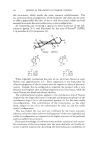
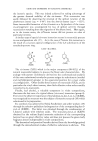
CHEMICAL STRUCTURE AND ANTIMICROBIAL ACTIVITY OF BIS-PHENOLS 273 3,3'-Melhylenebis(2,5,64richlorophenol), No. 66 IId. 3,3'-Methy/enebis(¾-bromo-2,5,6-trichlorophenol). Condensation of 4-bromo-2,3,6-trichlorophenol (105 g.) with paraformaldehyde was con- ducted as described for IA. Crystallization of the crude bis-phenol from 420 ml. of methanol and 190 ml. of water with addition of Nuchar yielded 76 g. of dark material, m.p. :204-212 ø. Recrystallization fi'om 300 ml. of petroleum naphtha plus 300 ml. of toluene, with Filtrol as decolorizing agent, and then from a mixture of 100 ml. of carbon tetrachloride and 250 ml. of ethylene dichloride (plus Filtrol) yielded 30 g. of a tan-colored product, m.p. 222-225 ø. HB. 3,3'-Me•hylenebis(2,$,6-trichlorophenol). Debromination of 30 g. of IIA was performed in the same manner as that of IA. The crude substance (19 g. m.p. 138-148 ø) was crystallized from 100 ml. of methanol and 50 ml. of water (plus Nuchar). The first fraction (5.8 g. m.p. 169-175 ø) was recrystallized from 40 ml. of toluene and then from 30 ml. of methanol. White, small crystals (2.7 g.) were obtained. 3,3'-3¾ethylenebis(¾,$,6-trichlorophenol), No. 67 IHd. 3,3'-Methylenebis(2-bromo-¾,5,6-trichlorophenol). 2-Bromo-4,5,6- trichlorophenol (60 g.) was converted into the bis-phenol as described for IA. The crude product (39 g.) was twice crystallized from methanol plus dioxane 27 g. of satisfactory material,. melting at 294-295 ø, was obtained. [liB. 3,3'-Methylenebis(¾,5,64richlorophenol). Treatment of the alka- line solution of IIIA with zinc yielded 16.6 g. of crude material which •vas first dissolved in boiling 80% v./v. aqueous methanol 1.5 g. remained insoluble. On cooling the flitrate, 9.1 g. (m.p. 211-214 ø) was obtained. Subsequent crystallization from 300 ml. of petroleum naphtha, from 160 ml. of toluene (plus Filtrol), and finally from 20 ml. of methanol yielded 2.3 g. of the pure substance. H. Microbiological Each of the compounds was dissolved in alcohol (specially denatured No. 30) to make a 1% stock solution. Twofold serial dilutions of the stock solu- tion were made in alcohol, and 0.2 mi. of each dilution level was added to a tube containing 20 mi. of 50 ø molten agar. The tube was swirled thoroughly to distribute the test compound and the contents were poured into a sterile plate. Hardened plates were surface-inoculated with an Accu-Drop dispenser (Scientific Products, Flushing, L. I., N.Y.). Agar employed for bacteria was Dextrose Tryprone Extract Agar (Difco Lab- oratories, Inc., Detroit, Mich.) Sabouraud's Dextrose Agar (Difco) was used for yeasts and molds. The American Type Culture Collection liquid
Purchased for the exclusive use of nofirst nolast (unknown)
From: SCC Media Library & Resource Center (library.scconline.org)