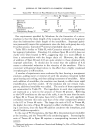
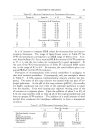
284 JOURNAL OF THE SOCIETY OF COSMETIC CHEMISTS III. Discussion The theory of microemulsion formation can be useful in many ways for the preparation of cosmetic creams and lotions. 1. The theory provides a rationale for the preparation of transparent lotions and gel. 2. Since these transparent products are thermodynamically stable, they have a decided advantage over conventional emulsions. The addition of an opacifying agent to a transparent emulsion will give the appearance of a conventional lotion or cream. 3. Macro emulsions can be readily prepared without the use of homog- enizers and other high shear equipment by first dispersing the internal phase as a microemulsion. Upon subsequent dilution with the solute of the continuous phase, and cooling, the size of the dispersed droplets in- creases to a value consistent with the final concentration of emulsifying agents. 4. Because of the small size of the dispersed droplets in a transparent emulsion, biologically active ingredients (in the dispersed phase) may be absorbed more readily. Thus, these systems may be the preferred ve- hicles for topical application. However, a word of caution is necessary because conventional cosmetic ingredients may prove to be not quite so innocuous when applied in this manner. IV. SUMMARY The experimental study has shown that the conditions required for the preparation of transparent emulsions can be explained on the basis of the physical state of the interphase. If the interphase is expanded or too highly condensed, a transparent emulsion will not form. These results are consistent with Schulman's microemulsion theory. Only one deviation from the theory was observed in that transparent emulsions can be formed even though the hydrocarbon chain length of the nonpolar oil is greater than that of the emulsifying agents. This deviation does not detract from the theory but is simply an extension of experimental findings that broadens the applications of the theory. (Received March 25, 1963) REFERENCES (l) J. H. Schulman and J. B. Montagne,/inn. N.Y./icad. Sci., 92 (Art. 2), 366 (1961). (2) J. E. Bowcott and J. H. Schulman, Z. Elektrochem., 59, 283 (1955). (3) J. H. Schulman, W. Stoeckenius, and L. M. Prince, y. Phys. Chem., 63, 1677 (1959). (4) A. S.C. Lawrence, Ier Congr. mondial detergence et prods. tensio-actifs, (Paris) 1, 31 (1954). A.J. Hyde et al., Discussions Faraday Soc. No. 18, 239 (1954). (5) P. A. Winsor, Trans. Faraday Soc., 44, 376 (1948). (6) P. A. Winsor, Ibid., 46, 762 (1950). (7) J. Bromilow and P. A. Winsor, f. Phys. Chern., 57, 889 (1953). (8) P. A. Winsor, f. ColloidSci., 10, 88 (1955).

TRANSPARENT EMULSIONS 285 (9) P.A. Winsor, Chemistry &Ind. (London), June 4,1960, 645. (10) L. I. Osipow, Surface Chemistry: Theory and Industrial dpplications, Reinhold Pub- lishing Corp. New York, 1962. (11) Atlas Chemical Industries, Inc., The dtlas HLB System, 1962.
Purchased for the exclusive use of nofirst nolast (unknown)
From: SCC Media Library & Resource Center (library.scconline.org)