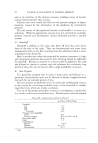
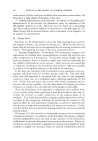
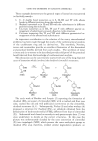
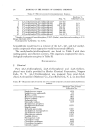
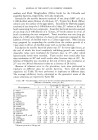
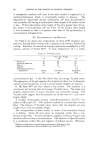
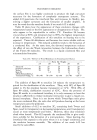
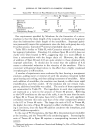
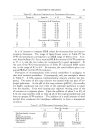
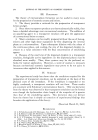
254 JOURNAL OF THE SOCIETY OF COSMETIC CHEMISTS rate or by retention of the stratum corneum, yielding a layer of keratin- aceous material greater than normal. Calluses and corns would also fall into the general category of hyper- keratosis, caused by the stimulation of the epidermis by intermittent pressure. The soft nature of this epidermal keratin could enable it to serve as a substrate. While the appropriate enzyme may not currentJy be available, product research and development should ultimately provide a suitable system. D. Dandruff' Dandruff is defined as the scales that flake off from the outer horny layer of the skin of the scalp. They are keratinaceous and many times impregnated with an oily film resulting from the seborrhea which so often accompanies the dermatitis. Here is another area where the potential for enzyme treatment is high, and the general approach discussed for skin softening should be applicable for dandruff. Because an enzyme in a cream could be applied to the scalp and allowed to remain in contact with the substrate for a relatively long period of time, this area of interest offers a high probability of success. E. Oral ttygiene It is generally accepted that in order to keep caries and halitosis at a minimum, food particles must not be allowed to remain trapped between the teeth for an extended period of time. Salivary amylase undoubtedly serves to reduce the carbohydrate content in the mouth by converting in•olub 1• (""Ms of the c _, •__•: , _ ............ •ouus•u• to soluble, ingestib!e forms which are ream•y swanowed. The use of the proper proteolytic enzyme in a toothpaste, or preferably in a troche, could serve several functions. Proteinaceous material trapped TABLE III.--CoMPOSlTION OF DENTAL PLAQUE* g./100 g. of Dry Plaque Inorganic Ca 2.7 Mg 0.6 PO4 3.8 Total ash 10.6 Nitrogen (micro~Kjeldahl) Total 12.6 Protein nitrogen 11.1 (X 6.25 = 69.4) Free amino acids 11.6 I,ipid 1.9 Carbohydrate Glucose 3.5-5 Pentose ca. 1.0 Hexosamines 0.1 *

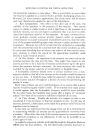
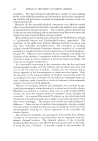
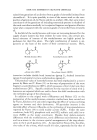
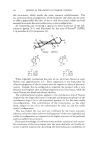
PO'IENTIAL OF ENZYMES FOR TOPICAL APPLICATION 255 between the teeth would fall ready prey to such activity and would be solubilized and removed from the site where fermentation and putrefaction could take place with the resultant acid and odor production. Another important application of enzymes in the area of oral hygiene is concerned with plaque formation. Dental plaque is composed primarily of protein, as shown in Table III. The low carbohydrate content of plaque is not surprising, since, as mentioned above, one would expect the salivary amylase to prevent the accumulation of such insoluble carbohydrates as starch. One day after deposition on the teeth, plaque becomes quite difficult to remove by toothbrush alone. It is likely that a troche containing the proper proteolytic enzyme can be used to diminish the rate of plaque for- tnation. Prevention of the initial deposition of protein by enzymatically degrading this foodstuff should inhibit plaque fortnation. III. FORMUL^T•ONS There are few special requirements that have to be met when choosing an enzyme for a formulation and the wide assortment of enzymes currently available (or available in the future) serves to ease the burden on the formulatot. An enzyme should be considered as merely another active ingredient that is present in a product. However, often the choice of enzyme dictates the composition of the topical preparation. .4. Enzyme Selection Some of the factors important in enzyme selection are the following: 1. Nature of Substrate. That the nature of the substrate imposes re- strictions on the formulatot is obvious, but this is slightly complicated by the fact that there are many enzymes from which one could choose to act on a particular class of substrate. For example, the term "proteolytic" covers a multitude of enzymes, and it is important to know other factors possibly influencing enzyme activity that are associated with the substrate in question. 2. pH of the Environment. For most topical applications the pH range of the skin is used as the basic frame of reference. While it is known that the pH of the skin varies throughout the body, it is generally agreed that the range is pH 4.2-5.6 (5, p. 16). Enzymes should be chosen that are active at these pHs otherwise the formulation must be buffered to the pH at which activity will l•e exhibited. Irritation of the skin may, of course, result if the formulation is buffered at a poorly tolerated pH. It is also important to consider the pH requirements of each enzyme if a mixture is employed. There is no point in attempting to combine enzymes with different requirements in the same formulation. Fortunately, the
Purchased for the exclusive use of nofirst nolast (unknown)
From: SCC Media Library & Resource Center (library.scconline.org)