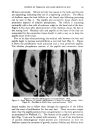
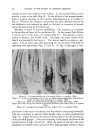
j. soc. cos. CHEM. 15, 129-136 (1964) THE EFFECTS OF THALLIUM AND HAIR GROWTH IN THE RAT By E^P,L O. Bu•-c•EP,, Ph.D.* Presented September 25, 1963, Seminar, Boston, Mass. ABSTRACT It is shown that thallium acetate is a unique and specific depilatory. Application of thallium acetate results in hair loss in the area of application within five days. When applied to the skin of nursin• mothers, pups lose their hair. Dietary addition of cystine or cysteine prior to application of thallium acetate does not prevent depilation. The rapid chan•es in the hair follicle, induced by thallium acetate, provide a means of studyin• the fate of the papilla and the pro•,enitors of the cells for the next hair. The papilla, which may be identified by its alkaline phosphatase activity, persists from the old hair to the new hair. Glycogen in the external root sheath cells enables one to follow these cells and to observe that they are the progenitors of the new hair upon the re•res- sion of the old hair bulb. INTRODUCTION The purpose of this presentation is to show the uniqueness and specificity of thallium acetate as a depilatory and to explain on what the growth of hair is dependent. Explanations of the depilatory action of thallium have been attempted by many. BuscAke (1) considered the effect of thallium on the hair follicle to be secondary to its effect on the endocrine glands. Thyresson (2) assumed that thallium mainly disrupted the cytoplasm differentiation and keratin formation of the follicle cells. Truflq (3) attributed the depilatory effect of thallium to a direct local effect on the hair follicle. In my own studies (4) I was inclined to believe that thallium acetate in- duced an over-keratinization and suppression of growth. Goffart (5) found that thallium acetate in a 1% concentration had no effect on the free sulfhydryl groups of human skin. Gross, Runne and Wilson (6) suggested that thallium acts either by binding the L-homocysteine and L- cysteine, resulting in a deficiency of cystine, or by blocking the enzymatic action that is necessary for the conversion of the cysteine into cystine. * College of Dentistry and Graduate School of Arts & Science, New York University, New York 10, N.Y. 129

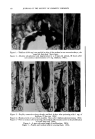
130 JOURNAL OF THE SOCIETY OF COSMETIC CHEMISTS The basis of their conclusion is the fact that growth of hair proceeds normally when thallium and cystine were both administered. T•E EFFECTS OF THALLIUM The exact means by which thallium causes depilation thus seems un- known. Other interesting questions relative to thallium are: 1) will it induce a local effect or affect the entire organism when applied topically 2) will it pass through the mother and affect the offspring 3) are there other substances equally as effective as thallium ? Long-Evans rats were kept on a diet of ground Purina chow which contained 3% cystine, beginning at the age of 23 days. Rats refused to ingest more than 3% in their diet. When 35 days old they were given 1 rag. of thallium acetate subcutaneously. All six rats lost their hair in four to five days. Likewise, a similar group of rats was fed 3% cysteine instead of cystine, beginning on the 23rd day. Thallium acetate was administered at the age of 35 days, and this resulted in depilation. Pro- tection against the effect of thallium was not afforded, in any instance, by administration of cysteine or cystine, and it is diflqcult to understand the results of Gross, Runne and Wilson (6) unless the hair cycle was not taken into account. If thallium is given in the resting stage of the follicle, then no depilatory effects will result. Topical application of 0.04 cc. water containing 0.6 mg. of thallium acetate to a circular area of skin, the size of a dime, causes loss of hair in the localized area of 35-day-old rats. Application of double this amount often caused loss of hair over the entire body. This small area is receiving as much cystine by way of the diet as the rest of the animal's surface area, yet the affected area is not protected against the effects of thallium. If a mother rat receives a topical application of water containing 1-1.5 rag. of thallium on two successive days over a small area of skin, and her hair follicles are in the resting stage, enough thallium passes through the skin and by way of the mammary glands to cause the nursing pups to lose all of their hair (Fig. 1). The mother rat does not lose her hair, for her follicles are in the resting condition. Enough cystine is received for the continued body growth of the pups, yet this does not protect against the depilation. Hair loss may, likewise, result in the pups if thallium is injected subcutaneously in the mother. The possibility that hair loss in the pups resulted from their licking the mother when thallium was applied topically is eliminated. Since degeneration in the cells of the bulb can be detected in 36-40 hours after injection of thallium, since a localized effect can be induced by applications, and since topical administration to the mother is affectire on the nursing litter mates, there is much speculative evidence that thallium must exert its influence on an enzyme which is very necessary for the life
Purchased for the exclusive use of nofirst nolast (unknown)
From: SCC Media Library & Resource Center (library.scconline.org)