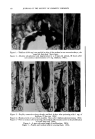
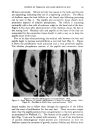
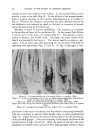
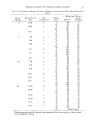
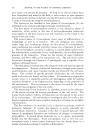
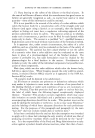
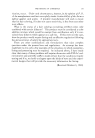
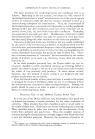
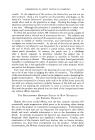
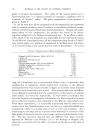
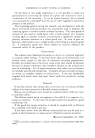
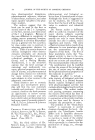
JOURNAL OF THE SOCIETY OF COSMETIC CHEMISTS 131 of the bulb cells. Many other substances have been applied or injected without producing any effect. For instance, 0.0007 g. of potassium cyanide subcutaneously greatly affected respiration, often resulting in death, yet there was no depilation. Several rats survived 1 mg. of chloromercuric benzoic acid, yet the hair was not lost. Administration of 1 rag. sodium selenite in 5 cc. water subcutaneously was nearly the lethal dose for rats, yet there was no effect on the hair. One per cent CuSO4 caused a necrosis of the skin, but there was no specific effect on the hair. Gallium sulfate, in subcutaneous injections of as much as 10 rag., caused no loss of hair. Numerous other substances have been administered but without effect. Thallium has been the only specific effective depilatory. Effects are probablY:'On an enzyme, but on which enzyme and how thallium interferes with if. are not kfiOwn. The enzyme involved is undoubtedly necessary for m::itosis and life of the cells of the bulb. Because of the rapid changes induced in the hair follicle by thallium acetate, it was thought that a histochemical study following the admin- istration of thallium might provide information about the progenitors of the hair follicle and more on what hair growth is dependent. Three problems confront us in relation to the growth phenomenon: 1) does the papilla su:ryive from generation to generation and does it have any inductive poteni•al• 2) is cessation of growth in the bulb mainly a phenomenon of aging.•. Are there changes in• er•zymes or in cell inclusions such as the Golgi body or mitochondria 3) ffbm what does the epithelioid mass for the new bud originate, why isn't it :used up and what stimulates the new bud to activity. T• M•e•Asms oF G[•OWTH Thirty to thirty-five day-old: animals from the Long-Evans strain were given subcutaneously 1 rag. of thallium acetate. For nine consecutive days folI:awing the injection, biopsies of white skin areas were taken from the dorsum of various rats. The biopsies were fixed in 80% alcohol at 4øC. and prepared histologically. For the alkaline phosphatase study, the method of Gomori was used. The presence of glycogen was demonstrated with the PAS method. The Barrnett and Seligman method was employed in determining th• degree of keratinization as revealed by the demonstration of SS groups. Succinic dehydrogenase was studied by the method of Nachlus. The site of alkaline phosphatase activity is marked with a brown to black precipitate depending upon the concentration of the alkaline phos- phatase present in the tissue. Figure 2 shows a follicle which has just started to produce a keratinized hair. A positive alkaline phosphatase reaction is seen in the derreal papilla and the connective tissue sheath. These follicles are from an animal which was given 1 rag. of thallium acetate

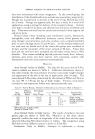
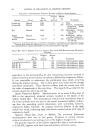
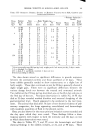
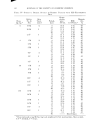
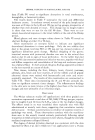
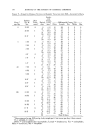
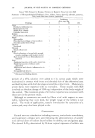
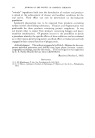
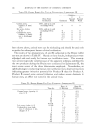
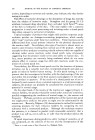
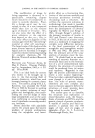
132 JOURNAL OF THE SOCIETY OF COSMETIC CHEMISTS 5•-'•"• " ' ..•.....: -5. . . .:. . ,...: ..... _ .'2. • . '.. -..,... . •- :.:}•. i . . .'.. ß : . --. ..... :. ?" { :.W' Figure 1.--Thallium (0.06 mg.) was applied to skin of the mother in two successive days the pups lost their hair 7 days later. Figure 2.--Alkaline phosphatase and degeneration in a 35 day-old animal, 48 hours after subcutaneous administration of 1 rag. thallium 190X. .: . •. . •'•. -:.::...: ...... :,.•:.., : : --• .. .- . ß ... •,. .:. •:::.•.•:. •--• ? •-'?:,.• ...... .??•' :'• ..:.•:-• . •. - ': ....... •' ':.7 ' ' •' ' . --•::v , ::.•-_ .. .. -•-• .. • • } .' :•-•' ' '• =i . '.. 5.• -•.:• : . ß •.: . - -2'• •. ß :- • : • .: .. , '.' : ..... -: •5:k ::,.':. •- '..' . • ' '•:•...,.•:.' .,:,• .... " •'"'•."' "" '• '"".• '"".•."". ': •5 7' ' •t• fl., '•'- ß :-• :" '? '".- "•::i•'.:.i ',:::5'.•? .. •. 0 ?" '•',..,-.: :• '-, '•.• •." ..4. •'•-' --" .•% .. : ' '-'. --- .• p'....'C " ' ' "• ' • • :" . ..... ..... •.• •"'•, -.2•" Figure 3.--Papilla, connective tissue sheath, and hair 4 days after poisoning with 1 mg. of thallium, 37 day-rat 190X. Figure 4.--Residual cells at base of hair, papilla 5 days after thallium administration 190X. Figure 5.--Five to six days after poisoning, the residual cells become active in the proliferation of a new hair bud 190X. Figure 6.--A more advanced stage of proliferation 190X. Figure 7.--Papilla and residual cells in a normal hair 155X.
Purchased for the exclusive use of nofirst nolast (unknown)
From: SCC Media Library & Resource Center (library.scconline.org)