EXPERIENCES IN SAFETY TESTING OF COSMETICS 163 these problems is primarily concerned with some of the practical experiences of the authors during the testing of cosmetics. THE CORRELATION BETWEEN ANIMAL AND HUMAN TESTS It is commonly accepted that animal skin or eye tests are sound guides to the safety of products or of raw materials. It must be remembered, how- ever, that animal skin is entirely different from human skin and that there may be no correlation between the mildness of a raw material on a rabbit's back and its safety during use on a human face. For example, it is widely recognized that isopropyl myristate is relatively irritating in the Draize rab- bit skin test (5). This compound, nevertheless, seems to be a safe ingredient for use on the human integument. Hair loss due to squalene has been demonstrated by Flesch (6) in animals, but squalene is a normal constituent of human sebum (7) and has been widely and safely used in cosmetics (8). Butcher (9) elicited increased mitosis, parakeratosis and desquamation through application of olive oil to the skin of rats, although olive oil has been used to anoint the human body--apparently xvith impunity--since Biblical times. The authors have also established that some finished cosmetic products, which are classified as mildly irritating (by the Draize rabbit skin test procedure), cause no reactions of any type under closed patch tests per- formed on humans and are safe when used under normal conditions by the population at large. Certain materials appear to be more irritating in the Draize rabbit skin tests than in human patch tests. If reliance were placed exclusively on the results obtained in animal tests, many useful raw materials or even finished preparations could not and would not be marketed. What is even more distressing is that many products that have been used for years with- out apparent ill effect would also have to be abandoned. This does not mean or should in no way imply that the use of animal skin tests should be abandoned for these tests, when properly used and intelligently inter- preted, can be valuable tools. If properly judged, i.e., not on an all or none basis, animal skin tests have considerable merit and probably can predict whether a finished product or new raw material may elicit severe irritation or toxic symptoms on application to human skin. The Draize rabbit eye test (5) has been widely used as a test of safety for products used in, on, around, or above the eyes. The great confidence placed by many in the validity of this test does not seem fully justified. Information has been presented (10) indicating that different laboratories, presumably using the same technique, have obtained conflicting results with the same product. This might indicate that results of the Draize rabbit eye test depend either on the conduct of the test, method of inter- preting the results, or perhaps even on the particular groups of rabbits

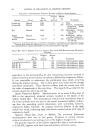
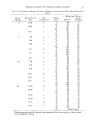
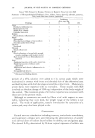
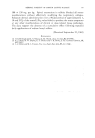
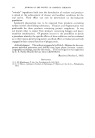
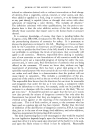
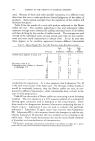
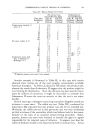
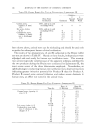
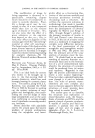
164 JOURNAL OF THE SOCIETY OF COSMETIC CHEMISTS used. Because of these and other possible variations, it is difficult to use data from this test to make predictive clinical judgments of the safety of products. Some typical examples from the experience of the authors will illustrate this point. Table I lists the results of a very mild product subjected to the Draize rabbit eye test. The numbers appearing in this and subsequent tables represent average scores obtained by adding individual scores of all rabbits and then dividing by the number of rabbits tested. The averages are used instead of the individual scores of each animal since they are less cumber- some and more easily represented in tabular form. It can be seen that there appears to be excellent agreement between different laboratories TABLE I--DRAIZE RABBIT EYE TEST (No WASltlNO AI•TER EYE INSTIL[ATION) Lab., Lab., Lab., I II III Time, hr. 10 Rabbits 3 Rabbits 3 Rabbits Corneal score, (opacity X area) X 5 Iris score, (value X 5) Conjunctiva score, (redness d- chemosis d- discharge) X 2 1 0 1.6 ... 2 0.5 ... 24 0.s ii• 48 0.5 0 •" 72-144 0 0 0 0 0 0 1'" 9.3 ... 2 •i• 24 3.8 51• •iq 48 1.0 6.0 6.0 72 0 4.0 2.0 96 0 1.3 0 120 0 0 0 1• o 0 o conducting the experiment. It is also apparent that Laboratory No. II is the most severe scorer of the three used. On the basis of these results, it would be concluded, however, that the Draize rabbit eye test, as con- ducted by different laboratories, yields reproducible data, at least in the case of mild preparations. Table II lists the results of Draize rabbit eye tests using a more irritating material. The test substance is a 15% aqueous solution of a commercial wetting agent commonly used in shampoos at this concentration. From these results the disagreement between laboratories conducting the test is clearly -- TM ' ß ev•cant. Laooratory I was not used to evaluate this particular substance.* Laboratory II again scores more severely than Laboratory III. Laboratory III, in this instance, cleared the detergent as safe for use, whereas Laboratory II reported this raw material as too irritating to be safely used. These results demonstrate the need for more reliable methods of procedure and standardization of interpretation. * It should be noted that Laboratory I consistently scores Draizc test data lbr a given product less severely than Laboratory 1I and more severely than Laboratory Ill.
Purchased for the exclusive use of nofirst nolast (unknown)
From: SCC Media Library & Resource Center (library.scconline.org)