LEUKOCYTE DAMAGE BY ORAL PRODUCTS 151 The second method to be described is more suitable for the L.D.50 determination of an oral product. EXPERtMENTAL METHOD I. For Morphological Evaluation The composition and preparation of the harvesting solution has been described elsewhere (1). It is a modified isotonic balanced saline solution. If the oral product is a mouthwash, a certain volume is added to the harvesting solution to obtain the required percentage for the test. If the oral product is a toothpaste, the test concentration is obtained by adding the required volume of paste to the harvesting solution. Vigorous shaking is followed by centrifugation. The clear supernatant fluid is used as the harvesting solution. Five ml. of this solution is kept intra-orally for 30 seconds, expectorated, centrifuged at 1200 X g for 10 minutes, and the mucus sediment is examined with a phase contrast microscope. H. For counting and L.D.5o determination A different approach is used because the leukocyte count is of prime im- portance. A hypertonic solution is prepared by concentrating the harvest- ing solution 1.5 X. Used as an oral rinse, it shrinks the leukocytes, causing them to retract their pseudopods or vesicles and spherulizing them completely. The main purpose, however, is that mucus can be removed by vigorous shaking without causing plasmolysis. Even fourth phase leukocytes, not viable but still intact, are prevented from rupturing and remain available for the count. Five ml. normal isotonic harvesting solution is used for a 30-second rinse. The expectorated sample is divided into two equal parts, A and B. To part A fresh harvesting solution is added, up to 8 ml., to serve as a control. To part B fresh harvesting solution is added, up to 4 ml. followed by 4 ml. oral product-isotonic harvesting solution-extract of desired concentration. Samples A and B are then inverted three times to mix the mucus with the solutions without destroying the stretch fibrilla- tion and elastic recoil properties of the mucus. Samples A and B are centrifuged for 10 minutes. The supernatant fluids are then completely decanted. For the counting procedure, the 11/2 X concentrated solution is added to each of the mucus sediments, up to 6 mi. The hypertonicity introduced at this time insures the cell membrane integrity. Vigorous shaking for 15 seconds destroys the mucus properties of stretch fibrillation and elastic recoil. The samples lose their viscosity. The number of intact leukocytes in the A and B samples is determined with a standard A. O. Neubauer hemacytometer and a phase contrast microscope. The concentration at which the B count is 50% of the A count determines the L.D.50 of the product.

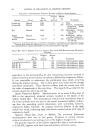
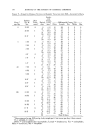
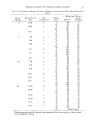
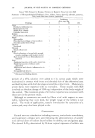
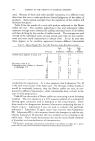
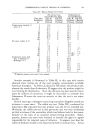
152 JOURNAL OF THE SOCIETY OF COSMETIC CHEMISTS Leukocyte donors were apparently healthy subjects between 25 and 45 years of age of both sexes, all having 24 or more natural teeth. Each L.D.50 determination, as shown in Table I, is the mean value of three tests for each product. More than 20 oral products have been screened for a preliminary evaluation. Only the highest and lowest values of dentifrices and mouthwashes are represented in Table I, for which a single leukocyte donor was used. TABLE I--TYPICAL L.D.•0,s or LEUKOCYTES FOR. VAKIOUS OR.AL PR.ODUCTS •--Leukocytes X 106• A -- B X Mean % Oral Product L.D.•0, • Part A Part B 100 A Difference Dentifrices H 18 L 0.2 Mouthwashes H 12 L 5 2.064 1.020 51.16 1.656 0.816 50.72 1.332 0.672 49.55 2.112 1.068 49.43 1.800 0.876 51.33 1,248 0,588 52.88 50.48 51.22 2.172 1.092 49.72 51.28 1.512 0,708 53.18 2.208 1,080 50.95 2.046 1,116 45.93 50.25 2.280 1,380 51,06 2.700 1.248 53.78 RESULTS The types of leukocyte disintegration under the conditions of test can be divided in to two categories: 1) Cell Plasmolysis. (a) Enlargement and cell spherulization are the general features. Up to the L.D.50 oral product concentrations, second- and early third-phase leukocytes will remain intact in spite of the swelling and still show specific granule patterns of motion. The granules ag- gregate in great numbers and form an organized directional stream, aimed at some area of the cell membrane, however, without the normal formation of a pseudopod. At L.D.50 and higher oral product concentrations, granu- lar aggregation ceases and changes to randomized BrownJan particle movement in a cytoplasmic environment that has lost its rigidity and viscosity. Often the nucleus enlarges and disrupts even before the cell becomes overextended and finally disrupts. Fourth- and late third-phase leukocytes are unable to cope with any additional enlargement caused by the influence of oral products on mucus and burst almost immediately. (b) Cell enlargement without spherulization. The cell membrane loses its elasticity and selective permeability. Previously formed pseudo- pods are not retracted and lose much of their cytop]asmic rigidity and vol-
Purchased for the exclusive use of nofirst nolast (unknown)
From: SCC Media Library & Resource Center (library.scconline.org)