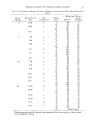
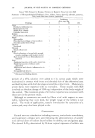
J. soc. cos. CHEM. 15, 149-154 (1964) LEUKOCYTE DAMAGE BY ORAL PRODUCTS By J. M. KL•qKU^MER, D.M.D., and V. F. L•s^N'rt, D.M.D.* Presented September 2•t-25, 1963, Seminar, Boston, Mass. ABSTRACT The healthy human mouth harbors millions of viable phagocytosing polymorphonuclear white blood cells. The oral mucus, containing these leukocytes, is harvested by means of a SO-second oral rinsing procedure. In vitro observations of leukocytes remaining in their original host-mucus environment have provided a new method for the evaluation of the biological effects of substances on a human living cell. Evaluation criteria are based on cell integrity as it is exemplified by the well-defined dynamic characteristics of: mode and polarity of locomotion, cell membrane activities and specific granule distribution patterns. Aqueous extracts of commercial oral products added to the mucus samples show disintegration of half the leukocyte population at concentration levels between 18 and 0.2%. Unexpected destruction of exfoliated epithelial cells has been observed, and the events of the disintegration process have been studied through phase-contrast cinemicrography. INTRODUCTION Recently a method has been developed to harvest mucus from the human oral cavity, containing millions of viable po]ymorphonuclear leukocytes. The rate of migration onto the surface of the mucous mem- brane is considerable, and counts have reached values of over 100,000 leukocytes per second (1). The most important function is the constant vigorous phagocytosis which takes place in the mucus layer covering all free surfaces of the oral cavity. It has become clear that the polymor- phonuclear leukocytes are a formidable force in the control of bacterial invasion. In this paper a procedure for screening the effects of oral products on leukocytes will be described. No claims have ever been made indicating that commercial products have any particular effect on the integrity of oral leukocytes. This report hopes, therefore, to stimulate such interest and aims to show that among existing oral products a wide range of toler- * Institute of Stomatological Research, Brookline 46, Mass. 149

150 JOURNAL OF THE SOCIETY OF COSMETIC CHEMISTS ance values can already be detected. As long as no clinical criteria have been formulated and tested in the field, it must remain an open question how much protection has to be built into the formulation of an oral product in order to maintain the integrity of oral ]eukocytes. The leukocytes are classified in four phases of cytomorphosis (2), scribing functional and morphological changes simultaneously. The first phase of cytomorphosis pertains to the formative phase of leukocytes, which occurs in the case of polymorphonuclear ]eukocytes (neutrophils) in the bone marrow and will, therefore, not be found in the mucus of the oral cavity. The second phase of cytomorphosis shows signs of differentiation in morphology as well as in function. The cell cytoplasm and nucleus, rather large and nondescript during the first phase of cytomorphosis, start condensing into smaller and final mature size of between 12 and 15 u. The cell cytoplasm contains, in addition to a multi-lobed nucleus and a few mitochondria, a multitude of very small particles, the so-called specific granules of the leukocytes. These are the carriers of many hydrolytic enzymes, and 80 to 100 can be counted per cell. The cell shows active locomotion through the formation of pseudopods and is capable of en- gulfment of foreign matter. The third phase is reached when the cell grows older and loses its capacity for phagocytosis. Instead of polarized locomotion through active pseud- opod formation, only many rounded vesicles are formed by the cell mem- brane. The number of specific granules diminishes, the cell becomes senile and enters the fourth and last phase. All membrane and granular motion comes to a standstill, and the cell disintegrates, either by swelling and final disruption or by fragmentation, depending on the properties of the environment. This environment is the mucus secreted by the major and minor mucous glands of the oral cavity. The harvesting of oral leukocytes is, therefore, aimed at the collection of the mucus covering the mucous membranes of the oral cavity. The mucus which harbors millions of leukocytes can be exposed to the action of an oral product. All oral products investigated thus far evoke a leu- kocytic response, and all cause complete destruction of leukocytes at higher concentrations. The first method to be described is for a detailed microscopic study of leukocytic behavior. It enables the observer to watch especially the second phase leukocytes. Changes in the flow of specific granules with respect to pseudopod formation are indicative of changes in membrane permeability. A second phase leukocyte is, so to speak, prematurely rushed into the third phase. Some oral products may at very low con- centrations carry a second phase leukocyte into the fourth phase in a matter of seconds, resulting in complete cell disruption.
Purchased for the exclusive use of nofirst nolast (unknown)
From: SCC Media Library & Resource Center (library.scconline.org)