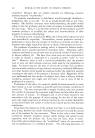
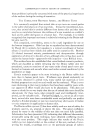
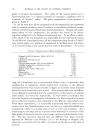
EXPERIENCES IN SAFETY TESTING OF COSMETICS 169 results. In the experience of the authors, the ideal safety test has not yet been evolved. Such a test would be one that predicts unfailingly, on the basis of a "routine laboratory" procedure, that a product is either safe or unsafe when used on the population at large. Pending the design of this ideal test, a procedure has been evolved which combines the patch test with a use test. Although this procedure is considered superior to other tech- niques, much more experience will be required to establish its validity. In brief, this procedure utilizes 100 volunteers who are issued a supply of test material with a written set of instructions for use. The subjects use the material daily for a period of 30 consecutive days. Additional material is issued as needed at weekly interviews, and examinations by the in- vestigator are carried out weekly. At the end of the trial use period, the test subject is not allowed to use the product for a period of seven days, at the end of which time the patient is patch tested, using the 48-hour closed patch procedure. In essence, the patch test is a challenge after a known exposure to determine whether the subject has in any way become sensitive to the product in question or whether any primary irritation is elicited. This technique has been found particularly valuable in establishing the safety of products which are used daily on a routine basis but is less applicable to shampoos and other products which are used at less frequent intervals. Care must also be exercised in the planning of in-use tests if the results are to be of any value in judging the safety of cosmetics. The reliability of the data obtained is directly related to the judgment used in designing the proper test procedures. The above mentioned neutralizer is a case in point: In-use tests conducted in a beauty salon and/or by skilled home users did not elicit any adverse reactions, probably because of the skill and care of the user in not allowing the neutralizer to come in contact with the eye. Not until the product was placed into the hand of the inexperienced were any adverse effects reported. THE RELATIONSHIP BETWEEN SAFETY OF RAW MATERIALS AND FINISHED PRODUCTS Despite their most careful efforts, even the best cosmetic chemists will occasionally make preparations which prove to be irritating, either during the use of the product or in predictive testing procedures. Unfortunately, the results of such tests are too frequently not examined in their fullest detail, and much valuable information is lost to the formulatot at the bench. An attempt to pin-point the basis for any observed irritation will frequently yield important and significant information. Usually, spot examination of the formula itself may disclose that no known irritants, sensitizers, etc., have been incorporated into the product. Under these circumstances, the 48-hour closed patch test has been found a very helpful

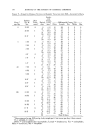
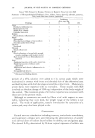
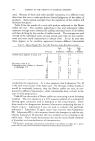
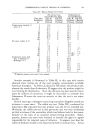
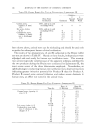
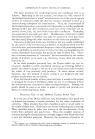
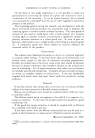
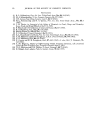
170 JOURNAL OF THE SOCIETY OF COSMETIC CHEMISTS guide in product development. The value of the routine patch test is demonstrated here in a typical example of a product, composed only of materials of "known" safety. The gross composition of the product is given in Table V. It can be seen that all the components of this preparation are commonly used in cosmetic products, and all conform to standards considered accept- able for cosmetics and/or pharmaceutical preparations. Despite the antici- pated safety of this composition, the product was found to be irritat- ing when subjected to the 48-hour closed patch test. In an effort to deter- mine which of the raw materials was responsible for the observed irritation (in the 48-hour closed patch test), all the component parts listed in Table V were tested singly or in solution or suspension in distilled water and shown to be non-irritating at the concentrations used in the product. As a next TABLE V--CoMPOSITION OF MAKE-UP PRODUCT About Mineral oil (40-50 Saybolt 0.840-0.819 S.G.) 25.0% Lanolin oil 2.5% Cholesterol absorption base 2.5% Spermaceti 1.0% Glyceryl monostearate (Not self-emulsifiable) 1.0% Colloidal magnesium--aluminum silicate 3.0% Titanium dioxide 7.0% Sodium lauryl sulfate (98% pure) 1.0% Perfume 0.2% Preservatives 0.3% Iron oxide pigments 5.0% Water q.s. 100 % step, the formulation was systematically broken down to determine that combination of ingredients which would elicit reactions in the 48-hour closed patch tests that would simulate in degree and number those obtained when the entire formulation was tested. After considerable time and effort, it was definitely established that the combination of the mineral oil, sodium alkyl sulfate and water was responsible. It was further ascertained that when the formula was changed by substitution of a heavier grade of mineral oil no irritation reactions were observed in the 48-hour closed patch test. From these experiments, it is reasonable to postulate that the observed re- actions from the finished product were not due to a single identifiable raw material but rather to a combination of two or more raw materials. It is interesting to note that similar reactions were observed by mixtures of this light grade of mineral oil and an amine soap, such as triethanolamine stear- ate. The skin reactions observed here are different from those recently reported by H6ckstra and Phillips (15) or the findings of Klippel (16) which are concerned with the effect of mineral oil fractions on the skin of animals.
Purchased for the exclusive use of nofirst nolast (unknown)
From: SCC Media Library & Resource Center (library.scconline.org)