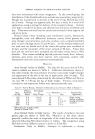
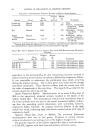
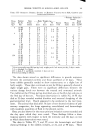
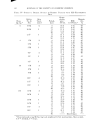
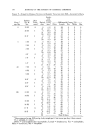
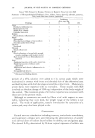
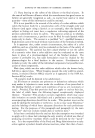
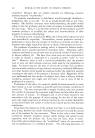
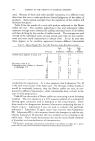
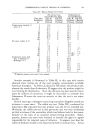
170 JOURNAL OF THE SOCIETY OF COSMETIC CHEMISTS guide in product development. The value of the routine patch test is demonstrated here in a typical example of a product, composed only of materials of "known" safety. The gross composition of the product is given in Table V. It can be seen that all the components of this preparation are commonly used in cosmetic products, and all conform to standards considered accept- able for cosmetics and/or pharmaceutical preparations. Despite the antici- pated safety of this composition, the product was found to be irritat- ing when subjected to the 48-hour closed patch test. In an effort to deter- mine which of the raw materials was responsible for the observed irritation (in the 48-hour closed patch test), all the component parts listed in Table V were tested singly or in solution or suspension in distilled water and shown to be non-irritating at the concentrations used in the product. As a next TABLE V--CoMPOSITION OF MAKE-UP PRODUCT About Mineral oil (40-50 Saybolt 0.840-0.819 S.G.) 25.0% Lanolin oil 2.5% Cholesterol absorption base 2.5% Spermaceti 1.0% Glyceryl monostearate (Not self-emulsifiable) 1.0% Colloidal magnesium--aluminum silicate 3.0% Titanium dioxide 7.0% Sodium lauryl sulfate (98% pure) 1.0% Perfume 0.2% Preservatives 0.3% Iron oxide pigments 5.0% Water q.s. 100 % step, the formulation was systematically broken down to determine that combination of ingredients which would elicit reactions in the 48-hour closed patch tests that would simulate in degree and number those obtained when the entire formulation was tested. After considerable time and effort, it was definitely established that the combination of the mineral oil, sodium alkyl sulfate and water was responsible. It was further ascertained that when the formula was changed by substitution of a heavier grade of mineral oil no irritation reactions were observed in the 48-hour closed patch test. From these experiments, it is reasonable to postulate that the observed re- actions from the finished product were not due to a single identifiable raw material but rather to a combination of two or more raw materials. It is interesting to note that similar reactions were observed by mixtures of this light grade of mineral oil and an amine soap, such as triethanolamine stear- ate. The skin reactions observed here are different from those recently reported by H6ckstra and Phillips (15) or the findings of Klippel (16) which are concerned with the effect of mineral oil fractions on the skin of animals.

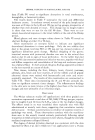
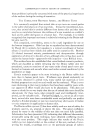
EXPERIENCES IN SAFETY TESTING OF COSMETICS 171 On the basis of this single experience, it is not possible to make any generalizations concerning the safety of a given raw material or even a combination of raw materials. It can be stated, however, that it should not necessarily be concluded* that the use of "safe" ingredients will in fact produce a safe product. The knowledge gained during the research and development with the above mentioned make-up product was successfully used to pinpoint the irritating agents in another totally unrelated product. The same grade of mineral oil was used in combination with a small amount of a nonionic wetting agent in another cosmetic and produced a significant number of primary irritation reactions in a closed patch test. In view of past ex- perience, reformulation was a simple matter of switching to a heavier grade oil. A subsequent patch test which yielded no reaction reflected the increased safety of the product. CONCLUSIONS The authors have illustrated attempts to arrive at a rational approach to cosmetic safety testing. It has been shown that use of animal tests is of limited value, except in the case of extremely irritating preparations. Further, for animal tests to be of any value at all, they should be followed by tests on human volunteers since complete reliance on the animal tests may be misleading. It is of equal importance that safety tests on humans be carefully selected and interpreted. Complete reliance on patch testing is as unwise as complete reliance on animal tests. A use test (preferably coupled with patch tests) has been found useful for predictive testing purposes. SUMMARY It has been shown that animal skin or eye tests are not always reliable indices of irritation potential of finished cosmetic products. Human eye instillation tests should be conducted after rabbit eye tests to ascertain safety. The 48-hour closed patch test appears to be valid if it is negative, i.e., causes no reactions. In this case, the product under test should be a good marketing risk. If the patch test causes irritation, it should be coupled with or followed by a carefully controlled in-use test. It has been shown that the 48-hour closed patch test can be used as a guide in the formulation or improvement of finished cosmetic products. (Received September 25, 1963) * Such a conclusion, incidentally, is a feature of the recently introduced Harris Bill (H.R. 8418).
Purchased for the exclusive use of nofirst nolast (unknown)
From: SCC Media Library & Resource Center (library.scconline.org)