J. Soc. Cosmetic Uhemists, 17, 81-91 (1966) Photosensitivity* MILTON M. CAHN, M.D.f Synopsis--This paper deals with the effects of the sun's rays upon human skin. The rays of the sun may act merely as a trigger to precipitate local skin and systemic disease or they may combine with photosensitizing materials in the skin to produce local reactions. A basic classification is presented and an attempt made to clarify the classification according to the diseases produced by ultraviolet light. Some recently developed therapeutic agents are excellent drugs but have been responsible for photosensitivity reactions. It is sometimes possible by examining the chemical formulas to predict a possible photosensitizing agent and perhaps to modify the structure slightly to eliminate its photosensitizing potentials. There has been an apparent increase in the incidence of abnormal skin reactions to sunlight. These abnormal reactions have varied from mild and minor skin involvement, to severe and even fatal systemic disease. Following the pioneer work by Epstein (1), Blum (2), and Lamb (3) whose interest early focused on this field, there has been a vast amount of basic research and clinical investigation resulting in a volu- minous but sometimes confusing welter of published articles on the subject. Exposure of the skin to sunlight produces many patterns of reaction, and numerous attempts have been made to classify these reactions. The simplest classifications propose that skin lesions may be produced by ultraviolet light of wavelengths shorter than 3200 A, i.e., radiations which induce the sunburn of normal skin or second, skin lesions may be due to abnormal photosensitizing substances in the skin and may be produced by wavelengths outside of the sunburn spectrum, i.e., above 3200 A (2). * Based on a presentation before the New York Chapter of the Society of Cosmetic Chemists, September 8, 1965. t University of Pennsylvania, Department of Dermatology, School of Medicine and Graduate School of Medicine, Philadelphia, Pa. 19104. .. . ß 81

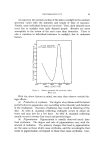
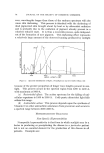
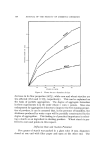
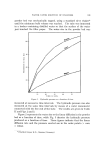
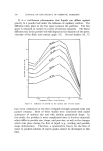
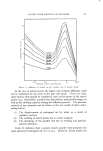
82 JOURNAL OF THE SOCIETY OF COSMETIC CHEMISTS An attempt is made below to present a step by step analysis and clinical classification of tha photosensitivities in accordance with the following scheme: Reactions to Sunlight I. Normal reaction (sunburn) II. Hypersensitivity reactions A. Nonspecific hypersensitivity (e.g., lupus erythematosus) B. True photosensitivity 1. Phototoxicity, quantitative hypersensitivity 2. Photoallergy, qualitative hypersensitivity (altered reactivity) NORMAL REACTION TO SUNLIGHT The normal photobiologic response of the skin, when exposed to ultraviolet light of a specific wavelength, is erythema ("sunburn"). This must be stressed, since sunburn is sometimes thought to be analo- gous to a thermal (infrared) burn, but they are not the same. The terms "sunburn spectrum" and "sunburn radiation" are used to describe those ultraviolet light wavelengths which produce erythema in normal human skin. The appearance of minimal perceptible erythema is the most ac- curate method for determining the erythemic response and is graphically represented by a curve (Fig. 1), known as the "action spectrum curve for erythema." There is a maximum at about 2500 A, falling to a mini- mum at 2800 A, reaching a very sharp maximum at 2967 A, then falling sharply and nearly reaching zero at 3200 A. Ordinary window glass prevents transmission of wave lengths below 3200 A and, therefore, will prevent sunburn. Frequently, the wavelengths transmitted to the earth are not shorter than 3200 A, and in this case sunlight has no sun- burn producing power. An approximate average curve for the spectral distribution of sun- light is shown in Fig. 2 ("S"). The wavelength distribution is between 2900 and 18,500 A. The intensity and spectral distribution of sunlight varies with the season of the year and with varying atmospheric condi- tions, including water vapor, smoke, and clouds. The sun's rays are most intense in late spring and early summer when the sun is at its zenith (summer solstice). At this time the sun is directly overhead and its rays are perpendicular to the earth's surface, thus traveling their shortest distance to earth, with the least filtering effect of the atmos- phere. It is during this season, naturally, that most skin reactions are observed.
Purchased for the exclusive use of nofirst nolast (unknown)
From: SCC Media Library & Resource Center (library.scconline.org)