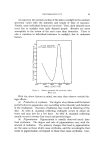
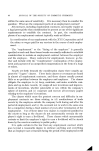
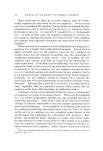
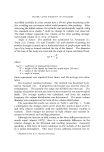
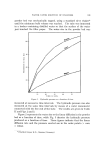
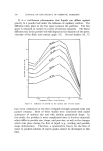
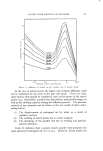
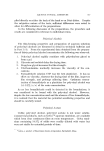
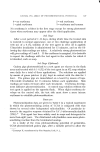
i•HOTOSE NSITiV ITY 83 As expected, the normal reaction of the skin to sunlight in the sunburn spectrum varies with the intensity and length of time of exposure. Finally, some individual factors are involved: Thus, dark skinned races react less to sunlight than light skinned people. Blondes are more susceptible to the action of the sun's rays than brunettes. There is also a variation in individual tolerance to sunlight, due to unknown factors. •oo •90 8O •7o Z 6O ¸ -- (..95O r'F40 -- •3o 24 O0 ACTION SPECTRU! ERYTHEMA PRODUCTION I I I I I I 26 O0 2800 .300 0 WAVE- LENGTH 320 0 Figure 1. Action spectrum for erythema [after Blum (2)] With the above factors in mind, one may then observe certain bio- logic effects. (a) Production of erythema: The degree of erythema and the latent period before its appearance vary according to the intensity and duration of the irradiation. Excessive irradiation may result in blistering of the skin. At 2536 A, maximal reddening ordinarily occurs in about six hours and may last for a few days. At 2967 A, maximal reddening usually occurs in twenty-four hours and persists longer. (b) Pigmentation: Pigmentation is usually observed much later than erythema. The degree and rate of pigmentation vary with the amount of radiation. The primary changes that lead to pigmentation are the same as those which cause erythema, and the wavelengths that result in pigmentation correspond to those that cause erythema how-

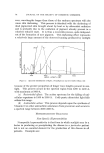
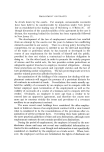
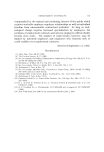
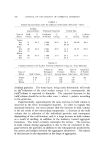
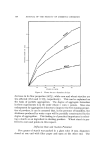
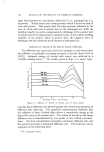
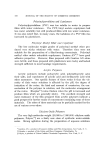
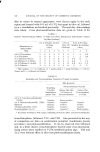
JOURNAL OF THE SOCIETY OF COSMETIC CHEMISTS ever, wavelengths longer than those of the sunburn spectrum will also cause skin darkening. This process is identical with the darkening of dead pigmented skin brought about by heat or by ultraviolet radiation and is probably due to the oxidation of pigment already present in a colorless reduced state. It is thus a reversible process, quite independ- ent of the formation of new pigment. This darkening effect represents a relatively large amount of the observed tanning produced by sunlight 4000 5000 6000 WAVE-LENGTH (,3,) Figure 2. Spectral distribution of light S-sunlight at sea level [after Blum (2)] because of the greater proportion of longer wave lengths present in sun- light. This process occurs in the spectral region from 3200 to 4400 A, with maximum at 3400 A. (c) Bactericidal effects: The action spectrum for the killing of uni- cellular organisms is 1850 to 2500 A. Cold quartz ultraviolet light falls within this range. (d) Antirachitic action: This process depends upon the synthesis of Vitamin D or other antirachitic substances from precursors and occurs in a spectral range between 2600-3200 A. HYPERSENSITIVITY REACTIONS Non-Specific Hypersensitivity Nonspecific hypersensitivity is that form in which sunlight may be a factor in producing or precipitating the disease in a particular patient but is not an essential element for the production of this disease in all patients. Examples are:
Purchased for the exclusive use of nofirst nolast (unknown)
From: SCC Media Library & Resource Center (library.scconline.org)