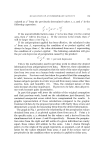
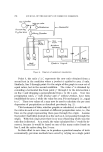
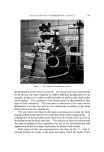
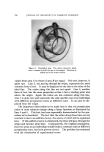
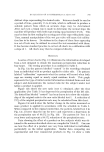
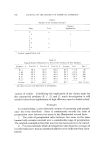
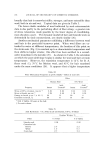
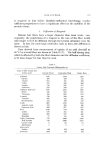
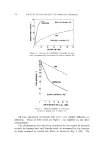
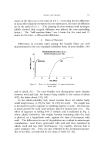
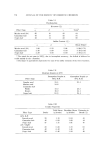
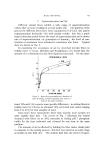
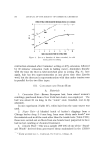
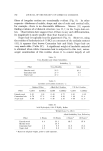
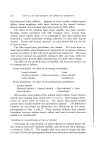
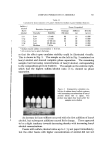
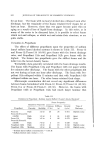
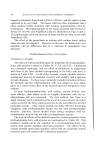
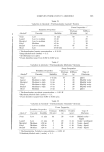
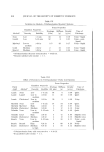
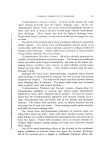
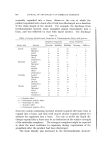
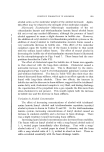
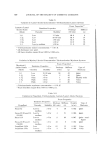
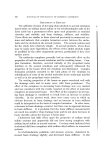
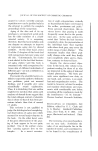
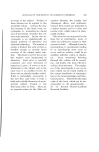
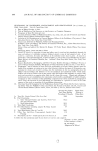
766 JOURNAL OF THE SOCIETY OF COSMETIC CHEMISTS Table I Outline of the Testing Procedure Time Test Product Application •' 0 V 1.5 V 2 2.5 V 3 3.5 v 4 Product applied before test. Table II Typical Results Obtained for a Test of One Product on Five Subjects Product: A Test No. 1 Test No. 2 Test No. 3 Average Dev. Der. 2 W.V. 89.0 80.0 94.5 87.8 + 5.6 36 J.M. 80.0 98.5 98.5 92.7 +10.5 121 L.M. 95.0 96.5 95.0 95.5 +13.3 169 F. S. 22.5 73.5 82.5 59.5 -22.7 529 R. G. 41.0 98.0 96.0 78.3 --3.9 16 , Average 65.4 89.3 92.0 82.7 S.D. 4- 14.7 All values are per cent depression of perspiration. variety of results. Considering the implication of the claims made for the commercial products B, C, D, and E, much investigation is still needed before these implications of high efficiency may be stated as fact. SUMMARY In summarizing, a new electronic system of measuring anti-perspir- ancy has been described. Since it continuously records the ratio of perspiration rates between two areas it has illuminated several facts: 1. The ratio of perspiration rates between two areas on the same human body remains constant over a considerable range of perspiration. The original assumption that this was true has been proven to be correct. 2. Previous methods which developed the ratio from the averages of recorded data have had an unnoticed additive error built into their calcu- lations.

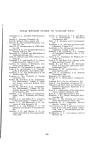
EVALUATION OF ANTIPERSPIRANT ACTIVIT5 • 767 3. The new method has demonstrated a means of eliminating this error in order to obtain more accurate information about the effect of antiperspirants on human subjects. 4. The method produces results about as rapidly as the subject in test can generate perspiration. (Received May 10, 1966) REFERENCES (1) Daley, E. W., Antiperspirant testing: A comparison of two methods, Proc. Sci. Sect. Toilet Goods Assoc., 30, 1 (December, 1958). (2) Brun, R.. Studies on perspiration, J. Soc. Cosmetic Chemists, 10, 70 (March, 1959). (3) Takahashi, T., and Wada, M., The permanent recording of sweat by plastic impression. J. Invest. Dermatol., 38, 197 (1962). (4) Kilmer, F. S., Reller, H. H., and Snyder, F. H., The antiperspirant action of topically applied anticholinergics, J. Invest. Dermatol., 43,363 (November, 1964). (5) Fredell, W. G., and Read, R. R., Antiperspirants and axillary method of determining effectiveness, Proc. Sci. Sect. Toilet Goods Assoc., 15, 23 (May, 1951). (6) O'Malley, W. J., and Christian, J. E., An evaluation of the ability of compounds to reduce perspiration flow, J. Am. Pharm. Assoc., Scio Ed., 49,402 (June, 1960). (7) Jenkins, J. W.. Quellette, P. A., Healy, D. J., and Della Lana, C., A technique for per- spiration measurement, Proc. Sci. Sect. Toilet Goods Assoc., 42, 12 (December, 1964). (8) O'Malley, W. J., and Christian, J. E., The design of a continuous recording in vivo method of measuring sensible perspiration over a limited area, J. Am. 2Pharm. Assoc., Sci. Ed., 49,398 (June, 1960). (9) Custance, A. C., Cycling of sweat gland activity recorded by a new technique, J. AppL Physiol., 17, 741 (1962). (10) Jacobi, O.K., Does insensible perspiration exist independent of the activity of the sweat gland, Am. 2Perruiner, 78, 23 (August, 1963). (11) Thiele, F. A. J., and Schutter, K., Moisture meters for measuring the water balance of human skin, 2Proc. Sci. Sect. Toilet Goods Assoc., 40, 20 (December, 1963)• (12) Van Gasselt, H. R. M., and Vierhout, R. R., Registration of insensible perspiration of small quantities of sweat, Nether. Soc. Dermatol., 127, 255 (1963). (13) Bullard, R. W., Continuous recording of sweating rate by resistance hygrometry, J. Appl. Physiol., 17, 735 (1962). (14) Bernard, G. I., and Maibach, H. I., Effect of systemically administered epinephrine on palmar sweating, Arch. Dermatol., 92, 192 (1965). (15) Randal, W. C., and Kimara, K. K., Pharmacology of sweating, 2Pharm. Reviews. 7, 3 (Septe•nber, 1955).
Purchased for the exclusive use of nofirst nolast (unknown)
From: SCC Media Library & Resource Center (library.scconline.org)