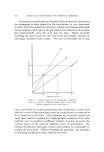
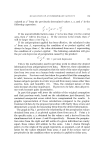
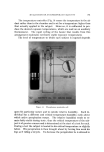
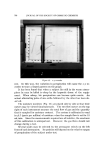
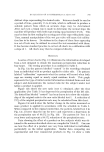
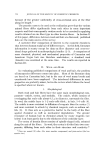
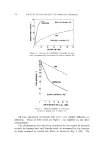
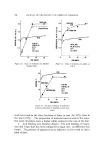
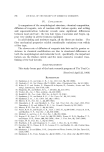
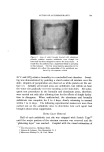
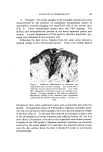
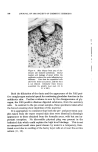
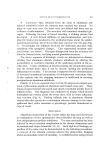
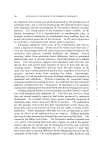
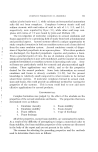
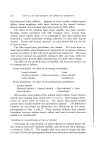
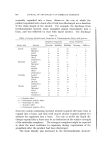
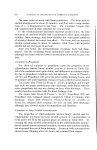
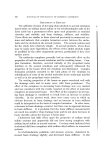
750 JOURNAL OF THE SOCIETY OF COSMETIC CHEMISTS The manner in which data are handled, either as they are obtained by the equipment or later treated by the investigator, is very important. To date, all of the methods devised have erred in one fundamental detail. Those methods which rely on the gravimetric determination of perspira- tion automatically carry the error into the data. Where electronic recording has been used, the error has been unavoidably, though un- knowingly, included in the results. The error is essentially the averag- • I X' X" X Values for Area A Figure 1. Idealized plot of the perspiration output of area A rs. area B. Without product (line 1) and with product applied to area A only (line 2) ing of test results at various perspiration rates to produce a single point ratio for a series of determinations made on a control area as compared to those made on a test area. This situation has occurred because too much time would be required for a single product evaluation if the other methods were to produce a sufficient number of points to assure the constant nature of the ratio for different rates of perspiration. The method described in this paper resolves the problem by continually re- cording the ratio itself. Before describing the procedure, the principles of obtaining perspiration ratios must be reviewed.

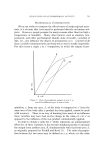
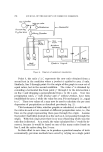
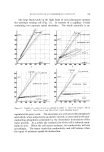
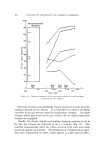
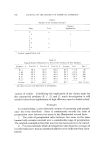
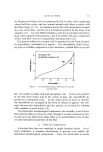
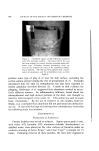
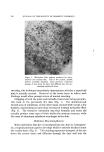
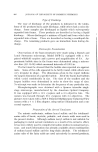
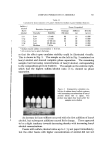
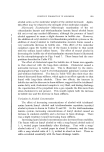
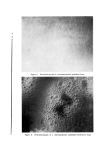
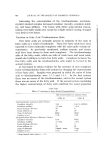
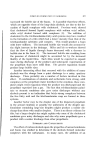
EVALUATION OF ANTIPERSPIRANT ACTIVITV 751 MATHEMATICAL CONSIDERATIONS When one wishes to compare the effectiveness of antiperspirant mate- rials, it is obvious that tests must be performed directly on human sub- jects. However, people perspire for many reasons other than too high a temperature or humidity. Many other factors, such as emotion, tem- perament, and other psychological stimuli, state of health, variation of diet, etc., also influence the degree of perspiration (15). Control of all these variables simultaneously and from test to test is totally impossible. For this reason a single x to x' comparison, in which the output of per- 4 7 Figure oe. Plots of perspiration output of area A rs. area B for different types of control tests spiration, x, from one area, A, of the body is compared to x' from the same area of the body after a product has been applied, cannot be made with accuracy. There is no way of knowing how much of an influence these variables may have had on the change in the value of x to x' as opposed to the influence of the test product coincidentally applied. In order to obtain a value for x' which represents an antiperspirant effect free of these variables, it has become standard practice to measure the output from another area, B, simultaneously with that from area A, as originally proposed by Fredell and Read (5). The ratio of perspira- tion between the two areas may be defined as x/y, where x is the value
Purchased for the exclusive use of nofirst nolast (unknown)
From: SCC Media Library & Resource Center (library.scconline.org)