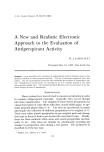
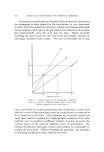
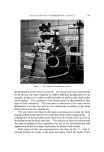
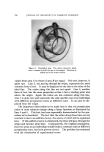
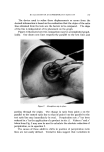
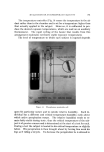
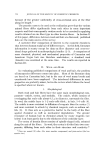
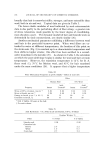
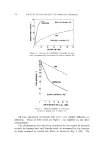
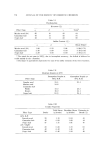
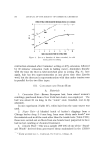
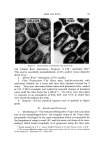
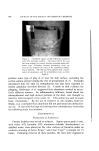
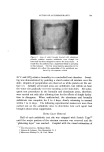
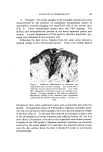
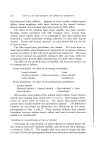
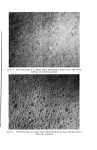
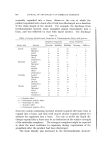
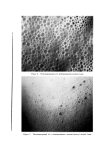
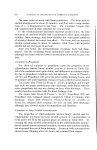
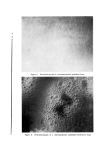
790 JOURNAL OF 'FILE SOCIETY OF COSMETIC CHEMISTS Figure 1. Anhidrotic square of skin following treatment with 10rf formalin solution. The lower half of the area has been striI)pcd to remove stratum comeurn using cello- phanc tape. Following thermal stimulation sweat ap- pears in the stripped area only as the superficial obstruc- tion is relieved. The skin has been painted with a starch- castor oil suspension, and the perspiration shows as white droplets produce some type of plug at or near the skin surface, occluding the eccrine ostium and preventing the exit of perspiration (2, 3). Formalin introduced into the skin by iontophoresis has also been reported to inhibit glandular secretion directly (4). Unable to find evidence for plugging, Sulzberger, et al. suggested that aluminum worked in an en- tirely different manner. An inflammatory infiltrate, found about the intraepidermal and high derreal portions of the duct, was thought to interfere with transport of the sweat (5). This action was said to result from "cherootaxis." By the use of sensitive in ,,itro studies, however, Blank, et al. concluded that aluminum did not penetrate into derreal tis- sue (6). It was with the hope of resolving these contradictory views that the following study was initiated. EXPERIMENTAL Production of Anhidrosis Twenty healthy men served as subjects. Square gauze pads (5 cm), with either 10% formalin, 20% aluminum chloride (hexahydrate), or distilled water, were placed on the volar surfaces of forearms under an occlusive dressing of Saran Wrap •"•* and Clear Tape •'t overnight for 18 hours. Following removal of these patches, the men were exposed to

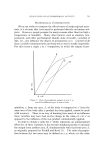
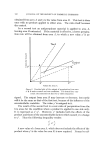
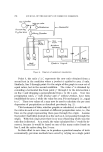
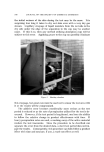
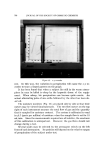
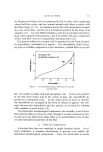
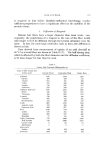
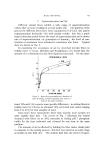
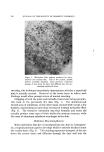
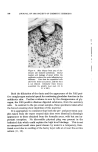
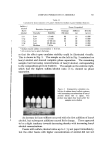
ACTION OF ANTIPERSPIRANTS '2: '• •: ':i"'::"•"•: 791 Figure 2. Area of wfiar forearm treated with aluminum chloride solutiou remains auhidrotic even though the lower half has beeu stripped to remove the horuy layer. It would thus be unlikely that a superficial block is operatiug iu this iustance. The few sweat puucta appearing in the stripped site reflect the uumaskiug of the auhidrosis pro- duced by the aqueous vehicle 38 øC and 90% relative humidity in a controlled heat chamber. Sweat- ing was demonstrated by painting a starch-castor oil mixture over the skin droplets of perspiration are observed as white puneta on the sur- face (7). Initially all treated areas are anhidrotic, but within an hour the water site gradually recovers sweating as the skin dries. All subse- quent test procedures in the formalin and aluminum areas, therefore, were carried out only after allowing time for the effects of simple hydra- tion to disappear. When undisturbed, the aluminum and formalin anhidrosis was complete for 3 to 4 days, slowly returning to normal within 7 to 14 days. The following experimental maneuvers were then carried out on the anhidrotic sites to determine how each agent had brought about sweat suppression. Itornj' Layer Removal Half of each anhidrotic test site was stripped with Scotch Tape •* until the major portion of the stratum corneum was removed and the "glistening layer" was reached. Coupled with the visual estimation of * Dow Chemical Co., Midlaud, Mich. • Johusou & Johusou, New Bruuswick, N.J. { Minnesota Miuing Co., St. Paul, Miuu.
Purchased for the exclusive use of nofirst nolast (unknown)
From: SCC Media Library & Resource Center (library.scconline.org)