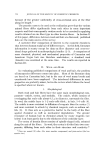
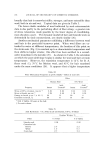
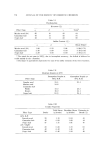
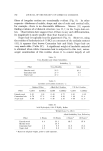
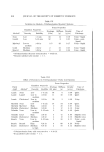
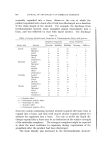
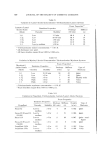
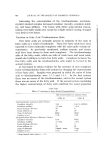
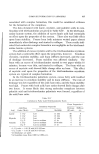
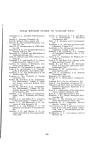
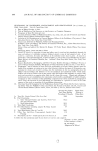
816 JOURNAL OF THE SOCIETY OF COSMETIC CHEMISTS Table VII Variation in Alcohols--Triethanolamine Stearate • Systems Emulsion Properties Alcohol b Viscosity Stability Foam Properties Drainage Stiffness Density (2 hr) (g) (g/cc) Type of Discharge None Low 1 rain 53 14 0.19 Lauryl Low 5-15 min 52 8 0.21 Myristyl Low to 24 hr 0.5 32 0.17 medium Cetyl Medium 24 hr 2 21 0.27 Stearyl Medium 24 hr 4 15 0.33 Noisy--liquid Noisy--semi- liquid Noisy--liquid Noisy--liquid Noisy--liquid Triethanolamine Stearate concentration = 0.025 Stearate/alcohol ratio (molar) = 1:1. Table VIII Effect of Cholesterol in Triethanolamine--Fatty Acid Systems Foam Properties Emulsion Properties Fatty Drainage Stiffness Density Acid s Alcohol •' Viscosity Stability (60 rain) (g) (g/co) Type of Discharge Laurie None Low 1-5 •nin 84 6 0.06 Laurie Lauryl Low to 24 hr 11 20 0.06 medium Lauric Cholesterol Low to 24 hr 36 3 0.08 medium Myristic None Low 1-5 min 34 34 0.06 Myristic Myristyl High 24 hr 0 50 0.07 Myristic Cholesterol Medimn 24 hr 5 17 0.10 Palmitic None Low to 5-15 min 0 39 0.06 medium Palmitic Cetyl High 24 hr 0 42 0.09 Palmitie Cholesterol Medium 24 hr 2 12 0.10 Stearic None Low to 5-15 min () 30 0.11 medium Stearic Stearyl High 24 hr 0 88 0.23 Stearic Cholesterol Medium 24 hr 2 16 0.12 to high Quiet Quiet Noisy Quiet Noisy Noisy Quiet Slightly noisy Slightly noisy Noisy--semi- liquid Noisy Slightly noisy Triethanolamine-fatty acid concentration = 0.10 M. Soap/alcohol ratio (molar) = 1:1.

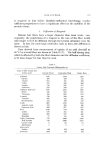
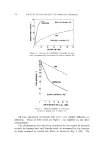
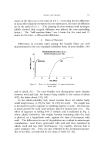
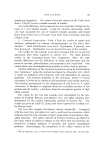
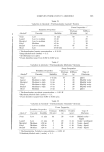
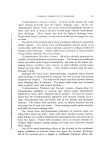
COMPLEX FORMATION IN AEROSOLS 817 7'riethanolamine Laurate •¾ystems Systems which caused the Inost rapid wetting generally had the highest drainage rates. In the tri- ethanolamine laurate series, the foams from triethanolamine laurate or those with oleyl or stearyl alcohols wetted paper almost immediately after discharge. These foams also had the highest drainage rates. Foams with lauryl, myristyl, or cetyl alcohols did not wet paper for over an hour. The effect of the alcohols upon foam persistence followed a somewhat similar pattern. The foams from triethanolamine laurate alone, or in combination with oleyl or stearyl alcohols, started to collapse within 30 minutes after discharge. Foams with lauryl, myristyl, or cetyl alcohols retained their structure for over an hour. Triethanolamine g•[yristate Systems -All of the alcohols increased the stability of triethanolamine myristate foams. The foam from trierhanoi amine myristate wetted paper immediately, but none of the foams con- taining lauryl, myristyl, cetyl, stearyl, or oleyl alcohol wetted paper during one hour after discharge. These results correlate with the foam drainage results. Although the foam from triethanolamine myristate alone showed rapid drainage, it maintained its structure for over an hour but became progressively thinner. The foams with lauryl and oleyl alcohols showed some thinning after 30 minutes. The most stable foams were obtained with myristyl, cetyl, and stearyl alcohols. Triethanolamine Palmitate and Stearate Systems--Foams from tri- ethanolamine palmirate or stearate also wetted paper immediately, followed by those that contained lauryl alcohol. It must be remem- bered that the triethanolamine palmkate and stearate systems have a soap concentration only one-fourth that of the laurate and myristate systems. The foams with myristyl, cetyl, or stearyl alcohols did not wet paper for at least two hours. Those wetting results again correlate well with the foam drainage data. The foams from triethanolamine palmirate or stearate alone col- lapsed after about one hour those with lauryl alcohol became increas- ingly thinner as a result of drainage but maintained their structures for at least two hours. Foams with myristyl, cetyl, or stearyl alcohols de- veloped slight surface crazing during two hours but otherwise showed little change. One of the most interesting effects of the alcohols in the triethanol- amine palmirate or stearate series was upon the product discharge. All of the systems gave a liquid or semiliquid discharge which sub-
Purchased for the exclusive use of nofirst nolast (unknown)
From: SCC Media Library & Resource Center (library.scconline.org)