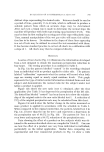
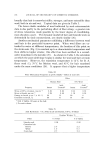
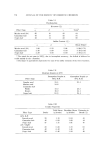
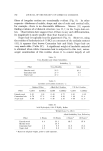
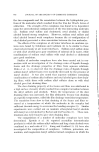
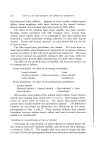
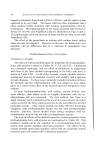
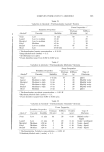
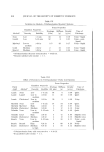
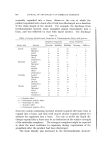
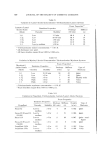
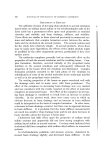
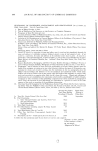
824 JOURNAL OF THE SOCIETY OF COSMETIC CHEMISTS Increasing the concentration of the triethanolamine myristate/ myristyl alcohol complex increased emulsion viscosity, emulsion stabil- ity, and foam stiffness. The foams with either soap/alcohol concen- tration were fairly stable and, except for a slight surface crazing, changed very little in two hours. Variation in Fatty .4 cid/ Triethanolamine Ratio Free fatty acids are normally present in solutions of the salts of fatty acids as a result of hydrolysis. These free fatty acids have been reported to form molecular complexes with the salts under certain cir- cumstances. As previously mentioned, sodium stearate and stearic acid have been shown to form such complexes. The triethanolamine salts of the fatty acids, which are salts of weak bases and weak acids, would also hydrolyze to form free fatty acids. Complexes between the free fatty acids and the triethanolamine salts might be formed in the aerosol systems. It was hoped to obtain evidence for the existence of such complexes in the triethanolamine-fatty acid systems by changing the concentration of free fatty acid. Samples were prepared in which the ratios of fatty acid to triethanolamine were 1:1.5 and 1.5:1. In the first system, there was an excess of the triethanolamine, and in the second system there was an excess of the fatty acid. If the aerosol system containing the higher concentration of fatty acid exhibited the usual properties Table XIII Effect of Variations in Soap Alcohol Concentrations • Salt Concentration in Aqueous Phase 0.025 M 0.100 M Triethanolamine Laurate/Lauryl Alcohol Emulsion viscosity Low Low to medium Emulsion stability 1 rain 5 hr Foam drainage (60 rain) 20 6 Foam stiffness (g) 20 20 Type of discharge Quiet Quiet Density (g/co) 0.06 0.06 Triethanolamine Myristate/Myristyl Alcohol Emulsion viscosity Low High Emulsion stability 1-5 min 5 hr Foam drainage (60 rain) 2 0 Foam stiffness (g) 24 56 Type of discharge Liquid--noisy Noisy Density (g/cc) 0.13 0.07 Soap/alcohol ratio (molar) = 1:1.

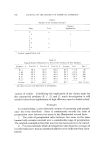
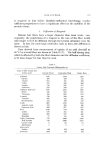
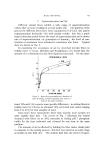
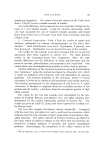
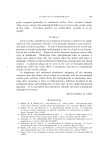
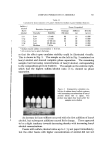
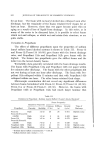
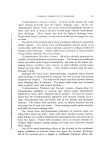
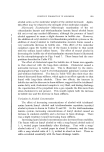
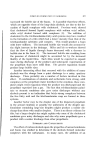
COMPLEX FORMATION IN AEROSOLS 825 associated with complex formation, this would be considered evidence for the formation of the complexes. The data obtained with lauric, myristic, and palmitic acids in com- bination with triethanolmine are given in Table XIV. In the triethanol- amine laurate system, the addition of excess lauric acid had essentially no effect upon the properties of the system. There also was little effect upon foam stability. Foams from both mixtures wetted paper almost immediately after discharge and started to collapse. These results indi- cated that molecular complex formation was negligible in the triethanol- amine laurate systems. The addition of excess myristic acid to the triethanolamine myristate system had a noticeable effect upon the properties, however. Emulsion viscosity, emulsion stability, and foam stiffness increased, and the rate of drainage decreased. Foam stability was affected similarly. The foam with an excess of triethanolamine started to wet paper within 10 minutes, became very thin, and started to collapse. The foam with an excess of myristic acid showed little change after an hour. This effect of myristic acid upon the properties of the triethanolamine myristate system are typical of complex formation. In the triethanolamine palmkate system, excess fatty acid resulted in an increase in emulsion stability and in loam stiffness. The rate of drainage was low regardless of the acid/base ratio, and the foam stability was high. Foams with both acid/base ratios showed little change after two hours. It seems likely that strong molecular complexes between palmitic acid and triethanolamine palmitate were formed, regardless of the acid/base ratio. Table XIV Variation in Fatty Acid/Triethanolamine Ratio Foam Properties c, a Emulsion Properties Acid/Base Drainage Stiffness Acid Ratio (Mols) Viscosity Stability (60 min) (g) Lauric 1:1 •/• Low 1 rain 85 9 1:1•/• b Low 1 min 86 10 Myristic 1:1•/• (* Low 1 min 71 21 1 •/•:1 • Low to medium 1 hr 5 37 Pahnitic 1:1•/• a Low to medium 15-30 min 0 23 1 •/•: i v Low to medium 1 hr 0 42 1:1• ratio = 0.10 M acid/0.15 M base. 1•/•: 1 ratio = 0.15 M acid/0.10 M base. All discharges are quiet. All densities range from 0.060 to 0.069 g/cc.
Purchased for the exclusive use of nofirst nolast (unknown)
From: SCC Media Library & Resource Center (library.scconline.org)