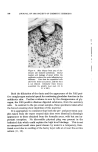
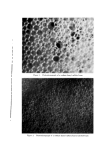
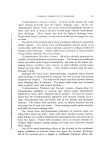
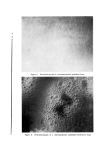
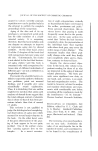
828 JOURNAL OF THE SOCIETY OF COSMETIC CHEMISTS alcohol had a marked effect upon the aerosol system. Emulsion vis- cosity and stability were increased, foam drainage was decreased, and foam stability was increased. Foam stiffness was increased in some systems. On the basis of these results, it was concluded that molecular complexes were formed in aerosol systems. The effect of these com- plexes upon the properties of the systems was similar in many respects to that previously reported with nonaerosol systems. The use of molecular complexes is an effective method for varying the properties of aerosol foams. By the proper choice of surfactant, alcohol, and propellant, foams may be obtained which wet immediately after discharge and then collapse or which wet immediately but retain their foam structure. Foams may also be obtained which are quite stable and show no wetting or collapse for extended periods. Aerosol emulsions can be formulated to give an immediate foam discharge or a liquid discharge which subsequently expands into a foam. The aerosol emulsions were prepared with sodium lauryl sulfate or the triethanolamine salts of lauric, myristic, palmitic, and stearic acid as the surfactants and fluorinated hydrocarbon propellants as the dis- persed phase. The effect of alcohols upon the emulsions and foams was studied with lauryl, myristyl, cetyl, stearyl and oleyl alcohols and cholesterol. The extent to which any alcohol affected the properties of a specific aerosol emulsion or foam depended upon such factors as the type and concentration of the alcohol, the surfactant, and the propellant. The saturated fatty alcohols formed complexes in both sodium lauryl sulfate and triethanolamine-fatty acid systems. Microscopic observation showed that complex formation usually reduced the bubble size of the foams. In some instances, the addition of an alcohol resulted in a product which had a noisy or sputtery discharge. This was attributed to the formation of a solid molecular complex which resisted expansion when the liquefied propellant vaporized during discharge. Cholesterol had little effect in sodium lauryl sulfate systems but formed fluid complexes in the triethanolamine-fatty acid systems. These complexes expanded easily during discharge, and this increased bubble size and decreased foam stiffness. Oleyl alcohol likewise had little effect in sodium lauryl sulfate systems but appeared to form weak complexes in some of the triethanolamine-fatty acid emulsions. The type of propellant had a considerable influence on the properties of surfactant/alcohol systems. In general, the most stable emulsions and foams were obtained with Freon-12, Freon-12/Freon-114 (40/60)

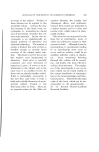
COMPLEX FORMATION IN AEROSOLS 829 or Freon-114. Freon-12/Freon-11 (51)/30), Propellant 142b, and Pro- pellant 132a gave less stable foams. The latter two propellants gave foams with the lowest density. Triethanolamine-fatty acid systems with an excess of fatty acid were investigated to a limited extent. The data indicate that fatty acids also form complexes with the triethanolamine salts. The results of the present study show that molecular complex for- marion can vary the properties of aerosol emulsions and foams over a wide range. These data were obtained with simple aerosol systems. The extent to which the present findings can be applied to modify the properties of practical aerosol products remains to be determined. Possible applications include the formulation of more heat stable foams, resulting from a potentially higher film drainage temperature with the foams containing molecular complexcs, and the preparation of aerosol emulsion systems with powder suspensions. The increased viscosity of the aerosol emulsion systems with molecular complexes might retard set fling and agglomeration of the powder sufficiently so that a practical product could be obtained. (Received March 29, 1966) REFERENCES (1) Schulman, J. H., and Rideal, E. K., Proc. Roy. Soc., 122B, 29, 46 (1937). (2) Schulman, J. H., and Stenhagen, F., Proc. Roy. Soc., 126B, 356 (1938). (3) Schulman, J. H., and Cockbain, E.G., Trans. Far. Soc., 36, $1 (1940). (4) Miles, G. D., Shedlovsky, L., and Ross, J., J. Phys. Chem., 49, 93 (1945). ($) Miles, G. D., Ross, J., and Shedlovsky, J., J. Am. Oil Chemists' Soc., 27,268 (July, 1950). (6) Epstein, M. B., Ross, J., and Jakob, W. C. W., J. Colloid Sci., 9, 50 (1954). (7) Becher, P., and Del Vecchio, A. H., J. Phys. Chem., 68, 3511 (December, 1964). (8) Epstein, M. B., Wilson, A., Jakob, W. C. W., Conroy, L. E., and Ross, J., J. JPhys. Chem., 58, 60 (1954). (9) Kung, H. C., and Goddard, E. D., J. Phys. Chem., 67, 1965 (1963). (10) Kung, H. C., and Goddard, E. D., J. Colloid Sci., 20, 766 (September, 1965). (11) Ryer, F. V., Oil and Soap, 23,310 (1946). (12) John, L. M., and McBain, J. W., J. Am. Oil Chemists' Soc., 25, 141 (1948). (13) Reed, F. T., Chemical Specialties Manufacturers' Association, Proc. 39th Annual Meet- ing, p. 32 (December 1952). (14) Foresman, R. A., Ibid., p. 35. (15) Carter, P., and Truax, H. M., Proc. Sci. Sect. Toilet Goods Assoc., 35, 37 (May, 1961). (16) "Freon" Aerosol Report, FA-21, Aerosol Emulsions with the "Freon" Propellants, E. I. du Pont de Nemours & Co. (17) Sanders, P. A., J. Soc. Cosmetic Chemists, 9, 274 (September 1958). Also available as "Freon" Aerosol Report, A-49, E. I. du Pont de Nemours & Co. (18) Sanders, P. A., Aerosol Age, 5, No. 11, 33 (November 1960). Also available as "Freon" Aerosol Report, A-53, E. I. du Pont de Nemours & Co.
Purchased for the exclusive use of nofirst nolast (unknown)
From: SCC Media Library & Resource Center (library.scconline.org)