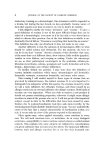
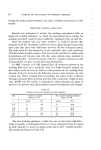
THE INTERACTION OF DETERGENTS AND THE HUMAN SKIN By adding the water-binding capacity of each of the amino acids in the proportions in which they are present in the water-soluble substances, the water-binding capacity of a mixture of these substances only would be 14%. Subsequently it was proven that the water-binding capacity of a mixture of amino acids in the proportions in which they are present in the skin, binds more water than would be expected from the sum of their in- dividual water-binding capacities. This mixture would produce a water- binding capacity of the water soluble substances of 105%. Addition of the other known substances increases the water-binding capacity of a mixture of all known water soluble substances to approx. 265%. This may be due to the presence of strongly hygroscopic substances, such as sodium pyrroli- done carboxylate and lactate. In fact, however, the water-binding capacity of extracts of scales scraped from normal skin is 310%. From these results it is clear that the amino acids have only a limited importance for the water-binding capacity of the water soluble substances of the horny layer. The other known substances also have hygroscopic properties and possibly the unknown rest (12) contributes to the water- binding capacity of the water soluble substances too. In another experiment, the amount of amino acids that could be extracted from scales was compared with the loss of water-binding capacity after extraction. Good correlation was found here, both when scales were extracted before their water-binding capacity was determined, and when the living skin was extracted and the water-binding capacity of subsequent scrapings of the stratum corneum was established (Table ¾I). Table VI Ratio between the extracted quantity of araino acids and the decrease of water-binding capacity of skin scrapings Duration of extraction 2• rain a. b. 15 min a. b. 90 rain a. b. 18 hr. a. b. Araount of amino-N •o of dry weight 0.90 1.08 1.41 1.44 1.63 1.73 1.73 1.77 Decrease in water-binding capacity ( % dry weight) 40.5 45.2 53.9 53.4 59.3 60.3 59.1 59.5 From these results it is clear that the loss of amino acids may be a parameter for the loss of water-binding capacity of the stratum corneum,

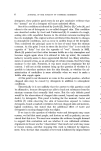
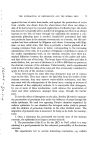
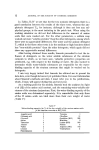
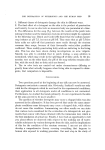
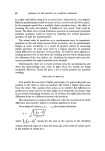
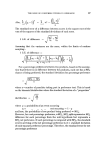
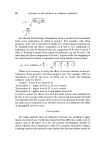
14 JOURNAL OF THE SOCIETY OF COSMETIC CHEMISTS though the amino-acids themselves are only of limited importance in this respect. IMPROVED WASHING SIMULATOR Smeenk was prompted to resume the washing experiments with an improved washing simulator, in which the mechanical forces during the washing procedure could be more uniformly regulated (Figs. la and lb). Since the method was now more sensitive, it could be proven that solutions of all five detergents washed out more amino nitrogen than water alone, and that there were differences between the five detergents tested. The same holds for the estimation of the materials that react positively with the Folin-Ciocalteu reagent. This reacts both with the free amino acids tryptophane and tyrosine, and with the same radicals when included in protein molecules. About the nature of the F.C. positive substances in the washing fluid I can give you the following information: In 1966, Vermeer et al (16) claimed that all substances present in the washing fluid that react positively with the Folin-Ciocalteu reagent are free amino acids, because he failed to find proteins in the washing fluid. Smeenk, however, proved in the following manner that proteins are also washed out. When washing fluid (containing the amino acids) is filtered through a pressure filter arresting proteins with a molecular weight of more than 10,000 and the residue is hydrolysed, amino-nitrogen can again be proved to be present with the [•-naphtho-quinone 4-sulphonic acid reagent. Table VII Elution results with modified washing simulator pH Amino N. (T/mil) F.C. positive material (¾/mil) mean (n---- 12) mean (n-• 12) -- water 2.7 water 20.1 T 3 34.2 5.7 7.8 5.8 T 3 4.9 T• 5.8 T 1 6.1 T 5 47.6 T 1 47.8 9.5 T O 6.8 T O 55.2 10.2 T 6 7.1 T 6 61.5 The new washing simulator--unlike the one we had used originally-- made it possible to distinguish between various detergents both in respect to their capacity to wash out amino acids and to elute "soluble proteins". The results are shown in Table VII.
Purchased for the exclusive use of nofirst nolast (unknown)
From: SCC Media Library & Resource Center (library.scconline.org)