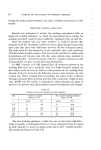
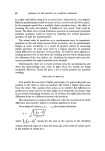
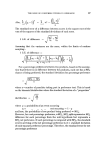
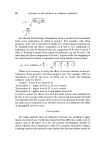
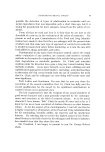
THE INTERACTION OF DETERGENTS AND THE HUMAN SKIN 17 for the extension of the lesions. It appeared that a sequence could be given that was based on statistically significant differences {Table IX). The various clinical symptoms caused by the immersions are shown in Figs. 2-4. Some subjects showed a typical scaling of the finger webs, others a diffuse redness of the whole arm (Fig. 2) sharply demarcated by the margin of immersion. In some cases we saw a redness sharply limited to the flexure of the elbow (Fig. $), in others a typical craquel[ appeared (Fig. 4). The last symptom was typical for T 8. In 15 cases we were able to study the pathology. In several cases we found a more or less marked, predominantly lymphocytic infiltration of the corium {Figs. 5a and 5b). Only two cases showed marked parakeratosis, and the inflammation was not pronounced. It is hardly possible to evaluate the condition of the stratum corneum histopathologically in either paraffin or in cryostat slides. In a few cases we saw a swelling of the cells of the stratum granulosum, without being able to draw conclusions from this obser- vation. Summarizing the results of the immersion test and our earlier results, with reference only to the results for those detergents included in all tests, gives the following picture (Tables X and XI). Table X Comparison of the result of various tests for a number of detergents Immersion Permeation Extraction of test Freeing of Patch (surface SH-groups test F.C.- test involved) ! amino positive I acids material T1 10 26 7.15 6.1 47.8 0.38 T3 2 0 3.66 4.9 34.2 0.02 T 5 30 9 5.58 5.8 47.6 0.56 T 6 0 2 34.95 7.1 61.5 1.30 To 50 17 8.09 6.8 55.2 1.00 Mr. de Jonge, statistician of the Leiden Medical Faculty, advised us to evaluate our data by tabulating the rank orders, giving the following result:

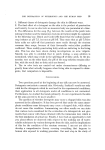
18 JOURNAL OF THE SOCIETY OF COSMETIC CHEMISTS Table XI Rank orders of the detergents in the various tests a b c d e __ Immersion Extraction of test Freeing of Permeation Patch (surface SH-groups test F.C.- test involved) amino positive acids material __ T• 3 5 3 3 3 2 T3 1.5 1 I I 1 1 T• 4 3 2 2 2 3 T 6 1.5 2 5 5 5 5 T o 5 4 4 4 4 4 From Tables X and XI it is apparent that none of the other tests give results that agree completely with those of the immersion test. Without any doubt there are two detergents that are least irritating in the immersion tests: T3, a nonionic condensate of isooctylphenol with 8-9 moles ethylene oxide, and T6, a pure fatty acid soap. Their agreement in the immersion test is as marked as their divergence in all the other tests. T 3 is not reactive in any of the other tests. T6, on the contrary, was between the two worst offenders in the patch test, it was top scorer in the permeation test, it hardly freed any sulphyhydryl groups, and ranked highest in extracting F.C.-positive material and amino acids. DISCUSSION After having stated so l nany hard facts, I cannot resist the temptation to speculate on their meaning. Since many subjects showed a true in- flammation in the immersion test, it is obvious that the toxic properties of the detergent for the living epidermis are important in determining the final effect of detergents under our experimental conditions. I agree com- pletely with Bettley (3) that the effect of a detergent on skin is caused by two important parameters: penetration through the barrier and toxicity for the living epidermis and cutis. When a detergent penetrates only a little, but is very toxic to living cells, the final effect surpasses that of a non-toxic detergent that penetrates easily. The discrepancies between the various tests might be attributed to the following fact s:
Purchased for the exclusive use of nofirst nolast (unknown)
From: SCC Media Library & Resource Center (library.scconline.org)