40 JOURNAL OF THE SOCIETY OF COSMETIC CHEMISTS new toilet soap may be shown to be much milder to the skin than a control soap in objective, laboratory tests. This does not mean that a consumer will consider it milder when she compares these two soaps in use, since mildness to the consumer is not the same thing as mildness in laboratory test terms. Therefore, it is necessary to be extremely careful to bear this in mind when using consumers' assessments. TESTING "FINAL" PRODUCTS All the above testing has been "introvertive". Once an optimum product has been selected an "extrovertive" test is necessary, to see whether the product is satisfactory by comparison with other things which are available to achieve the same consumer benefit. If the product is entirely revolutionary and there is nothing with which to compare it, further testing can be carried out to see what its main advantages and disadvantages are from the consumer's view point. Beyond that, for attitude surveys, concept testing, etc., market research testing is necessary and that is outside the scope of this paper. PANEL SELECTION Once the objectives of the test have been clearly defined, it is possible to consider what kind of people should be included in consumer tests and how they can best be used. For consumer studies designed to guide research it is not necessary to have a panel which is representative of the population in social status it is much more useful to have an intelligent, literate and articulate panel. Selection of panelists for a particular test should be based on character- istics relevant to that test. These might include age group, hair type, "usual" products used on the hair, etc., for a hair product test no dentures, usual toothpaste, frequency of tooth cleaning, etc., for a dental product test and so on. It is useful to have a large panel available, from which smaller panels can be drawn for particular tests. From background data for the total panel, of personal characteristics, product usage, etc., a suitable panel for any one test can be selected, providing the original panel is large enough. This has the advantage of saving the time and money necessary to recruit a fresh panel for every test. It does mean that panelists become used to taking part in tests and are no longer typical consumers. However, even a

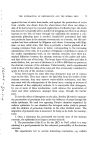
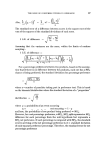
THE ROLE OF CONSUMER STUDIES IN RESEARCH 41 freshly recruited panel is somewhat atypical by virtue of their willingness to co-operate. Also, experience of verbalising thoughts and feelings about test products can be very useful in research guidance testing and on the whole, providing panelists are not over-worked to the extent of rarely having to buy products because test ones are supplied all the time, such experience is an advantage. The size of a panel depends on the object and design of the test. For example, if two products were to be tested in a paired comparison test and the product development chemist felt that a 10% net preference for one of them would be important and meaningful, then a panel size can be calculated so that such a difference would be significant at a level of, say, 1 in 20. Difference in net percentage preference Standard error of net percentage preference The standard error of net percentage preference -- where n: panel size .'. In this example 10 1.9t3 , • lOO 1.913 100 (See section below v/•- on Analysis of results) n 384 i.e. a panel size in excess of :384 is necessary to meet these requirements. PRESENTATION OF PRODUCTS As soon as panelists' opinions are sought, the visual presentation of the product becomes very important. No one is going to have much confidence in a positively unpleasant looking product and/or container. On the other hand, since final pack, perfume, colour etc., will probably be decided later by the marketing department it is important that these aspects of the product do not have undue influence at this stage of testing. Normally, when one uses a purchased product, one's expectations for that product are conditioned by the pack, the name, the price and the brand image and advertising claims. With a test product the appearance of the product and pack are the only prior indication to the consumer of "what to expect". Therefore care in choosing the visual aspects of the
Purchased for the exclusive use of nofirst nolast (unknown)
From: SCC Media Library & Resource Center (library.scconline.org)