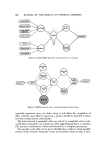
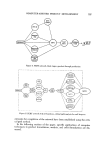
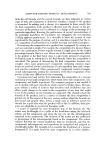
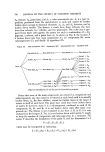
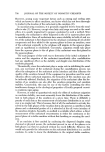
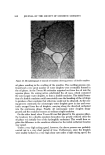
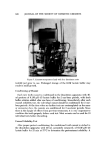
790 JOURNAL OF THE SOCIETY OF COSMETIC CHEMISTS Aa, thinner Aa, paint base and A4, a color concentrate mix. A• is a pure in- gredient, purchased from the manufacturer as such and cannot be further broken down (except to chemical elements). A•, As, and A4, however, can be broken down further. The thinner is made from three solvents the base from four solvents, two vehicles, and two plasticizers. The color mix is pre- pared from three color pastes the pastes are each a combination of a dry pigment, a solvent, and a paint base As. As shown in Fig. 6, the lacquer X is broken down into four main components A's, six components B's, seven subcomponents C's, and finally 12 ingredient D's. Product (X) Moin Components (A's) Components (B's) Subcomponents (C's) Ingredients (D's) Flow odditive, A t --Flow odditive, B t • Flow odditive, C t • Flow odditive, D t •........•4DDD?.DSDI,I,II,III,II,SolventVehicle•Solvent./-•-//•..,/•Vehicle Thinner, A?. Thinner, B?. Thinner, C?. -•....._..•- 5 Point, X 6 Point Bose, AS •Point Bose, B$ Point Bose, / ••_•.Plasticizer I, D? • '• Pløsticizer II' De ß Solvent IV, C4 Solvent IV, D 9 B4•Pigment I, C 5. PigmentDiOI•II,Pigmenl • •Color Poste I, BS"•/"/-•Pigment II, C 6 Color Mix, A 4 •Color Poste II, •"Color Poste III, B6r Pigmen t III, C? Pigment III, Dig Figure 6. Breakdown of nafi lacquer for formulation program Notice that some of the main components are retained as components and subcomponents any item must be re-entered at each level until it is actually broken down. A•, the flow additive, cannot be broken down at all, hence it occurs as itself at each level. The paint base could have been broken down at matrix P however, since it is a subcomponent contained in each of the components, B4, Bs, and B6, it is not broken down until after those com- ponents are. The thinner is not contained in any item A, B, or C it is only contained in the lacquer X. Yet, it is not broken down untfi matrix S, simply to keep the number of components and subcomponents to a minimum. The matrix P describes the breakdown of the paint X, and has dimensions i x 4. P = (P•,• P•,2 P•,a P1,4) which may be interpreted as indicating: X = r•,, (A•) + r•,• (•) + r•,• (•) + r•,• (•)

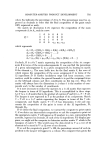
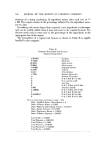
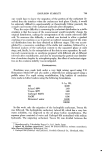
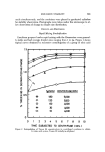
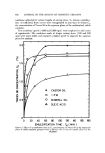
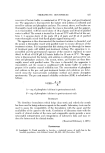
COMPUTER-ASSISTED PRODUCT DEVELOPMENT 791 where P•,i indicates the percentage of Ai in X. The percentages must be ex- pressed as decimals in order that the final composition of the paint totals 100% expressed as unity. The matrix Q, dimensions 4 x 6, expresses the composition of the main components A• to A•, each in a row: which represents: 1 0 0 0 0 0 0 1 0 0 0 0 0 0 1 0 0 0 0 0 0 q4,4 q4,5 q4,6 A• = B• + [O(B• 4- O(Ba) + O(B4) + O(Bs) + O(B6)] A2 = B2 4- [O(B•) 4- O(Ba) + .... ] Aa = Ba + [O(B•) + 0 .... ] A4 -- q4.4 (B4) 4- q4,a (Ba) 4- q4,• (B6) 4- [O(B•) 4. 0...] S,_'milarly, R is a 6 x 7 matrix expressing the composition of the six compo- nents B in terms of the seven subeomponents C one ean find the percentage of a given subcomponent Cj in a given component B• by loeating in matrix R the element r•,•. The same holds true for the final matrix S, the rows of which express the composition of the seven components C in terms of the 12 ingredients D. If further breakdown steps had been necessary, more matrices could be written the general formula is to put the compound items on the left-hand column and their constituents on the top row. Thus, the matrix will always have the dimensions i x ] where i is the number of com- pounds and i is the number of eonstitnents. It is now necessary to reduce the matrices to a i x 12 matrix that expresses the laequer in terms of 12 ingredients. This is accomplished in three steps. Let T be a I x 6 matrix that is the product of matrices P and Q, i.e., T = P x Q. The lacquer is now expressed in T as the product of six components. Matrix U = T x R is a i x 7 matrix expressing the lacquer in terms of the 7 sub- components, and finally matrix V = U x S has dimensions i x 12 and rep- resents the composition of the paint in terms of the 12 ingredients, D• through D•. If we desire the final composition, we instruct the computer to print matrix V if we desire any intermediate composition we ask the computer to print out the appropriate matrix. V will appear as 12 numbers in .a row, representing the amounts, expressed as decimals, of each of the 12 ingredients. For display pur- poses, we might ask the computer to determine another matrix V • which is the transpose of matrix V. This would cause the data stored in V as a row of 12 elements to be stored in V • as 12 rows of one element. If we ask the computer to print V • x 100, the percentage amount of each in- gredient in the lacquer will appear in a column. The computer then prints the
Purchased for the exclusive use of nofirst nolast (unknown)
From: SCC Media Library & Resource Center (library.scconline.org)