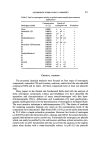
318 JOURNAL OF THE SOCIETY OF COSMETIC CHEMISTS when administered subcutaneously in oil solution, was shown to be approximately equal to that of oestrone (Huis in 't Veld, unpublished data). The three samples for promotion of female breast development (samples 40, 41 and 42) lacked detectable oestrogenic activity. Of three samples for depression of abnormal growth of hair in the female (samples 43, 44 and 45), two (samples 43, 44) 'Hairstop' cream, both of the same brand, showed considerable oestrogenic activity, which has been confirmed by the results of chemical analysis. ACKNOWLEDGMENT This investigation has been sponsored by Drs P. H. Berben, Head Inspector for Control of Food and Commodities to the Ministry of Public Health of the Netherlands. REFERENCES (1) (2) (3) (4) (5) (6) (7) (8) (9) (10) (11) (12) (13) (14) (15) (16) Zondek, B. Klin. Wschr. 8 2229 (1929). Eller, J. J. and Eller, W. D. Arch. Derm. Syph. 59 449 (1949). U.S. Patent 2, 845, 381 Organon (1954). Scherm, A. J. Soc. Cosmet. Chem. 17 727 (1966). Ebling, F. J. J. Soc. Cosmet. Chem. 25, 381 (1974). U.S. Patent 2, 791,543, May 1957. U.S. Patent 2, 988, 486 (Helena Rubenstein). McBryde, C. M. J. Am. Med. Ass. 112 1045 (1939). Everse, J. W. R. In: Fette Seifen, Anstrichm. 75 203 (1973). Allen, E. and Doisy, E. A. J. Am. Med. Ass. 81 819 (1923). Lisboa, B. P. and Diczfalusy, E. Acta Endocrin. 40 60 (1962). Adlercreutz, H. and Luukkainen, T. Gas phase chromatographic methods for estrogens in biological fluids. in: Gas Phase Chromatography of Steroids, by K. B. Eik-Nes and G. C. Horning Springer Verlag (1968). Wu, C. H. and Lundy, L. E. Steroids 18 91 (1971). Smith, W. G. and MacNeill, E. E. An. Chem. 44 1084 (1972). Jones, L. N., Seidman, M. and Soutworth, B.C. J. Pharm. ScL 57 646 (1968). Schuller, P. L. J. Chrom. 31 237 (1967).

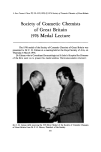
J. Soc. Cosmet. Chem. 27 319-327 (1976) ¸ 1976 Society ooe Cosmetic Chemists ooeGreat Britain Sex differences in odour perception E. P. KOSTER and H. S. KOELEGA* Presented at the Symposium on 'A Sensory Approach to Cosmetic Science', organized by the Society of Cosmetic Chemists of Great Britain at Manchester on 8 April 1975. Synopsis--Men and women seem to differ in their SENSITIVITY and VARIABILITY to, and appreciation of, odorous substances. The differences in sensitivity seem to be particularly marked for substances which have a biological significance because they act in the animal world as SEXUAL ATTRACTANTS. The differences in sensitivity to these substances are probably due to changes in sensitivity which occur in the female population around puberty. Older findings about the variations of the olfactory sensitivity of women during the course of the MENSTRUAL CYCLE also sug- gested a link between OLFACTORY SENSITIVITY and HORMONE action, but it is not yet completely clear in which way this interaction takes place. INTRODUCTION Odours and the sense of smell play an important part in the sexual attraction and the sexual behaviour of many animal species. Whether olfactory communication is also an important factor in the sexual behaviour of man is still a completely open question. In recent years, a large amount of money and effort has been put into the search for a possible human sex attractant or 'pheromone', but little has come out of this so far. The research on sex differences in odour perception reported here has different and much older origins and is only indirectly relevant to the question of the existence of a human pheromone. The question asked here is simply whether men and women differ in their perception of odours and if so, what possible mechan- isms might be responsible for the differences in odour perception found. Whether or not such differences may also have a functional meaning in human sexual behaviour cannot be decided on the basis of these experiments alone. * Psychology Department, University of Utrecht, Utrecht, The Netherlands. 319
Purchased for the exclusive use of nofirst nolast (unknown)
From: SCC Media Library & Resource Center (library.scconline.org)