302 JOURNAL OF THE SOCIETY OF COSMETIC CHEMISTS in the rabbit eye. In the human, the production of copious amounts of watery tears after an irritant enters the eye, in conjunction with fast blinking helps to dilute and remove the irritant from the eye. The rabbit tear reflex is not as effective as that of the human, and although watery secretions from the tear and Harder's gland, assisted by the action of the eyelids and nictitating membrane, promote the removal of the irritant from the eye, this is neither as rapid nor as efficient as in the human. There is, therefore, some foundation for the suggestion that irrigation of the rabbit eye after instillation of a test material, might well considerably reduce its potential irritancy, and more nearly approach the human situation. The present rabbit eye irritation test most widely adopted is that recommended in the U.S.A. Code of Federal Regulations (1). This test has no provision for irrigation of the eye within 24 h of instillation of the test material. Earlier test methods (2) recommended irrigation of the eye with 20 mls of water 2 and 4 s after instillation of the test material, and in 1972 a test (3) was proposed whereby the eyes of three rabbits were irrigated with 300 mls of water 5 min after instilla- tion of the test material. The difference between 2 s and 5 min clearly indicates a variance of opinion about the length of time that should elapse before irrigation is initiated. Similarly the difference between 20 and 300 mls shows that opinions differ on the amount of water that should be used for this purpose. It was the objective of the research reported here to help clarify those differences of opinion. An attempt was made to find the maximum period of time a particular test material could remain in the eye without causing damage to the cornea, although it is accepted that this time may vary with different materials. Each test was also replicated using quantities of 20 ml and 100 ml of water for irrigation. A well documented anionic sur- factant--sodium lauryl sulphate--was used for these initial investigations. EXPERIMENTAL PROCEDURE New Zealand White strain rabbits in the weight range 2.5-3.5 kg were used in all experiments. The animals were caged separately in metal cages with wire mesh floors and had free access to a pelleted diet (Coney Pellets, 351.B.O.C.M. Silcock) and water at all times. Before experimentation the eyes of all animals were examined and absence of corneal damage confirmed using a 2•o aqueous solution of sodium fluorescein. A 10•o w/v aqueous solution of sodium lauryl sulphate (B.D.H. Limited) was instilled into one eye of each animal by gently pulling the lower lid away from the eyeball to form a cup into which 0.1 ml of the test solution was dropped. The other eye remained untreated and served as a control.

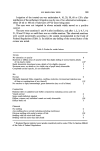
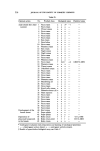
EYE IRRITATION TESTS 303 Irrigation of the treated eye was undertaken 4, 10, 20, 30, 60 or 120 s after instillation of'the surfactant. Irrigation was by one of' two alternative techniques-- either 20 ml or 100 ml of lukewarm (37øC) water being used. The eyes were not irrigated in eleven animals which served as a positive control. The eyes were examined 1 and 4 h after instillation, and after 1, 2, 3, 4, 7, 14, 21, 28 and 35 days or until there was no visible reaction. The observed reactions were scored numerically according to the system recommended in the Code of' Federal Regulations (Table 1). In addition any dulling of the normal lustre of' the cornea was noted. Table I. Grades for ocular lesions Cornea No ulceration or opacity 0 Scattered or diffuse areas of opacity (other than slight dulling of normal lustre), details of iris clearly visible (1)* Easily discernible translucent areas, details of iris slightly obscured 2 Nacreous areas, no details or iris visible, size of pupil barely discernible 3 Completed corneal opacity, iris not discernible 4 Iris Normal 0 Markedly deepened folds, congestion, swelling, moderate circumcorneal injection (any of these or combinations of any thereof) (1)* No reaction to light, haemorrhage, gross destruction (any or all of these) 2 Conjunctivae Redness (refers to palpebral and bulbar conjunctivae excluding cornea and iris) Vessels normal 0 Some vessels definitely injected 1 Diffuse, crimson red, individual vessels not easily discernible (2)* Diffuse beefy red 3 Chemosis No swelling Any swelling above normal (including nictating membrane) Obvious swelling with partial eversion of lids Swelling with lids about half closed Swelling with lids more than half closed 0 1 * Bracketed figures indicate lowest grades considered positive under Title 16, Section 1500.42 of the Code of Federal Regulations.
Purchased for the exclusive use of nofirst nolast (unknown)
From: SCC Media Library & Resource Center (library.scconline.org)