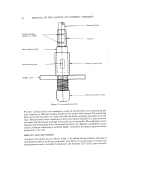
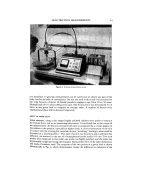
j. Soc. Cosmet., Chem., 28, 37-51 (February 1977) In vivo skin friction measurements A. F. EL-SHIMI Past address.' Lever Brothers Company, Edgewater, N.J. 07020. Present address.' The Clorox Co., Pleasanton, CA 94566. Received March 8, ] 976 Synopsis In the area of SKIN CARE BENEFITS, consumers tend to rate SMOOTHNESS as an important attribute in their overall judgment. This paper describes a TECHNIQUE to measure the FRICTIONAL FORCE result- ing from rotating a probe on the skin surface as a function of normal load and speed of rotation. A brief back- ground review on FRICTION THEORY is presented. A number of factors were investigated. The high- lights of our findings are as follows. 1. The use of a highly polished stainless steel disc or hemispherical probe produces "wrinkling" or "twisting" of the skin surface during rotation, especially at higher normal loads. The use of an intentionally toughened probe produces friction data which satisfy the simple laws of friction. 2. The force of friction is not a linear function of the normal load as suggested by Amonton's Law, F where F is the force of friction, L is the normal load and/z is a constant called COEFFICIENT OF FRIC- TION. A different expression, F = KL n, was found to describe our results fairly well. K and n are constants. The deviation from Amonton's law is attributed to the elastic behavior of skin. 3. Dry skin produces low friction values. Much higher values are obtained on hydrated skin. A rationale for this behavior is proposed. 4. To produce immediate and significant changes in the friction properties of skin, sufficient quantifies of beneficial agents have to be deposited on the surface. Talcum powder and silicol•e oil reduce the friction force. With silicone oils, fluid or hydrodynamic lubrication is involved. INTRODUCTION This paper describes a technique which assesses quantitatively the frictional properties of skin in vivo and the effects of product treatment on such properties. Cosmetic products, which are aimed at conferring smoothness to the skin, are thought to perform their function by depositing sufficient amounts of desirable ingredients lead- ing to a perceptible change in the adhesion and friction properties of skin. The percep- '//:!)j•ii•ii :.111:11:. tion of such changes is usually subjective, and a fair assessment may not be possible be- cause of the slmulta a tlon of other attributes Obwousl a method to assess skl• frJctJon ro ertJ u not onl offers a etter wa of eneratm as]c • ' ' p p 'esq antitatively y b y g ' gb ' information on the condition of untreated skin, but it could also provide valuable •?:-• ::: guidelines in the course of developing new products aimed at producing a desirable •:. tactile feel. The technique to be described in this paper features a cylindrical metal probe, which contacts the skin surface under a given normal load. The probe can rotate within a wide

38 JOURNAL OF THE SOCIETY OF COSMETIC CHEMISTS range of speeds, and the resistance to the rotating motion can be measured directly via a torque measuring device. Specifically, we have set out to examine the applicability of the general laws of friction, derived mainly for metallic materials, to human skin as a substrate. A basic premise of modern friction theories relates to the distinction between the real area of contact between sliding materials and the geometrical area. The real area of contact is much smaller than the geometrical area due to surface rough- hess. This point has been examined in some detail using a rough and highly polished probe made from the same material. Also, the effect of Lubricants (talcum powder and silicone oil) has been examined and an attempt was made to elucidate the lubrication mechanism of these materials. THEORETICAL BACKGROUND The coefficient of friction/a between two solids is defined as F/L, where F denotes the frictional force and L is the load or force normal to the surfaces. When/a is constant, • = F/L is known as Amonton's law and expresses two important observations: (1) the friction force is proportional to the normal force and (2) the friction force is inde- pendent of the apparent area of contact. There is abundant evidence that even microscopically smooth surfaces are irregular on a molecular scale of distance. As a result of irregularities, two surfaces brought into contact will touch only in isolated regions. The true area of contact is then much less than the apparent area it can be estimated, for example, from a measurement of the electrical conductivity between the two solids. it is also known that high local tempera- tures can develop during rubbing, as well as high local pressures, which can lead to plucking out of portions of the softer material by the harder one (1-4). As the two surfaces are brought together, the pressure is large at the initial few points of contact, and deformation immediately occurs to allow more and more contact to develop. This plastic flow continues until there is a total area of contact such that the local pressure has fallen to a characteristic yield pressure Pm of the softer material. Thus, around each region of contact, there is a plastic zone, with further elastic de- formation outside (2). The actual contact area is then determined by the yield pressure, so that A = L/Pro (1) In a typical measurement of friction, a slider is pressed against a stationary block and the force F required to move the slider is measured. This force, in general, will consist of 2 terms. First, there is the force F required to shear the junctions at the pointõ of actual contact. This is given by F = ASm (2) where Sm is the shear strength per unit area. The second term, F•, is the force required to displace the softer material from the front of the harder one. With metals of dif- ferent hardness, the harder one, if used as a slider, will plow a track in the softer, and F• is, therefore, a work term associated with this plowing action. In a general way, one ex- pects F• to be proportional to the width of the slider, i.e. F• = K A• (3)
Purchased for the exclusive use of nofirst nolast (unknown)
From: SCC Media Library & Resource Center (library.scconline.org)