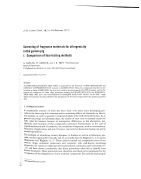
j. Soc. Cosmet. Chem., 28, 79-82 (February 1977) Solubility of cholesterol in isopropyl myristate R. J. HARWOOD and E. M. COHEN, Merck Sharp and Dohme Research Laboratories, West Point, PA 19486 Received March 8, 1976 Synopsis This report describes how the SOLUBILITY of CHOLESTEROL in ISOPROPYL MYRISTATE was de- termined by optical rotation. The procedure described is particularly attractive as compared to other •nalytical procedures used to determine cholesterol content quantitatively with respect to speed and sim- plicity of the measurement. The optical rotation procedure indicates that 5.26 per cent (w/w) cholesterol is '•:: soluble inisopropylmyristate. :. INTRODUCTION Cholesterol and its esters are common constituents of a number of pharmaceutical and cosmetic topical formulations (1-3). In the course of recent laboratory experiments, it was necessary to accurately determine the solubility of cholesterol in isopropyl rnyristate. This report describes how this was determined by optical rotation. In addition, the procedure described herein would appear to be applicable as a general approach to the assay of optically active compounds in lipid and semisolid ingredients of the type generally used for cosmetics, toiletties, and topical pharmaceuticals. 79

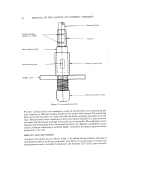
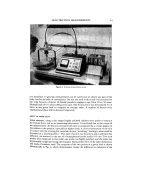
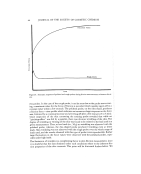
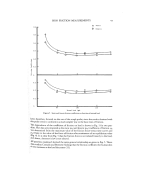
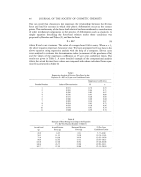
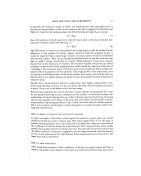
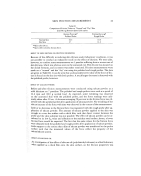
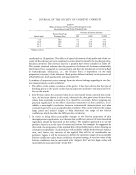
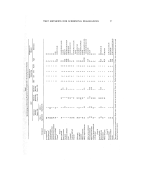
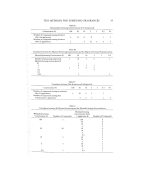
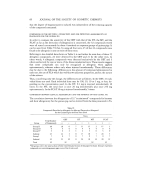
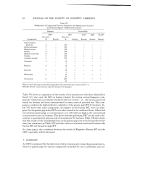
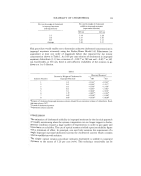
80 JOURNAL OF THE SOCIETY OF COSMETIC CHEMISTS EXPERIMENTAL Qualitative determination of solubility of cholesterol in isopropyl myristate: Cholesterol* and isopropyl myristate-I- were heated to 95-100øC. The mixtures were stirred until solu- tion was complete. The solutions were then cooled to room temperature (2 iøC) and observed for the presence or absence of crystals. Quantitative determination of solubility of cholesterol in isopropyl myristate.' Cholesterol and isopropyl myristate were mixed together and stored in covered beakers for at least 2 weeks. An aliquot of each solution (or an aliquot of the supernatant liquid) was with- drawn and diluted with an equivalent volume of anhydrous chloroform. Optical rota- tion measurements for the resulting solutions were made using the Perkin Elmer Model 141 Polarimeter½ equipped with a 5 cc capacity, 1 decimeter cell. RESULTS Qualitative measurement.' A series of solutions of cholesterol in isopropyl myristate were made in the concentrations as is shown in the chart that follows. •Solution (per cent by weight)-- A B C D E F G H I Cholesterol 9.8 8 6 5.5 5.25 5 4.5 4 2 Isopropyl myristate 90.2 92 94 94.5 94.75 95 95.5 96 98 At t = 0, all solutions, except A and B, which were a mass of crystals, were placed at 5øC. Two and one-half hours later, solutions C, D, E, and F formed crystals and solu- tions G, H, and I were devoid of crystals. The mixtures were then placed at room temperature (21øC). Eighteen hours later, while at room temperature (21øC), there were no crystals in .E, F, G, H, and I C and D remained as a slurry of crystals and A and B were almost a solid mass of crystals. Quantitative measurement.' A series of mixtures of cholesterol in isopropyl myristate was made. The system compositions ranged from 1.0 to 8.0 per cent by weight cholesterol. Table I indicates the observed rotations for all the samples made. A plot of the per cent composition versus observed rotation, at both 589 and 365 nm (as is shown in the chart that follows), over the concentration range of 1 through 5 per cent (by weight) choles- terol in isopropyl myristate was found to be linear. The rotations of the supernatants from solutions 6, 7, and 8 were used to calculate the cholesterol concentration in solu- tion by use of the calibration curve obtained from the rotation data obtained for solu-. tions 1 through 5 of Table I. *U.S.P. grade supplied by Amerchol, Edison, N.J. 08817. q-Armak, Chicago, I11. 60690. $Norwalk, Conn.
Purchased for the exclusive use of nofirst nolast (unknown)
From: SCC Media Library & Resource Center (library.scconline.org)