TEST METHODS FOR SCREENING FRAGRANCES 55 none" basis. This contrasts with another method still in use (11), where only one arbi- trarily fixed concentration is used, and its activity is evaluated subjectively according to the intensity of the lesions observed. Before the induction procedure (see below), we determined the skin irritation caused by a single application. For this purpose, we applied 0.025 ml of each undiluted com- pound and of its progressively diluted solutions to an area measuring 2 cm 2 previously marked with a circular stamp on the clipped flank skin of 6 to 8 animals per group. In each case, the liquid tested was applied uniformly with a pipette. After evaporation of the solvent, the application site was left uncovered. The reactions were read after 24 h using an "all or none" criterion, i.e., the dose-response curve was established by end- point determination. The minimal irritating concentration was defined as the lowest concentration causing mild erythema in at least 25 per cent of the animals of the group concerned, and the maximal nonirritant concentration as the highest concentration causing no macroscopically discernible reactions in any of the animals of the group. The highest concentration of a compound used in this local application test was de- termined by its solubility and skin irritating capacity. Most of the substances used could be applied undiluted. However, high concentrations causing strong reactions, e.g., ß swelling, necrosis, or ulceration, were not used for evaluation because the end-point determination was considered a more sensitive index of activity. The determination of the tolerance threshold on the guinea pig in the OET is mainly done for methodical reasons, in order to quantitatively realize an eventual sensitiza- tion, and besides it gives information on the concentration-dependent skin tolerance of -•: substances. Carrying over these results onto man is possible under restriction. Induction procedure.' On day 0 we applied 0.1 ml of each undiluted compound and of its progressively diluted solutions to an area measuring 8 cm z on the clipped flank skin of :'i:. 6 to 8 guinea pigs per concentration group, using 4 to 6 such groups for each corn- ' pound. The applications were repeated daily for 21 days, always using the same skin '?: site. The application site was left uncovered and the reactions were read 24 h after each application. The maximum nonirritant and the minimal irritating concentrations were :,:: determined by the same "all or none" criterion as described above. When necrotic or ulcerating reactions were provoked, the application site was changed. Generally speaking, the degree of the topically irritant effect after one single or after repeated application is characterized by the intensity of the skin reaction and by the :• magnitude of the minimal irritating concentration. For evaluation of the irritations, we applied the following scale: 0 = no skin reaction 0.5 = red spots 1 = confluent redness 2 = redness plus swelling 3 = redness, swelling, crusts 4 = necrotic skin alterations Challenge procedure.' To determine whether or not allergic contact dermatitis was in- duced, all the groups of guinea pigs previously treated for 21 days as described above, as well as 6 to 8 untreated controls for each compound, were tested on days 21 and 35 on the contralateral flank with the same compound at the minimal irritating concentra- tion and at some lower nonirritant concentrations. We used the minimal irritating

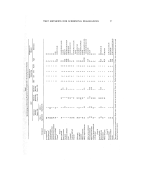
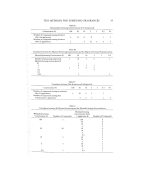
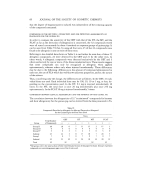
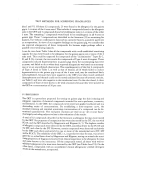
56 JOURNAL OF THE SOCIETY OF COSMETIC CHEMISTS concentration of each compound in order to confirm the biological activity determined after the first application and to exclude false results. These tests were performed by applying with a pipette 0.025 ml of each concentration to skin areas measuring 2 cm 2, the reactions being read after 24, 48 and/or 72 h. This procedure enabled us to de- termine the minimal sensitizing concentration necessary to induce contact hyper- sensitivity and the minimal eliciting concentration necessary to cause a positive reac- tion. A concentration was considered allergenic when at least 2 out of the 8 animals of the concentration group concerned showed positive reactions with nonirritant concentrations used for challenge, based on practical experience. The total dose of compound administered in the OET ranged from 2100 to 63 mg or less, depending on the concentrations used. Solvents, like water, ethanol and acetone, even when applied repeatedly, yielded no macroscopically detectable alteration on the treated skin. When other bases were ap- plied, like vaseline, diethyl phthalate or polyethylene glycol, additional controls for the vehicles were set in. DT (II).' A dose of 0.05 ml of a 0.1 per cent solution of the compound tested in isotonic saline was injected intradermally on day 0 and further doses of 0.1 ml each were injected on 9 alternate days (total dose = 0.95 rag). The treated animals and untreated controls were challenged intradermally with 0.05 ml of a 0.1 per cent solu- tion on days 35 and 49. The evaluation criterion was the mean diameter of the papular reactions. MT (4, 5).' On day 0 the animals were injected intradermally with 0.1 ml ofa 5 per cent solution of the compound tested, with 0.1 ml of a 5 per cent emulsion of the same com- pound in Freund's complete adjuvant (FCA) and with 0.1 ml ofFCA alone, each injec- tion being given twice. In addition, 250 mg of the compound dissolved in petrolatum at a concentration of 25 per cent, which always causes mild to moderate skin irritation under occlusion, was applied on day 8 to a clipped skin area of the neck and was kqpt under occlusive bandage for 2 days (total dose 20 mg intradermally plus 250 mg epicutaneously). On day 21 an occlusive patch test with the compound at a subirritant concentration in petrolatum was applied to the flank for 24 h. The reactions were read 24 and 48 h after removing the patch. FCAT.' Doses of 0.05 ml of the undiluted compound mixed with the same volume of FCA were injected intradermally into the neck on days 0, 2, 4, 7, and 9 (total dose 250 mg). The control animals were similarly treated with 5 x 0.05 ml ofFCA alone. All the animals were tested epicataneously on days 21 and 35 as described in the section above. III. RESULTS The results obtained by testing the 32 compounds by the 4 procedures described above are presented in Table I. The compounds are subdivided into 4 groups according to their allergenicity in the 4 animal tests, namely: Group I, not sensitizing in any test Group II, sensitizing in the OET and in one or more of the other tests Group III, sensitizing exclusively in the OET Group IV, not sensitizing in the OET but sensitiz- ing in one or more of the other tests.
Purchased for the exclusive use of nofirst nolast (unknown)
From: SCC Media Library & Resource Center (library.scconline.org)