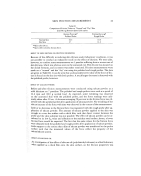
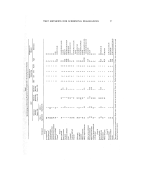
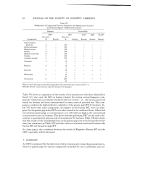
TEST METHODS FOR SCREENING FRAGRANCES 57 - m I I I I i i I +++ I+1++1+1 I+1+1 I+111 -+- --t- --t- --t-- I I

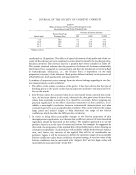
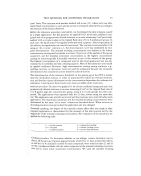
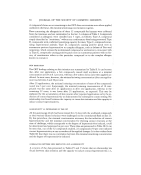
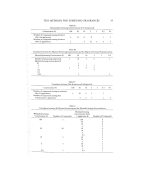
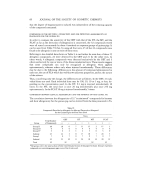
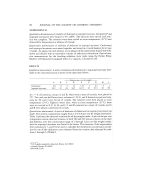
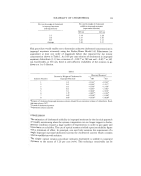
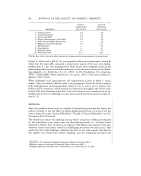
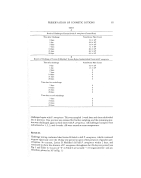
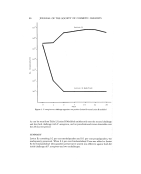
58 JOURNAL OF THE SOCIETY OF COSMETIC CHEMISTS A compound shown as not sensitizing in the OET does not sensitize even when applied undiluted otherwise, the minimal sensitizing concentration is given. Data concerning the allergenicity of these 32 compounds for humans were collected from the literature and are summarized in the last 2 columns of Table I. Compounds considered as allergenic were classified into 5 types, as follows: Type A, compound simply described as "sensitizers," without any confirmatory data being presented Type B, compounds with confirmed sensitizing capacity for man Type C, compounds sensi- tizing experimental animals Type D, compounds causing positive patch tests in eczematous patients hypersensitive to complex allergens, such as balsam of Peru and turpentine, which contain the incriminated compound or are known to cross-react with it Type E, compounds causing positive patch tests in eczematous patients with no his- tory of sensitization either to this particular compound or to the complex allergen known to contain it. SKIN IRRITATION The OET findings relating to skin irritation are summarized in Table II. It can be seen that, after one application, a few compounds caused mild erythema at a minimal concentration as low as 0.1 per cent, whereas a few others did so only when applied un- diluted. In most cases, however, the minimal irritating concentration (after one applica- tion) was between 3 and 30 per cent. After 21 applications, the minimal irritating concentration of most of the compounds tested was 3 per cent. Surprisingly, the minimal irritating concentration of 10 com- pounds was the same after 21 applications as after one application, whereas in the remaining 22 cases, it was lower after 21 applications, as expected. This may be explained by the accumulation of skin injuries after repeated applications or by the in- duction of contact hypersensitivity as demonstrated by subsequent contact testing. No relationship was found between the capacity to cause skin irritation and the capa, city to induce contact hypersensitivity. ALLERGENICITY AS DETERMINED BY THE OET All the guinea pigs which had been treated for 21 days with the undiluted compounds or their various diluted solutions were challenged on the contralateral flank on day 21. By this procedure, the minimal concentration necessary for the induction of contact hypersensitivity and the minimal concentration for eliciting contact reactions at the time of challenge, which corresponds to the degree of hypersensitivity induced, could be determined and expressed iWper cent. These data are presented in Table III. It can be seen that, out of the 32 compounds studied, 22 compounds (70 per cent) induced contact hypersensitivity at one or another of the applied dosages. It is also evident from Table III that there was no correlation between the minimal sensitizing concentration and the degree of hypersensitivity induced. CORKELATION BETWEEN SKIN IRRITATION AND ALLERGENICITY A scrutiny of the data presented in Tables IV and V shows that no relationship was found between skin irritation and the capacity to induce contact hypersensitivity, i.e.,
Purchased for the exclusive use of nofirst nolast (unknown)
From: SCC Media Library & Resource Center (library.scconline.org)