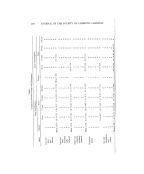
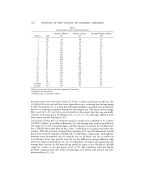
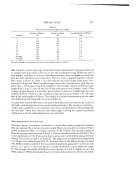
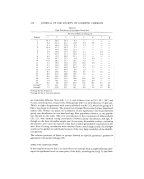
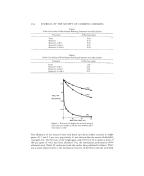
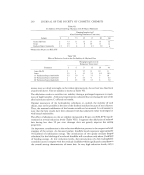
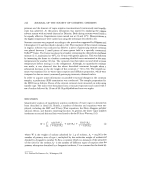
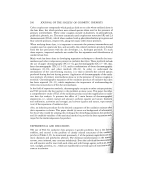
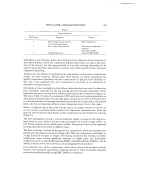
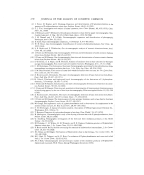
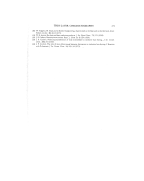
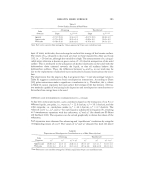
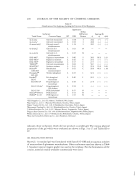
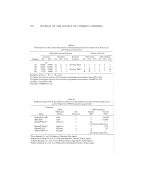
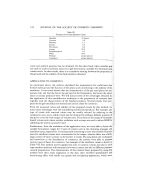
206 JOURNAL OF THE SOCIETY OF COSMETIC CHEMISTS Table II Agents That Induce Stinging Concentration Agent Per cent pH Vehicle Severity Benzene 1.0 7.5 Ethanol Phenol 1.0 5.9 Ethanol Salicylic acid 5.0 2.4 Ethanol Resorcinol 5.0 6.4 Water Phosphoric acid 1.0 2 1 Water Sodium carbonate 15.0 11.2 Water Trisodium phosphate 5.0 12.0 Water Propylene glycol a Neat 5.3 Propy[ene carbonate a Neat 8.05 Propylene glycol diacetate a Neat 3.8 Dimethylace tamid e Neat 7.8 Dimethylformamide Neat 10.2 Dlmethylsulfoxide Neat 14.0 Diethyltoluamide a (Deer) 50.0 8.8 Ethanol Dimethyl phthalate a 50.0 4.0 Ethanol 2-Ethyl- 1, 3-hexanediol a 50.0 10.5 Ethanol (Rutgers 612) Benzoyl peroxide lotion •' 5.0 9.9 Be nzo yl peroxide gel c 10.0 14.0 Crude coal tar a 5.0 10.0 Phosphoric acid 3.3 1.9 (1/3 mol) Hydrochloric acid a 1.2 1.3 (1/3 mol) -Sodium hydroxide 1.3 13.0 (1/3 mot) 2-e thoxyet hyl p-me thoxy- 2.0 7.4 cinnamate d Grease-free washable lotion base Polyoxyethylene laury[ ether gel D•methylformamide Water Water Water Ethanol Slight Slight Slight Slight Slight Moderate Moderate Moderate Moderate Moderate Moderate Moderate Moderate Moderate Moderate Moderate Moderate Moderate Severe Severe Severe Severe Severe aimmediate transient stinging as well'as delayed type. bBenoxyl 5 lotion, Stiefel Labs., Inc. ½Desquam-X 10 gel, Westwood Pharmaceuticals, Inc. dGiv-Tan F ©, Givaudan Corp. The stinging phenomenon-is peculiar to the face, particularly the nasolabial folds and cheeks, the latter being a little less sensitive. Our explanation for this localization relates to the high permeability of the nasolabial region (as determined by visible responses to vasoactive drugs), the high density of appendages (hair follicles and sweat glands), which can serve as penetration shunts into the dermis, and, not least, the elaborate sensory nerve network. In man, every veilus hair follicle is associated with specialized nerve endings these along with the abundant derreal nerve network on the face confer an exceptional sensitivity to touch and pain. Stinging seems to be a variant of pain and develops quickly after appropriate stimula- tion of sensory nerves. However, toxic and irritating chemicals, which can badly

STINGING CAPACITY OF APPLIED SUBSTANCES 207 damage skin, often lack the capacity to induce stinging. On the other hand, substances that are nonirritating may possess striking stinging capabilities. As a class, acids tend to cause strong stinging. The differences in stinging potentiality among acids are not dependent on pH, but are probably related to their diffusional characteristics, the more troublesome ones penetrating more rapidly. Likewise, strongly alkaline substances such as sodium carbonate, trisodium phosphate, and sodium hydroxide can induce marked stinging. Acids (below pH 2.0) and bases (above pH 11.0) probably excite nerve endings directly. The strong buffering capacity of the skin doubtlessly limits the damage from a single application. While there is generally no clear correlation between irritancy and stinging, their properties may parallel each other within a specific class of substances, viz., metallic antiperspirants and c•-hydroxy acids. That excitation of nerve endings is central to the stinging phenomenon is suggested by a number of observations. The intensity increases with each additional application of non-irritating materials. Hypertonic solutions do not cause stinging, but can cause its revocation after a stinging episode. For example, stinging will reappear when a satu- rated solution of sodium chloride is applied after the stinging induced by ADP or lactic acid has abated. Moreover, inflamed skin is far more prone toward stinging, even when the horny layer barrier is intact as in freshly sunburned skin. Of course, in chemically damaged skin the nerve endings are not only more excitable but increased permeability enables increased diffusion. Stinging is perceived with 5 per cent ADP and 5 per cent lactic acid only when the sub- ject is sweating the intensity of the sensation is proportional to the amount and dura- tion of sweating. The longer a person sweats, the easier and faster stinging can be elicited. In all probability, the principal role of sweating is to hydrate the skin, thus greatly increasing its permeability. It is well known that the flux of substances increases in moistened '3kin. Another is the associated increase in skin temperature, heightening the sensitivity of nerve endings. We found that stinging could be induced even at room temperature if a wet compress was applied to the cheek for 20 to 30 min before ex- posure to 5 per cent lactic acid. However, the intensity and duration of the stinging was always much less than with induced sweating. Then, too, diffusion through sweat-filled ducts promotes transport to derreal nerves. The sharp decrease in stinging on cheeks rendered anhidrotic by aluminum chloride is further evidence of the role of hydration. Although, we have emphasized preselection of subjects, it is perfectly clear that sting- ing can be elicited in anyone by assuring access to nerve endings. Persons who do not sting, when lactic acid is applied to the normal cheek, will do so if the horny layer bar- rier is removed, partially or completely by scotch-tape stripping. Apparently, the pecu- liarity of "stingers" is more permeable skin. As a practical point, persons who are not stinging-prone may experience appreciable stinging if the skin has become inflamed through chemical or physical insults for example, sunburned skin is considerably more reactive. We have preliminary evidence that the facial skin of stingers is more perme- able. We have already mentioned that DMSO produced more intense whealing and erythema in stingers. It is our impression that stingers have more permeable skin everywhere.
Purchased for the exclusive use of nofirst nolast (unknown)
From: SCC Media Library & Resource Center (library.scconline.org)