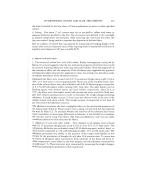
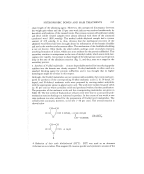
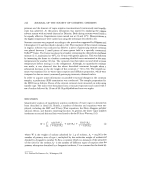
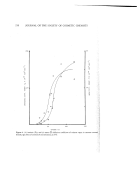
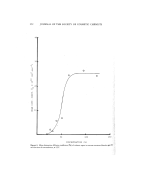
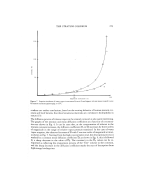
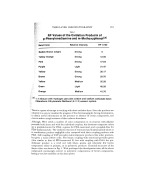
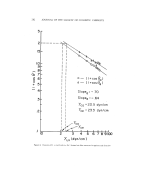
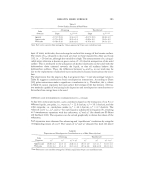
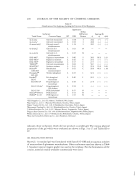
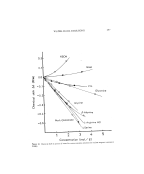
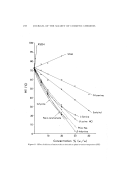
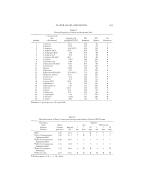
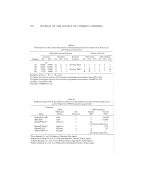
HYDROPHOBIC BONDS AND HAIR TREATMENTS 235 chain length of the alkylating agent. However, this unexpected discrepancy between the weight gain values and the 30 per cent work indices was resolved satisfactorily by the amino acid analyses of the treated wools. The cystine contents of both hexyl iodide and dec¾1 iodide treated samples were almost identical with those of the untreated unreduced wool (860 /xmol/g). The methyl iodide alkylated sample had a cystine content of 470 /xmol/g. It is, thus, obvious that the mechanical recovery of the alkylated wool fibers had been brought about by reformation of the keratin disulfide and not by the residue reinforcement effect. The mechanism of the disulfide rebuilding is not yet known. Most likely, the alkyl iodides undergo some secondary reactions involving formation of iodine which acts as an oxidant for the protein sulfhydryl. This secondary reaction is unimportant in the case of methyl iodide, which reacts with mer- captans very rapidly. An increase in chain length of the alkyl group causes a precipitous drop in the rate of the alkylation reaction (Fig. 1), and thus, may set a stage for the secondary process. 3. Synthesis ofN-alkyl maleimides: A more dependable method for introducing apolar residues into the keratin was clearly required. N-ethyl maleimide is often used as a standard blocking agent for protein sulfhydryl, and it was thought that its higher homologues might be of value in this respect. Although, the N-alkyl maleimides are not commercially available, they were easily pre- pared by pyrolysis of the corresponding N-alkyl maleamic acids (5, 6). N-hexyl, N- heptyl, and N-dodecyl maleamic acids were prepared by reacting maleic anhydride with the appropriate amine in glacial acetic acid. The acids' were isolated in good yields (ca. 85 per cent) as white crystalline solids and pyrolyzed without further purification. The properties of the maleamic acids and the corresponding maleimides are given in Table III. The low yields of final product (26 per cent) were due to a concurrent poly- merization reaction leading to a resinous by product. In the course of our work, a one step synthesis was also utilized for the preparation of N-alkyl (aryl) maleimides. The overall yield continued, however, to be low (-30 per cent). The overall reaction is showh below CH•H O-•-C C=O + RNH• --,-CH--CO•H N/ o CH--CONHR 170-180 • C. C H-•-C H I O =C C---•O N I R + H20 4. Reduction of hair with dithiothreitol (DTT).' DTT was used as an alternate reductant in our studies. This reagent (8) causes a specific and symmetric scission of the

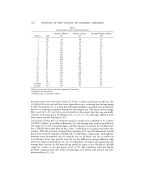
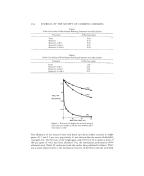
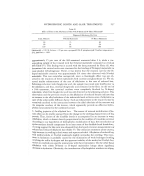
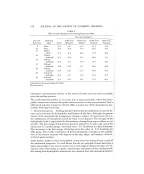
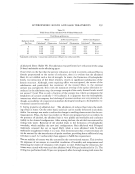
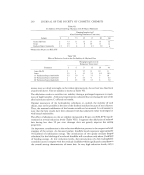
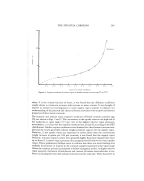
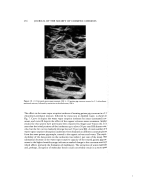
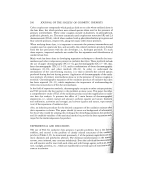
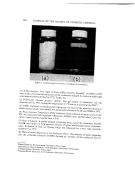
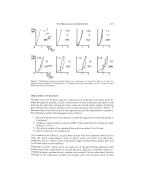
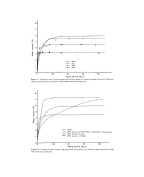
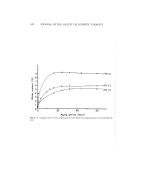
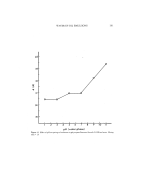
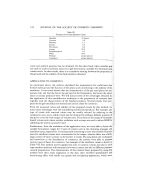
236 JOURNAL OF THE SOCIETY OF COSMETIC CHEMISTS Table III Properties of N-AIk¾1 Maleamic and N-Alk¾1 Maleimides Maleamic Acid • Maleimide • Derivative Melting Point, øC Melting Point, øC Hexyl 78 ø 125 ø @ 5.5 mm a Heptyl 75-77 ø 43-44 ø Dodecyl -- 56-59 ø Benzyl 140-142 ø 73-75 ø aBoiling point. bObserved me[ting points were within the range reported by Coleman et al (7). REDUCTION, % 60 1'20 TIME, min. Figure 2. Effect of time on reduction of hair by 0.1 M DTT at self-pH, 35 C In using the next higher homolog, i.e., N-heptyl maleimide, the alkylation reaction could also be completed within 2 h. Following the alkylation with N-ethyl maleimide, disulfide bonds without producing any byproducts such as mixed disulfides. Its efficac'r: as a reductant allowed us to perform the reduction swiftly at neutral pH and a tempera, i) ture of 35øC. ß Hair samples were treated with unbuffered solutions of 0.1 M DTT (self-pH, 5.4) 25:1 bath ratio, 35øC for various times. Levels of reduction were calculated on the basis': of the SH content determined via mersalyl acid titration (9). These data agreed with the reduction levels determined from residual disulfide analyses (via amino acid:i analysis) after cyanoethylation of the free SH groups. A plot of the reduction levels against time is shown in Fig. 2. 5. Alkylation of hair with N-alkyl maleimides.' N-hexyl maleimide was used to alkylate reduced hair containing 0.6 m moles of SH per gram of hair. The extent of reaction was monitored by determining the residual SH following the alkylation. Under the condi-: tions employed, the alkylation was complete within 2 h. The alkylation was carried out in 20 per cent n-propanol/0.04 M phosphate buffer, pI-I 7 at 35øC, 100:1 bath ratio under these conditions the extent of hydrolysis of the N-alkyl male imides is negligible.
Purchased for the exclusive use of nofirst nolast (unknown)
From: SCC Media Library & Resource Center (library.scconline.org)