J. Soc. Cosmet. Chem., 28, 285-314 (May 1977) Studies of water-in-oil (w/o) emulsion stabilized with amino acids or their salts YOSHIMARU KUMANO, SHIN NAKAMURA, SADAAKI TAHARA, and SABURO OHTAShiseido Laboratories, 1050, N•pacho, Kohokuku, Yokohama,Japan, Received June 15, 1976. Presented Ninth IFSCC Congress,June 1976, Boston, MA. Synopsis WATER-IN-OIL (W/O) EMULSIONS STABILIZED by using gels formed between surfactants and aqueous solutions of AMINO ACIDS were studied The gel can only be obtained with a fluid surfactant which has lipophilic properties and a specific orderly lameliar structure and amino acids or their salts which are readily soluble in water. By dispersing these gels into the oil phase and then adding the water phase, extremely stable w/o emulsions with wide ranges of water content were obtained. This type of emulsification was termed the "gel-emulsifica- tion method" by the authors. When this new technology was applied to the preparation of cosmetics, products with outstanding characteristics were obtained. The function of the amino acids in the emulsification were investigated by using physico-chemical methods such as X-ray analysis, nuclear magnetic resonance (NMR), heat of solution, electron microscopy (EM), and measurement of the water content solubilized in the surfactant phase. It may be concluded that the amino acids are effective in forming a tight surface atmosphere around the water particles and in preventing coa- lescence of water particles by strong hydration effect of the amino acids, thus stabilizing the w/o emulsion. INTRODUCTION Generally, w/o emulsions are said to be much more advantageous to human skin than an oil-in-water (o/w) emulsion. Gattefosse et al. (1,2) described the mechanism of ap- plication ofw/o emulsions to the skin as follows. The continuous fatty layer, in which minute droplets of water are distributed, is in contact with the epidermis and facilitates adhesion. After the water evaporates, the residual fatty phase of the emulsion on the skin is elastic and resistive, protecting the deeper layers of skin from dehydration and exaggerated hydration. Furthermore, other scientists (3) have also dealt on the properties of w/o emulsions of spreading well onto stratum comeurn and aid in the prevention of chemical and natural attacks thereon, retarding moisture loss, which in turn helps to maintain flexibility. 285

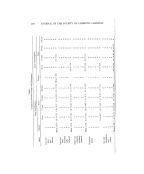
286 JOURNAL OF THE SOCIETY OF COSMETIC CHEMISTS Clar (4) has recently published results on skin impedance measurement that, in spite of the variation in the moisture of the atmosphere, when the w/o cream is applied, the moisture of the skin is preserved for some time. However, oil-in-water (o/w) type emulsions have better consumer acceptance than the w/o type emulsion, despite the various benefits of the latter to the skin. This can be at- tributed to the difficulties of maintaining the stability of the w/o emulsion as well as the inferior feel during application. Generally, w/o emulsions are prepared by increasing the ratio as well as the viscosity of the outer phase (oil) in order to improve stability. This results in a product with a transparent and glaring appearance and with a greasy and oily feeling, which will not readily gain consumers' acceptance. It is of great interest for cosmetic scientists to try to eliminate such defects from w/o emulsion (for example, the excessive addition of water caused separation (60 to 70 per cent)). The addition of oil-soluble polyvalent metallic soaps increased the stability of the w/o emulsions to some extent, but hardly altered the application defects. From the above facts, the authors carried out a series of experiments to obtain w/o emulsions, which were designed to hold wide ranges of water ratio, a nongreasy feel, and still have good stability. As a result, it was possible to develop a new emulsification method, which the authors termed as the "gel-emulsification method." The main points of this method are described as follows: By mixing an aqueous solu- tion of amino acids or their salts with lipophilic surfactants having specific require- ments in their chemical structure, a kind of gel, consisting of the surfactant in the continuous phase and an aqueous solution of amino acids or their salts in the dispersed phase, could be formed. In the following emulsification step, the gel was dispersed into the oil phase, and then the water phase was added into the mixture and emulsified. It was possible to obtain a stable w/o emulsion and/or cream having excellent characteris- tics with a wide range of water content. The major characteristics of the creams obtained by this method were their excellent affinity and nongreasy feel to the skin which has never been achieved before with a w/o emulsion. Moreover, the surfactants such as the monoglycerides used in the creams prepared by this gel-emulsification method are highly safe materials found widely in nature and lipids. Furthermore, the amino acids used in this investigation are also found to be in the natural moisturizing factor (NMF) of the skin and safe enough to be used as food fortifiers for human nutritional purposes. From this viewpoint, the creams obtained by the new method have great advantages over existing formulations, since they have been prepared from ingredients which have been proven to be physiologically safe for human beings to use. The research findings will be discussed in 3 parts. First, it will be necessary to clarify the necessary requirements in the relationship between surfactants and amino acids in order to form the gels (which is characteristic in the new technology). Secondly, the details of the gel emulsification method, in which the gel is dispersed into the oil phase and water is added, will be discussed together with its characteristics. Finally, the exam- ples of the practical application of the new technology to actual cosmetic formulations and their characteristics will also be explained. In addition, the similarity existing between the phenomena obtained in connection with amino acids and surfactants, and the spontaneous emulsifying phenomena on the skin will also be discussed to some extent.
Purchased for the exclusive use of nofirst nolast (unknown)
From: SCC Media Library & Resource Center (library.scconline.org)