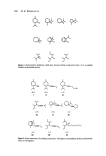
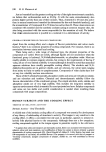
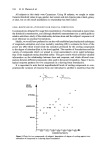
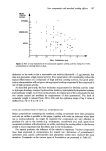
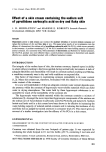
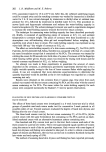
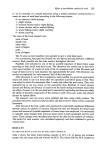
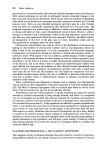
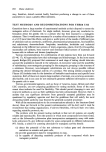
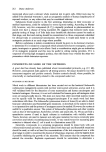
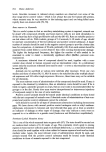
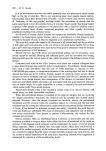
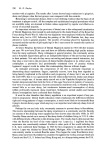
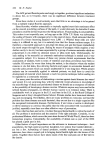
188 H.R. Watson et al. Figure 1. Hydrocarbon skeletons which give strong cooling compounds when -X is a suitable N-alkyl carboxamide group. Io.3) 1o.2• •oo..-• L,• •N•coNH •-• Figure 2. Some structures of cooling compounds. The figure in parentheses is the oral threshold value in micrograms.

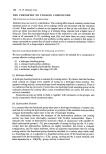
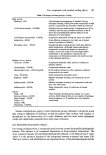
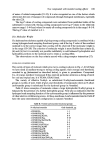
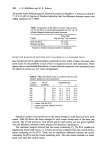
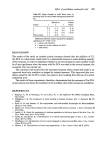
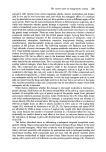
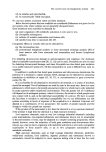
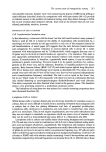
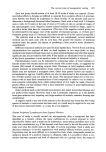
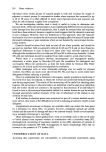
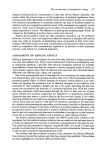
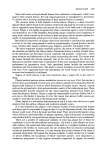
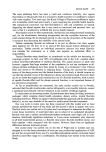
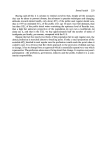
New compounds with menthol cooling effects 189 of series of related compounds (19-22). It is also recognised as one of the factors which determines the rate of transport of compounds through biological membranes, especially the skin (23). The log P values of cooling compounds were calculated from published tables of the substituent x-values (24). Strong cooling compounds have log P values in the relatively narrow range 1.5-4.0 and values for nearly all cooling compounds lie in the range 1.0-5.0. The log P value of menthol is 3' 1. (iv) Molecular Weight If a hydrocarbon skeleton capable of giving strong cooling compounds is combined with a strong hydrogen-bond accepting functional group, and if the log P value of the resultant molecule is in the correct range, then cooling will be observed if the molecular weight is in the range 150-350. The criterion of molecular weight is more flexible than criteria (i), (ii) and (iii) but it is certainly not possible indefinitely to add balanced hydrophobic and hydrophilic portions to the molecule and to retain a cooling effect. The observations on the four criteria accord with a drug-receptor interaction (17). COOLING COMPOUNDS The variety of types of molecule which give rise to cooling is shown in Fig. 2. All of these we have rated as medium-strong to strong cooling agents their average oral threshold, recorded in [tg (determined as described below), is given in parentheses. Compound I is, of course, menthol. Compound II has received particular attention as being of merit for oral and topical use it is FEMA GRAS listed. The variety of effective N-alkyl- or substituted N-alkyl-carboxamide functional groups is worthy of note. Table H gives oral thresholds of compounds where an N-alkyl- carboxamide group is substituted for the hydroxyl group in/-menthol. Table H shows examples of molecules where a large hydrophobic N-alkyl group is balanced by the presence of a further hydrophilic group. Note also an indication that the hydrogen bond accepting function of the carboxamide group is influenced by the presence of other electron withdrawing atoms. All thep-menthane-3-carboxamides listed in Table II have the same stereochemical configuration as natural/-menthol. Table II. N-alkyl carboxamide functional groups N-Alkylcarboxamide Oral threshold, gg -CONHCH, 1.1 -CONHCH•CH, 0.2 -CONI-ICH:CH•CH, 0' 8 -CONHCH(CH,): 0.45 -CONHCH•CH•CH:CH, 1.4 -CONHC(CHa)a 0' 4 -CONHC6H4OCHa(p) 0' 2 -CONHCH:CH•OH 5' 0 -CONH(CH•)aOH 2' 7 -CONH(CHO6OH 1' 1 -CONHCH:CH•OCH, 2' 7 -CONHCH:COOC•H, 0' 13 -CONHCH(CHa)COOC:H, 0' 4
Purchased for the exclusive use of nofirst nolast (unknown)
From: SCC Media Library & Resource Center (library.scconline.org)