EFFECT OF ZINC PYRITHIONE ON SKIN CELLS 11 decreased number of horny layers as compared to normal scalp (13). Therefore, the clinical effectiveness on dandruff through inhibition of DNA synthesis by ZPT seems aided through the enhanced permeability of dandruff scalp. This also suggests, as supported by clinical noneffectiveness of ZPT on mild dandruff subjects (14), that the restoration of the normal number of horny cell layers, because of decreased permeability, may generally diminish the potency of ZPT in exerting its inhibition of DNA synthesis. Scalp epidermal kinetics have revealed that dandruff is a disorder of hyperproliferation (15). Therefore, our findings that the highly active antidandruff agents ZPT and DS have an inhibiting effect on DNA synthesis of mammalian cells, support the hypothesis that the antidandruff effect by ZPT may primarily be due to its anti-metabolic effect rather than its anti-yeast effect. Since pyrithione is a general inhibitor of membrane transport processes in fungi (16), it seems likely that the decrease of P. ovale concomitant with the decrease in dandruff caused by ZPT as observed previously (1), involves similarities in cellular metabolisms between anti-yeast and anti-DNA synthe- sizing actions, both of which are related to a marked decrease in the activities of a variety of independently regulated transport systems within cells. REFERENCES (1) G. Imokawa, H. Shimizu, and K. Okamoto, Antimicrobial effect of zinc pyrithione, J. Soc. Cosmet. Chem., 33, 27-37 (1982). (2) J. j. Leyden, K. J. McGinley, and A.M. Kligman, Role of microorganisms in dandruff, Arch. Dermatol., 112, 333-338 (1976). (3) R. W. VanderWyk and K. E. Hechemy, A comparison of the bacterial and yeast flora of the human scalp and their effect upon dandruff production, J. Soc. Cosmet. Chem., 18, 629-634 (1967). (4) J. Fukuyama, Y. Mori, and H. Kikkawa, A male bearing XX sex chromosome constitution in humans, Proc. XII Intern. Congr. Genety., 1,216-217 (1968). (5) A. Sato, Changes in chromatin pattern during long term tissue culture of human male skin cells exhibiting XX chromosome, 26th Meeting of Japan. Tissue Culture Assoc. (1968). (6) E. Christophers, Growth stimulation of cultured postembryonic epidermal cells by vitamin A acid,J. Invest. DermatoL, 63,450-455 (1974). (7) T. Ebina, K. Ohtsuki, M. Seto, and N. Ishida, Specific G 2 block in HeLa-S3 cells by neocarzinostatin, Eur. J. Cancer, 11,155-158 (1975). (8) G. C. Priestley and J. C. Brown, Acute toxicity of zinc pyrithione to human skin cells in vitro, Acta Dermatovener (Stockholm), 60, 145-148 (1980). (9) G. Piewig and A.M. Kligman, The effect of selenium sulfide on epidermal turnover of normal and dandruff scalps,J. Soc. Cosmet. Chem., 20, 767-775 (1969). (10) M. Gloor, M. Dressel, and U. W. Schnyder, The effect of coal tar distillate, cadmium sulfide, ichtyol sodium and omadine MDS on the epidermis of the guinea pig, Dermatologica, 156, 238-243 (1978). (11) H. W. Young, G. Schochetman, S. Hodas, and M. E. Balis, Inhibition of DNA synthesis by hydroxyurea: structure-activity relationships, Cancer Res., 27, 535-540 (1967). (12) G. Imokawa and Y. Mishima, Cumulative effect of surfactants on cutaneous horny layers: lysosome labilizing action, Contact Dermatitis, 5,151-162 (1979). (13) A. B. Ackerman and A.M. Kligman, Some observations on dandruff, J. Soc. Cosmet. Chem., 20, 81-101 (1969). (14) A.M. Kligman, R. R. Marpies, L. R. Lantis, and K.J. McGinley, Appraisal of efficacy of antidandruff formulations,J. Soc. Cosmet. Chem., 25, 73-91 (1974). (15) A.M. Kligman, K.J. McGinley, and J. J. Leyden, The nature of dandruff, J. Soc. Cosmet. Chem., 27, 111-139 (1976). (16) C. J. Chandler and I. H. Segel, Mechanism of the antimicrobial action of pyrithione: effects on membrane transport, ATP levels, and protein synthesis, Antimicrobial Agents and Chemotherapy, 14, 60-68 (1978).

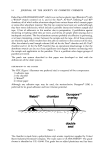
j. Soc. Cosmet. Chem., 34, 13-19 (January/February 1983) A new occlusive patch test system with a plastic chamber R. A. QUISNO AND R. L. DOYLE, Hill Top Research, Inc. Miamiville OH 45147. Received November 30, 1981. Synopsis A new patch test system, based on an inert flexible plastic chamber,* is described and its occlusive properties are demonstrated. The system (designated HTC) is fabricated from the chamber, containing a cotton insert, and a semipermeable tape. The occlusivity of the HTC has been demonstrated following 24-hour and 48-hour applications to the skin of human panelists who showered, swam, or undertook mild or moderate exercise. Essentially no change in weight of the HTC occurred. The system was well tolerated by the panelists. INTRODUCTION The human patch test technique has been in use for many years as a tool for predicting the sensitization and/or primary irritation potential of materials which come into contact with human skin (1-5). Most of the testing has been accomplished using a variety of adhesive tapes (cloth, plastic, or paper) to hold an absorbent material (gauze, nonwoven cotton, or filter paper) containing the test material against the skin. Experimentation with devices to render the system more occlusive in order to achieve better derreal absorption, more uniform skin exposure, and better reproducibility and to prevent interaction between the test material and the adhesive material began as early as Rattner's work in 1938 (6) and has continued sporadically until the present (7-12). The devices have generally been referred to as "chambers." Materials used in fabrication of these chambers have included glass, celluloid, various plastics, and aluminum. The purpose of this paper is to describe a system (designated HTC) based on a flexible plastic chamber, which in combination with certain adhesive tapes has excellent occlusive properties. BACKGROUND ON PATCH TEST SYSTEMS Some patch test systems which have been used commonly include (a) the Duke Elastopatch ©, which is an elastic cloth tape with a Webril © swatch in its center (b) the *The HILL TOP CHAMBER ©, patent pending. 13
Purchased for the exclusive use of nofirst nolast (unknown)
From: SCC Media Library & Resource Center (library.scconline.org)