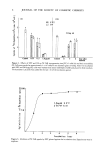
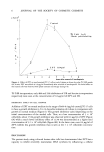
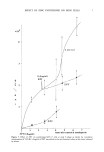
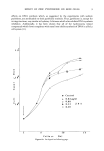
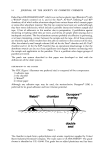
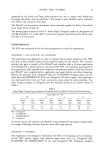
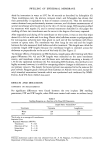
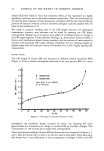
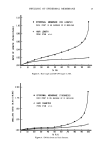
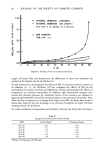
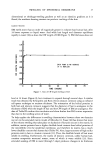
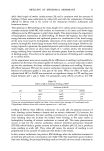
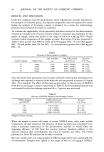
EFFECT OF ZINC PYRITHIONE ON SKIN CELLS 7 5 xlO Z PT(1.O/jg/ml) j' 2 3 4 5 6 7 hours after removal of Amethopterin Figure 5. Effect of ZPT on synchronized JTC-17 cells at early S phase as shown by cumulative incorporation of 3H-TdR. 1.0/ag/ml of ZPT was added to the synchronized culture at the times indicated by arrows.

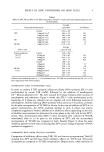
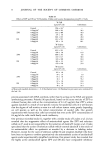
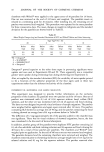
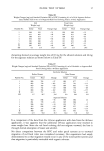
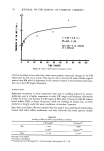
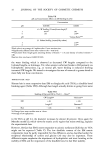
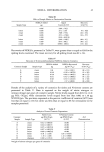
8 JOURNAL OF THE SOCIETY OF COSMETIC CHEMISTS Table II Effects of ZPT and DS on 3H-Thymidine, Uridine, and Leucine Incorporations intoJTC-17 Cells 3H-TdR (cpm/104 cell) % Inhibition ZPT DS ZPT DS ZPT DS Control 2766 _+ 333 a -- 0.25#g/ml b 2206 _+ 263 20.3 0.50#g/ml 1522 _+ 488 45.O 1.0o#g/ml 275 __+ 96 90.1 0.25#g/ml 1991 _+ 185 28.0 0.50#g/ml 1412 _+ 555 49.0 1.0o#g/ml 385 + 30 86.1 3H-Uridine (cpm/104 cell) % Inhibition Control 1012 _+ 232 - 0.25#g/ml 858 + 99 15.8 0.50#g/ml 1006 + 243 0.6 1.00#g/ml 619 + 127 38.8 0.25#g/ml 824 _+ 30O 18.0 0.50#g/ml 903 + 91 10.7 1.0O#g/ml 629 + 109 37.8 3H-Leucine (cpm/104 cell) % Inhibition Control 102 + 40 - 0.25#g/ml 99 + 24 3.0 0.50#g/ml 83 _+ 38 18.3 1.0O#g/ml 46 + 6 55.2 0.25#g/ml 82 + 30 19.9 0.50#g/ml 70 + 29 31.3 1.0O•tg/ml 48 _+ 18 53.4 a) Mean and standard deviations n = 9, b) Incubation hours: 3 hr Radioactive precusors were incubated for the last 1 hr. process associated with DNA synthesis, rather than by acting on the RNA and protein synthesizing processes. Priestley (8) speculated, based on the acute toxicity of ZPT to cultured human skin cells at the concentrations of 0.1-0.5/xg/ml, that ZPT's action against dandruff is a result of non-specific toxicity for epidermal cells. It is well known that the degree of cell toxicity as seen in a cell culture system varies greatly depending on cell species as well as the initial concentration of seeded cells. Our growth experiments with human skin cells has revealed that even at the ZPT concentration of 0.4/xg/ml the cells could finally reach confluency. Our previous microbial study (1), together with a similar study of Leyden et al. (2), has revealed that the suppressive effect of antimicrobial agents like ZPT and selenium sulfide on P. ovale is not responsible for the reduction of dandruff. Leyden et al. (2) also speculated that the action of selenium sulfide which controls dandruff is the result of its antimetabolic effect on epidermis as revealed by a decrease in labeling index. However, except for the cases of selenium sulfide (9) and omadine disulfide (10), there have been no reports to confirm quantitatively the antimetabolic action of antidandruff agents under experimentally simplified conditions. Our present study has revealed that the highly active antidandruff agents ZPT and DS also have comparable inhibitory
Purchased for the exclusive use of nofirst nolast (unknown)
From: SCC Media Library & Resource Center (library.scconline.org)