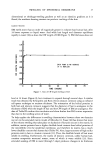
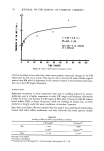
FDA METHODOLOGY FOR MICROBIOLOGICAL ANALYSIS 37 SCREENING TEST The screening test is in effect a rapid and simple test for the presence of microorga- nisms. Broth media are inoculated with either 1 g or 1 ml of sample. The media employed depend on the type of product being tested. Liquids, creams, ointments and most other products are inoculated into both modified letheen broth, to recover bacteria, and Sabouraud dextrose broth for yeasts and molds. For talcum and other powders, fluid thioglycollate medium is used to detect aerobic and anaerobic sporeformers. The fluid thioglycollate is incubated at 35øC, and the other media at 30øC, for at least seven days. Media are examined for growth periodically by checking for turbidity. Many products themselves, such as powders, creams, and lotions, cause turbidity in broth media and growth must be confirmed by plating on modified letheen agar, malt extract agar containing 40 ppm chlortetracycline, or acidified potato dextrose agar. If no growth is detected at the screening stage, the sample is considered negative and no further testing is necessary. If growth is detected, serial dilutions of the original sample are prepared in enrichment medium. These dilutions are used for both plate counts and microbial enrichment. PLATE COUNTS For aerobic plate counts, the sample is serially diluted from 10 -• to 10 -6 in modified letbeen broth. Each dilution is mixed thoroughly, and 0.5 ml is surface plated in duplicate on modified letheen agar. Surface plating, rather than pour plating, is employed to avoid the possibility of killing stressed organisms with melted agar. Plates are incubated for 48 hours at 30øC prior to enumeration of colonies for calculation of the number of organisms per g or ml of sample. These same dilutions are tested for the presence and number of $taphylococcus aureus by plating on Vogel-Johnson (v-J) agar. Typical staphylococci produce black colonies, caused by the reduction of potassium tellurite to elemental tellerium, surrounded by yellow zones indicating the fermentation of mannitol. Baird-Parker (BP) agar, an extremely effective medium for recovering stressed staphylococci, can be substituted for V-J agar (4). Sodium pyruvate, an ingredient of BP agar, destroys peroxides formed during the oxidative degradation of lipids and carbohydrates present in many products, and allows for better microbial recovery (4). Although many microorganisms have defense mechanisms (e.g., catalase and superoxide dismutase) against peroxides and free radicals, antimicrobial effects can still occur when high concentrations of toxic materials are produced or defense systems have been damaged. On BP agar, staphylococcal colonies appear black and are surrounded by either a clear zone, an opaque zone, or both, caused by the proteolysis or lipolysis of egg yolk in the medium. The only criticism against the use of BP agar is that polysorbates, from product or modified letheen broth, can clear the opaque medium and diminish its diagnostic value. However, this is an insignificant drawback in comparison to the overall advantages of using BP agar. Characteristic colonies are picked and streaked on tryptic soy agar slants and subsequent bacterial growth is used to test for coagulase activity. All strains yielding a positive coagulase reaction are considered to be $taphylococcus aureus, and no further testing is required. All product dilutions are also tested for numbers of yeasts and molds by plating them on either malt extract agar supplemented with 40 ppm chlortetracycline or potato

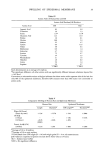
38 JOURNAL OF THE SOCIETY OF COSMETIC CHEMISTS dextrose agar acidified to pH 3.5. Most common fungal contaminants such as Penicillium and Aspergillus can be identified by colonial and cellular morphology. The more uncommon fungi require an experienced mycologist for identification and determination of any pathogenic or toxigenic potential. In addition to the media above, dilutions of talcs and powders are also plated on both anaerobe agar and blood agar. The anaerobe agar is incubated in the absence of oxygen to detect and enumerate obligate anaerobes such as Clostridium tetani, and the blood agar plates are incubated in an atmosphere containing 5% to 10% CO2 in air to detect microaerophilic organisms. ENRICHMENT AND IDENTIFICATION Final identification of contaminating microorganisms is dependent upon the results of the enrichment stage. The enrichment step is perhaps a misnomer from a strictly microbiological point of view, since the medium and conditions for incubation are not designed to enrich for specific groups of microorganisms. For example, both gram negative and gram positive organisms can be recovered. The dilutions of product (10 -• tO 10 -6) previously prepared in modified letheen broth for the plate counts are incubated at 30øC for no less than 7 days. Each dilution exhibiting growth is then streaked onto both modified letheen agar and MacConkey agar. After incubation, the plates of modified letheen agar are examined for growth, and cells for morphologically distinct colonies are gram stained. Gram positive bacilli are examined for motility and formation, morphology, and location of spores. Further characterization is usually unnecessary. Gram positive cocci are examined in somewhat greater detail. Production of catalase is determined using a solution of 3% H202. Depending on the results of the catalase test several types of media are inoculated to assist in identifying these organisms. If catalase is not produced, the following media are inoculated: a bile esculin agar slant, a tryptic soy agar slant containing 6.5% NaC1, and a blood agar plate. Blackening of the bile esculin medium along with growth in the presence of 6.5% NaCI characterizes the organism as a $treptococcus group D, enterococcus. However, if the bile esculin medium is black and there is no growth in the presence of 6.5% NaC1, the organism is a Streptococcus group D, non-enterococcus. Organisms incapable of blackening the bile esculin medium are characterized by their reaction on blood agar as either alpha, beta, or gamma hemolytic streptococci. If catalase is produced, the following media are inoculated: a mannitol salt agar plate, two tubes of oxidative-fermentative (OF) dextrose medium (one overlaid with sterile mineral oil), and an enriched agar slant (e.g., heart infusion agar) for use in the coagulase test. Ability to produce coagulase and ferment mannitol identifies the organism as Staphylococcus aureus. Oxidation and fermentation of OF dextrose without mannitol fermentation or coagulase activity characterizes the organism as Staphylococcus epidermidis. Micrococcus species are distinguished by their ability to oxidize but not ferment OF dextrose. For detection of gram negative organisms, MacConkey agar plates are streaked from the enrichment cultures each distinct morphological colony type is subcultured on triple sugar iron agar, heart infusion agar, and heart infusion broth. Because the original enrichment cultures were prepared as a series of product dilutions, it is possible to get some idea about the numbers of gram negative organisms present in the sample by
Purchased for the exclusive use of nofirst nolast (unknown)
From: SCC Media Library & Resource Center (library.scconline.org)