FDA METHODOLOGY FOR MICROBIOLOGICAL ANALYSIS 39 presuming that at least one organism existed in the highest dilution exhibiting growth on a streaked MacConkey agar plate. Thus, if growth occurred at the 10 -4 dilution but not at the 10 -5, one can deduce that at least 10,000 gram negative organisms per portion of sample tested (1 g or 10 g) were originally present (5). This technique, sometimes called "indicated numbers," is similar to a most probable number (MPN) method and as such cannot be compared in accuracy with the plate count method. In practice, we have frequently determined that the plate counts almost always yield a lower number of organisms. The current legal interpretation of the Food, Drug and Cosmetic Act as it applies to microbial contamination of cosmetics and topical drugs impels FDA to identify to species all gram negative bacilli for health hazard evaluation. Recently, excellent identification of both enterics as well as many non-fermenters have been attained by employing the API 20 E system as a rapid screening tool. Final confirmatory identification for the non-fermenters is still based upon the media and techniques outlined in the King scheme (6). Since for the most part, cosmetic and topical drug preparations are applied to non-sterile body areas, there is no legal requirement to manufacture a sterile product. Nevertheless, these products should be free of such pathogens as Escherichia coli, Pseudomonas aeruginosa, Staphylococcus aureus, and Salmonella and contain an effective preservative system that will ideally produce and maintain an adequately preserved product. It must be stressed, that the use of a preservative system should not in any way substitute or compensate for an unsanitary manufactured product. Presently, FDA has not set any legal microbiological limits for cosmetics and topical drug preparations and as such, each case is evaluated on an individual basis as to its public health risk (7). ACKNOWLEDGMENTS I thank James D. Macmillan, Science Advisor, Food and Drug Administration, New York Regional Laboratory, and Department of Biochemistry and Microbiology, Rutgers University, New Brunswick, NJ, and Joseph M. Madden, Food and Drug Administration, Division of Microbiology, Washington, D.C. REFERENCES (1) Bacteriological Analytical Manual, Division of Microbiology, Food and Drug Administration, Washington, D.C., 5th edition, 1978. (2) B. P. Dey and F. B. Engley, Jr., Environmental Sampling Devices for Neutralization of Disinfectants (Marion Scientific Corporation, Kansas City, Missouri, 1978), pp 1-21. (3) J. R. Evans, M. M. Gilden, and C. W. Bruch, Methods for isolating and identifying objectionable gram-negative bacteria and endotoxins from topical products, J. Soc. Cosmet. Chem., 23, 549-564 (August 1972). (4) R. S. Flowers and Z. J. Ordal, Current methods to detect stressed staphylococci, J. of Food Protection, 42, 362-367 (April 1979). (5) L. A. Otto, "Microbiology Methods for Topical Products," FDA By-Lines, 3, 209-214 (January 1973). (6) E. O. King, The Identification of Unusual Pathogenic Gram Negative Bacteria (Center for Disease Control, Atlanta, Georgia, Revised 1972). (7) J. M. Madden and G. J. Jackson, "Cosmetic preservation and microbes: viewpoint of the Food and Drug Administration," Cosmetics and Toiletries, 96, 75-77 (October 1981).

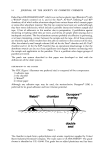
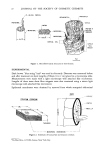
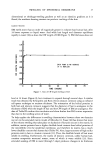
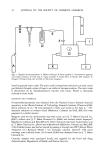
J. Soc. Cosmet. Chem., 34, 41-46 (January/February 1983) Rapid determination of N-diethanolnitrosamine in cosmetics S. BRENNAN and C. W. FRANK,* Department of Chemistry, University of Iowa, Iowa City, IA 52242. Received.July 30, 1982. Abstract A method for rapidly estimating the N-nitroso content of cosmetic products is presented. For a water extract of a two gram sample a detection limit of 2 ppb NNO-N is obtained with a reproducibility of less than thirteen percent. Nitrite can be determined using the same methodology. INTRODUCTION The presence of nitroso compounds, namely, Nonitrosodiethanolamine (NDELA), has been reported to occur in cosmetic products at levels ranging from 1 ppb to 48 ppm (1). Other investigators reported that the level of this nitrosamine in cosmetic and dermopharmaceutical preparations was in the range of undetectable (50 ng NDELA/ mL) to 380/xg/kg (2). Recently, the nitrosamines, N-nitrosomethyldodecylamine and N-nitroso-methyltetradecylamine, were found in hair-care produ•cts ranging in concen- tration from 8 to 873 ppb (3). The methodologies used in the determination of NDELA in cosmetic products include HPLC (1,4,5,6), gas chromatography (2,7), and ion exchange chromatographic tech- niques (8). These methods are reported to be specific for the detection of NDELA. Recently, a colorimetric method for the screening of nitrosamines in numerous consumer products has been published (9). With a 2.5 gram sample, a sensitivity of 3-5 ppb was reported. However, long sample analysis time was required. This paper presents a screening method for N-nitroso compounds which is sensitive and rapid. The instrumentation can also be applied to the determination of nitrite. EXPERIMENTAL APPARATUS The analytical system used has previously been described (10) and is presented in Figure 1. This technique is based on chemical cleavage of the nitrogen-nitrogen N-nitroso *Author to whom correspondence should be addressed. Current address: E.G. & G.-Idaho, P.O. Box 1625, Idaho Falls, ID 83415. 41
Purchased for the exclusive use of nofirst nolast (unknown)
From: SCC Media Library & Resource Center (library.scconline.org)