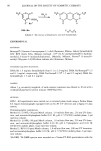
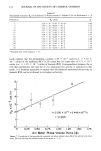
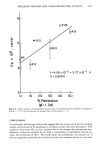
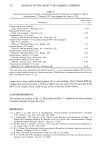
134 JOURNAL OF THE SOCIETY OF COSMETIC CHEMISTS MEA and a maximum tolerable level of 50 ppb for NDELA (11). It appears logical that analogous specifications for other cosmetic ingredients that are based on alkanolamines should be established. Another step to decrease the risk of nitrosamine formation has been taken by a recom- mendation of the German Federal Health Office (Bundesgesundheitsamt) to stop using secondary amines for production of cosmetics and toiletries (12). EXPERIMENTAL REAGENTS ß Analytical grade, unless specified otherwise. ß Amberlite Ion Exchange Resin IR 120, 20-50 mesh, counter ion: Na. ß Silica gel 40 (0.063-0.200 mm) from Merck, Darmstadt. ß Methanol, chloroform, hydrochloric acid, acetone, i-octane. ß Ethylformate, redistilled twice. ß Sodium sulfate. ß Nitrogen (99.99 vol.%). ß N-methyl-N-trimethylsilylheptafluorobutyramide (MSHFBA). ß Internal (i.st.) and external (e.st.) standards: NEHPA (i.st.) and NDELA (e.st.), 1 •g/ml each in ethylformate. ß indicator solution (methyl red in methanol). APPARATUS Chromatography columns 30 X 200 mm, teflon stop cock, frits P3 (pore size 16-40 •m), receiver (13). Gas chromatography: a Hewlett-Packard Gas Chromatograph (5880 A Series) con- nected to a Thermal Energy Analyzer (Thermo Electron Corporation, Waltham, MA, Mod. 502) was used. ION EXCHANGE RESIN Pour 200 ml, presoaked in water, into appropriate column and prepare H+-form by treatment with hydrochloric acid (2n, 1000 ml). Wash with water (800 ml) and dis- place the solvent by methanol/water (1' 1, 200 ml). CLEAN-UP COLUMN Bottom layer of sodium sulfate (6 g), wetted with methanol/acetone (1:1), upper layer of silica gel (10 g) suspended in the same solvent (40 ml) displace solvent by chloro- form/acetone (5'1).

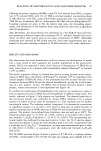
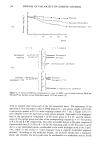
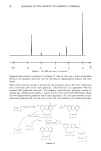
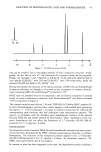
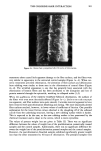
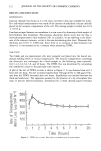
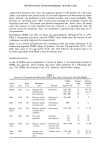
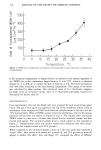
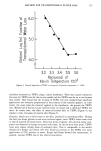
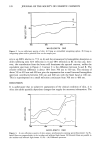
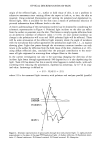
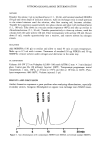
NITROSOALKANOLAMINE DETERMINATION 135 METHOD Dissolve the amine (1 g) in methanol/water (1:1, 10 ml), add internal standard NEHPA (50 •xl) and three drops of indicator solution. Add ion exchange resin in small portions to the stirred mixture until the solution, after first turning red, becomes colorless. Transfer the suspension quantitatively into glass column and elute with methanol/water (1:1, 100 ml). Take down in a vacuum rotary evaporator (40øC) and take up residue in chloroform/acetone (5:1, 10 ml). Transfer quantitatively to clean-up column, wash the column with the same solvent (40 ml). Elute nitrosamines with acetone (50 ml). Rotate down (5 ml), transfer quantitatively into a receiver, and remove solvent by nitrogen stream. SILYLATION Add MSHFBA (150 •zl) to residue and allow to stand 45 min at room temperature. Make up to 0.5 ml with i-octane. Treatment of standard (50 ng NDELA and 50 ng NEHPA): remove solvent under nitrogen and derivatize in the same way. GC CONDITIONS Column: 6% OV 275 on Volaspher A2 (80- 100 mesh ASTM) (2 mm X 3 m) silanized glass. Carrier gas: He (20 ml/min). Injector: 200øC. Temperature programme: initial temperature, 1 min, 150øC, at 2ø/min to 170øC and then at 10ø/min to 220øC. Pyro- lyzer temperature: 400-500øC. Volume injected: 5 •zl. RESULTS AND DISCUSSION Artifact formation represents a great problem when analyzing alkanolamines, especially secondary amines. Inorganic (Kieselguhr) or organic (ion exchange resin XAD2) mate- Q. _1 'I- UJ Z Z 0 5 10 15 20min Figure l. Gas chromatogram with contaminants NBHPA and NDELA and internal standard NEHPA.
Purchased for the exclusive use of nofirst nolast (unknown)
From: SCC Media Library & Resource Center (library.scconline.org)