J. Soc. Cosmet. Chem., 41, 235-241 (July/August 1990) A rapid in vitro test to assess skin moisturizers MASAAKI OBATA and HACHIRO TAGAMI, Department of Dermatology, Tohoku University School of Medicine, Sena•i 980, Japan. Received April 14, 1990. Synopsis We developed a simulation model using human stratum corneum to quickly evaluate the efficacy of topical "moisturizers" under controlled ambient conditions. We determined high-frequency conductance as a mea- sure of the hygroscopicity of the horny layers. We examined three emollients under varied relative humi- dities and were able to discriminate among them with regard to hydrating capacity. This method is a relevant and quick screening model for moisturizers, yielding reproducible and reliable results. INTRODUCTION Water in the stratum corneum mainly controls its softness and pliability (1,2). De- creased hydration is the common factor in various dry skin conditions such as winter xerosis and xerosis of the aged (3-6). Dry skin is also a classic feature of persons who suffer from atopic dermatitis (7). The factors that control the.moisture content of the normal horny layer are not fully understood. It is assumed that certain water-soluble substances, the so-called natural moisturizing factors (NMFs) (4,8) and intercellular lipids of the stratum corneum (9,10), are crucial for maintaining the softness of the surface. In everyday life the aesthetic properties of the skin surface depend upon an adequate level of hydration. The cosmetic industry makes extensive use of hygroscopic ingredients that are supposed to prevent drying out of the outer horny layer. Estimating the moisturizing capabilities of the many products designed to relieve dry skin is a difficult task. Moreover, the results are often inconsistent and are strongly influenced by ambient weather conditions. Various noninvasive techniques have been utilized to measure changes in the hydration level of the stratum corneum in vivo after application of skin moisturizers (11-15). Determination of skin conductance against 3.5 MHz high-frequency electric current has been found to be valuable for demonstrating the effects of topical agents on the water- holding capacity of the desquamating, outer portion of the stratum corneum (3,10,11). The water sorption-desorption test described by Tagami et al. (16) is the principle underlying such tests. In this report we describe an in vitro method for evaluating the efficacy of moisturizers based on our previously reported human stratum corneum model (17). 235

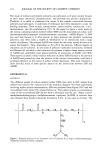
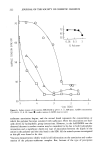
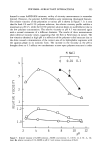
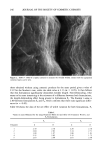
236 JOURNAL OF THE SOCIETY OF COSMETIC CHEMISTS MATERIALS AND METHODS HUMAN STRATUM CORNEUM Skin was obtained from the extensor surface of the amputated thigh of a 17-year-old girl. Sheets of stratum corneum were isolated by the method of Kligman and Chris- tophers (18). THE STRATUM CORNEUM SIMULATION MODEL The model (17) utilizes a single 1 x 1-cm square of stratum corneum sheet placed over seven layers of circular filter paper 6 mm in diameter. The filter paper was mounted on a glass slide and wetted with 30 IXl of phosphate-buffered saline (PBS). This was then covered by a sheet of stratum corneum and sealed with a vinyl adhesive tape in which a 6-mm-diameter hole was cut out. The water gradient across the stratum corneum is comparable to that existing in vivo (Figure 1). Environments with relative humidities (RHs) of 33%, 69% and 90% were produced in sealed chambers containing specific saturated salt solutions as described before (17). The model was allowed to equilibrate at predetermined relative humidities for at least two hours before making measurements that were repeated three times on each sample. SKIN SURFACE HYGROMETER We used the lBS hygrometer (Hamamatsu, Japan) to measure the conductance against a high-frequency electric current of 3.5 MHz (3). We incorporated an improvement that employs a probe having an outer cylindrical 4-mm-diameter electrode and an inner 2-mm one. Conductance was expressed as micro-mho (Ix o). EXPERIMENTAL DESIGN We examined the effect of occlusion at 2 iøC and 27% RH, the ambient conditions of our laboratory. Occlusion was obtained by covering the model with a polyethylene film for up to 30 minutes during which time measurements were made. We then evaluated three emollients, which were spread evenly over the surface at a surface dose of 1.25 mg/cm 2, an amount just sufficient to cover the whole applied area. ST. COHNEUM SHEET FILER PAPER+PBS i ADHESIVE TAPE SLIDE GLASS Figure 1. Stratum corneum simulation model: a water-diffusion chamber equipped with a human stratum corneum sheet that simulates both hydration state and electrical properties of in vivo skin.
Purchased for the exclusive use of nofirst nolast (unknown)
From: SCC Media Library & Resource Center (library.scconline.org)