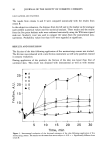
14 JOURNAL OF THE SOCIETY OF COSMETIC CHEMISTS surface. The relative movement of the two surfaces is restricted by friction. Thus friction of skin plays an important role in the objective evaluation of consumer-perceptible skin attributes. Quantitative measurements of skin friction can generate valuable guidelines in the course of product development, aimed at producing desirable tactile feel. The aim of the present study was to develop a set of techniques to measure the frictional response of skin following application of moisturizing creams. The friction was mea- sured objectively with a newly developed sliding friction instrument, as well as sub- jectively using sensory analysis. A consumer test was also undertaken in which we evaluated the subjective attitudes to the perceived skin feel. MATERIALS AND METHODS PREPARATIONS USED Five moisturizing creams (A-E) with variations in type and amount of oils, humectants, and emulsifiers were tested. The composition and viscosity of the creams are given below. The viscosity (mPas) was determined with Haake Viscosimeter RV 12 (Haake Mess-Technik GmbH u. Co., West Germany). The measurements were performed under the same conditions at 20øC. A. 5000 mPas urea, lactic acid, betaine, diethanolamine, cetylphosphate, cholesterol, lanolin, glyceryl monostearate, sodium chloride, water. B. 7000 mPas pyrollidone carboxylic acid, isopropyl myristate, peanut oil, mineral oil, alcohol, PEG-2 stearate/stearic acid, cetylphosphate/DEA cetylphosphate, diethanoi- amine, butylhydroxitoluene, parabens, water. C. 8000 mPas pyrollidone carboxylic acid, glycerine, cetearyl octanoate, dimethicone, mineral oil, isopropyl myristate, myristyl myristate, cetyl phosphate/DEA cetyl phos- phate, PEG-2 stearate/stearic acid, diethanolamine, parabens, butylhydroxitoluene, al- cohol, water. D. 10,000 mPas glycerine, peanut oil, mineral oil, glyceryl stearate, stearic acid, triethanolamine, parabens, water. E. 45,000 mPas mineral oil, cetearyl alcohol, ceteth-20, sodium citrate, citric acid, methylparaben, water. INSTRUMENTAL ASSESSMENT OF FRICTION Seven healthy volunteers were included in the study, two males and five females, with a mean age of 39 years (range 19-57). The creams (A-E) were tested once on the volunteers. The creams were also tested seven times on one volunteer (male, 28 years) during a time period of six months, with at least one day passing between each eval- uation. This was done in order to study the inter- and intraindividual variation in the skin response. Before application of the creams, a basal value of the skin friction was registered. The products were dispensed by a volumetric syringe to the inner forearm of the volunteers. The application rate was about 5 mg/cm 2. The friction was measured immediately after application of the product and then every fifth minute up to 30 minutes. Between each measurement the probe was cleaned.

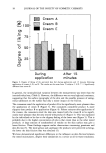
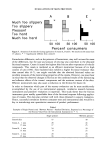
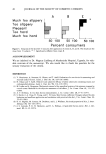
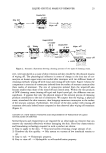
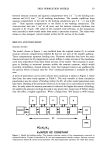
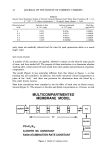
EVALUATION OF SKIN FRICTION 15 The computerized friction instrument consists of a probe with an oscillating steel plate that permits objective measurements of the surface slide friction (1,2). The operating principles of the instrument have been described in detail previously (1). The probe is applied perpendicular to the surface and the friction is measured at an axial load of approximately 0.1 N. At this low load no twisting or wrinkling of the skin occurs. The topographical features of the steel probe were determined using profilometry, according to a previously described method (3). The surface of the probe was much smoother than normal skin (data not shown). SENSORY ASSESSMENT OF FRICTION Eleven females constituted the panel for sensory evaluation of the creams. They were all familiar with tactile measurements. Their mean age was 46 years, range 41-50. The perceived degree of friction was marked on a 15-cm visual analogue scale, where the endpoints of the line reflect a continuum from very low to very high friction. Before application of the creams, the panelists were "calibrated" by estimating the basal level of the skin friction. They were instructed that the basal level was anchored 6 cm from the left end of the line, and that the scale values emanated in two directions from this normalized point. The key benefit to the use of the line comes from its ability to diminish the variation in the panelists' rating and that it gives the panelists the oppor- tunity to use the scale in a way they found comfortable. The products were submitted to the panelists in random order. They were dispensed from coded volumetric syringes to the inner surface of the panelists' forearms. The application rate was 5 mg/cm 2. The panel members were asked to spread the product over and into the skin with fingertips. The ease of moving the fingertip over the surface during 10 s was evaluated as friction. The sensory magnitude of friction was estimated at product application and every fifth minute thereafter during 15 minutes. The fin- gertips were cleansed between each evaluation. CONSUMER TEST Fifteen users of skin care products were selected among subjects with no apparent connection to any of the tested creams. Their mean age was 4 ! year, range 29-57. Three products (A, B, and E) were dispensed to the arms of the volunteers as described above. The subjects were asked to spread the products on the skin surface and assess the degree of liking during spreading. Fifteen minutes later they were again asked to assess the degree of liking of the skin resistance. The results were marked on an analogue scale, where the left end reflected very unpleasant friction and the right very pleasant friction. The subjects were also asked to mark on a five-point hedonic scale the term that best represented their attitude about the feeling: Score Sensation 1 Much too slippery 2 Too slippery 3 Pleasant 4 Too stiff 5 Much too stiff and tacky
Purchased for the exclusive use of nofirst nolast (unknown)
From: SCC Media Library & Resource Center (library.scconline.org)