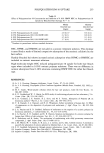
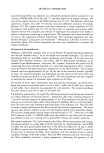
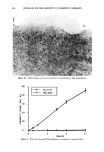
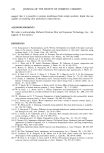
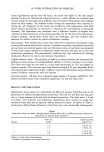
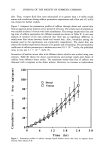
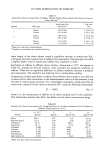
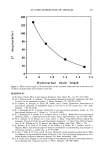
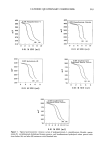
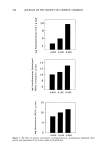
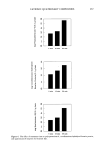
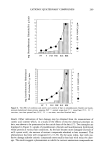
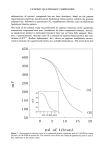
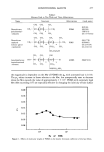
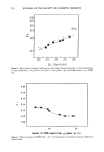
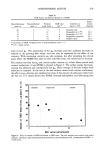
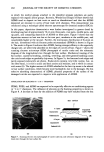
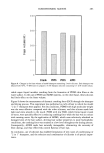
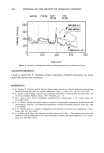
254 JOURNAL OF THE SOCIETY OF COSMETIC CHEMISTS able. Thus, receptor fluid flow rates maintained at or greater than 1.0 ml/hr would ensure sink conditions during caffeine permeation experiments and a flow rate of 2 ml/hr was chosen for further studies. Figure 1 compares the permeation profiles of caffeine through dorsal and ventral skin from an aqueous donor solution over a period of 24 hours. The steady state of permeation was reached at about 14 hours with both membranes. The average steady-state flux and lag time of caffeine permeation for different animals are shown in Table II. A two-way analysis of variance of the data indicated that there was no significant difference in steady-state flux values between dorsal and ventral skin. Also, variability among the animals used in the experiments was statistically insignificant. The dorsal skin was selected for further experiments because of its greater ease of handling. The permeability coefficient of caffeine permeation in hairless mice was 9.8 X 10- 4 cm/hr the published value in rats was 3.1 X 10⁻⁴ cm/hr (5). Interaction of hairless mouse skin with different donor vehicles was studied using nine solvents. Table III shows the donor concentrations and average steady-state fluxes of caffeine from different donor media. The maximum steady-state flux of caffeine was obtained with n-heptane as the donor solvent. However, an increase in hydrocarbon 120 100 80 60 40 • 20 W 0 Dorsal Ventral i i i 0 6 12 18 24 30 Time (hr) Figure 1. Permeation profiles of caffeine through female hairless mouse skin from an aqueous donor solution. Bars indicate S.D.

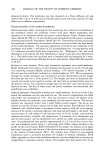
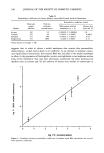
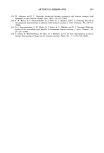
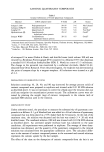
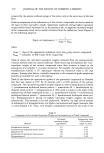
IN VITRO INTERACTION OF VEHICLES 255 Table II Steady-State Fluxes and Lag Times of Caffeine Through Female Hairless Mouse Skin From an Aqueous Donor Solution a'b Steady-state flux Lag time Animal Skin type (ng/cm2/hr) (hr) Dorsal 4.62 (0.40) 5.51 (0.41) 1 Ventral 4.31 (0.49) 5.92 (1.18) 2 Dorsal 3.89 (0.61) 5.91 (0.42) Ventral 4.01 (0.69) 6.72 (0.51) Dorsal 3.73 (0.52) 5.34 (1.13) 3 Ventral 3.73 (0.59) 5.72 (1.31) Mean of at least three determinations. Numbers in parentheses are standard deviations. chain length of the donor solvent caused a significant decrease in steady-state flux. n-Propanol provided a greater flux of caffeine than isopropanol. Propylene glycol yielded a slightly higher value of steady-state caffeine flux compared to water. Solubilities of caffeine in different donor vehicles, determined at 32øC, also appear in Table III. Among the selected solvents, water provided the maximum solubility of caffeine. There was no significant difference in caffeine solubility between n-propanol and isopropanol. The solubility was relatively low in hydrocarbon vehicles. Comparison of steady-state fluxes of caffeine from different donor media is not sufficient to assess vehicle-skin interactions, as the thermodynamic activity of the penerrant is not the same in various donor solutions. For a meaningful comparison, steady-state flux (J) values were converted to flux values at saturation (J*), using the following relationship: J* = Os/c) (Eq. 1) where C is the concentration of caffeine in the donor medium and S is the solubility. This relationship assumes that Fick's law holds over the entire concentration range. Table III Solubility (S), Donor Concentration (C), Steady-State Flux (J), and Flux at Saturation (J*) of Caffeine in Different Donor Solvents at 32 øC a S x 10 -2 C J J* Solvent (Ixg/ml) (Ixg/ml) (ng/cm2/hr) (ixg/cm2/hr) Water 268.7 4.07 3.81 24.92 Propylene glycol 117.8 5.00 5.99 12.83 n-Propanol 49.77 5.01 186.2 184.9 Isopropanol 49.71 5.00 53.32 52.98 n-Heptane 0.888 4.62 6528 125.5 n-Nonane 0.710 4.91 5080 73.43 n-Dodecane 0.684 4.51 2307 34.98 n-Pentadecane 0.699 5.01 1210 16.88 Light mineral oil 0.821 3.71 29.81 0.663 a Mean of at least three determinations.
Purchased for the exclusive use of nofirst nolast (unknown)
From: SCC Media Library & Resource Center (library.scconline.org)