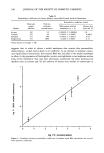
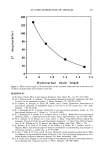
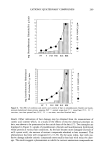
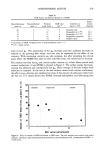
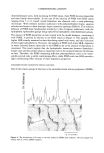
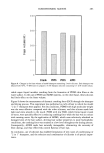
CONDITIONING AGENTS 281 dimethylsiloxane units, both increasing the HLB values, these POES become dispersible and then finally water-soluble. In the case of the solution of POES with HLB values ranging from 5 to 6, liquid crystal formation was observed with a cross-polarizing microscope. With ordinary nonionic surfactants with polyoxyethylene chains, aqueous solutions are known to form lyotropic liquid crystals at optimum HLB (4). This solution behavior of POES bears fundamental similarity to that of organic surfactants, with the hydrophobic hydrocarbon groups being replaced by hydrophobic dimethylsiloxane groups. The amount of POES deposition on hair treated with the model shampoo, containing 4 wt% POES, is plotted in relation to the HLB values in Figure 4. The samples with higher HLB scarcely remained on hair after being rinsed with water, and this is because of their high hydrophilicity. However, the samples of POES with lower HLB, dispersed in water, behaved almost identically to the PDMS as far as the amount of deposition is concerned. This result implies that the hydrophobic interaction between dimethylsi- loxane units and hair surface plays an important role in the sorption behavior of silicones on hair. Therefore, the POES containing sufficient polyoxyethylene units to be water- soluble provide only a subtle conditioning effect, while POES with low HLB provide a light conditioning effect because of their deposition properties. AMODIMETHICONE (AMINOFUNCTIONAL SILICONES) One of the newest groups of silicones is the aminofunctional silicone polymers (ADMS), Figure 6. The distribution of Si atom on the hair surface by EPMA (line analysis). The hair sample was treated with 0.2 wt% ADMS emulsion.

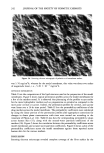
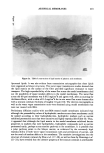
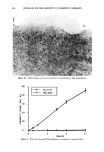
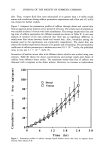
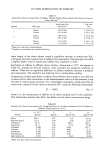
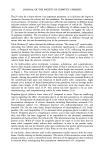
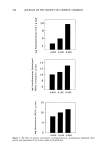
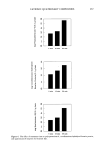
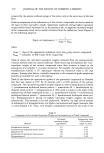
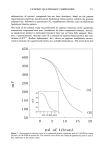
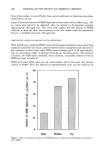
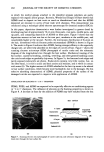
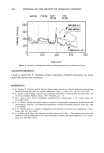
282 JOURNAL OF THE SOCIETY OF COSMETIC CHEMISTS in which the methyl groups attached to the dimethyl siloxane polymers are partly replaced with organic amine groups. Recently, Wendel and Disapio (5) have shown that ADMS tend to deposit on hair twice as much as dimethiconol and that the ADMS deposited are resistant to cycles of hair wash with shampoo. This measurement was conducted using a technique called electron spectroscopy for chemical analysis (ESCA). In this paper, deposition characteristics were further investigated in greater detail by dividing long hair of approximately 70 cm into three parts, root parts, middle parts, and tip parts, and comparing deposition of ADMS on these parts. Figure 5 shows that the deposition amount on hair was less at the root part, moderate at the middle part, and considerably higher at the tip part. Further, the microscopic distribution of Si-atom on the hair, determined with an electron probe microanalyzer (EPMA) is shown in Figure 6. The result in Figure 6 indicates that ADMS, having stronger affinity to the negatively charged site, are selectively adsorbed on the edges of cuticles of hair. Figure 7 shows the scanning electron microscope (SEM) photograph of cuticle scales and the schematic diagram of the longitudinal slice through the hair surface. Mechanical wearing of the hair surface, caused by brushing, combing, towelling, and other general handling causes the cuticle scale edges to gradually chip away. In Figure 7a, the fractured scale edges and partly exposed endocuticle are shown. Endocuticle contains very little cystine, but, on the other hand, it is rich in acidic and basic amino acid residues, and it swells in contact with water (6). The higher amount of ADMS adsorbed at the hair tip seems to be related to hair surface conditions, which became more hydrophilic due to the damages. By this selective adsorbing characteristic of ADMS, physical properties of the surface of the damaged cuticles are expected to improve with application of ADMS. APPLICATION OF SILICONES IN "2 IN 1" SHAMPOOS PDMS, POES, and ADMS are expected to be especially effective as conditioning agents in "2 in 1" shampoos. The influence of silicones on the foaming properties is shown in Figure 8. A decrease in foam by the addition of PDMS may have resulted from the less A-layer Exoeuticle Endoeuticle A-layer Exoeuticle Endoeutiele Hair surface Fractured scale edge (a) (b) Figure 7. Scanning electron microphotograph of cuticle scales (a), and schematic diagram of the longitu- dinal slice through the hair surface (b).
Purchased for the exclusive use of nofirst nolast (unknown)
From: SCC Media Library & Resource Center (library.scconline.org)