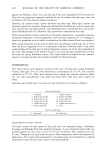
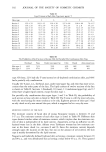
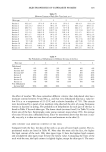
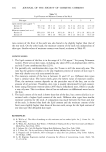
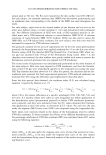
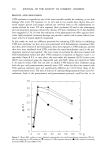
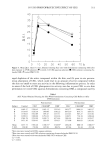
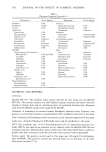
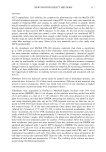
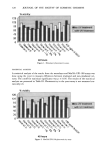
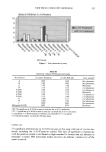
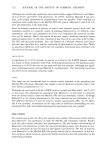
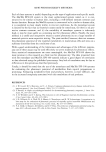
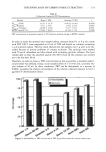
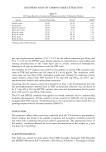
310 JOURNAL OF THE SOCIETY OF COSMETIC CHEMISTS RESULTS AND DISCUSSION UVB erythema is regarded as one of the most suitable models for studying in viva skin damage after acute UV exposure (1). In vitro and in viva studies have shown that acti- vated oxygen species and oxygen radicals are involved both in the inflammatory re- sponse elicited by acute UV skin exposure (skin erythema) (8) and in the photoaging and carcinogenesis processes induced by chronic UV skin irradiation (9). It has therefore been suggested (1,10,11) that the evaluation of the photoprotective effect against ultra- violet light-mediated cutaneous damage can provide a useful tool to assess radical scav- enger activity of topical applied compounds. In this study, we used two different protocols for evaluating CEG ability in inhibiting UVB skin erythema: (a) skin sites were pretreated with formulations containing CEG, and then, after removal of the formulation, they were exposed to UVB radiation, and (b) skin sites were irradiated with UVB, and then the same formulations used in the pre- treatment protocol were applied. The time course of erythema for skin sites treated with CEG formulations before and after UVB irradiation is reported in Figures 2 and 3, re- spectively. From A E.I. vs time plots, the area under the response (A E.I.)-time curve (AUC) was computed using the trapezoidal rule, and AUC values are reported in Table I. As may be noted, CEG was not able to inhibit UVB-induced skin erythema using both the pre- and posttreatment protocols since AUC values for skin sites treated with CEG aqueous solutions were not significantly different (p 0.05) from those of the control (untreated sites). The lack of activity of carboxyethylgermanium from water for- mulations, both in the pretreatment and posttreatment protocol, could be due to: (a) 55 50 25 . 20 :1 q$ 0 10 20 50 40 50 60 70 h Figure 2. Mean AE.I. values vs time, obtained treating skin sites with formulations containing CEG fore skin exposure to UVB radiation: (•') control (O) CEG aqueous solution (O) CEG solution containing Ariasolve DMI (V)water:DMI 50:50.

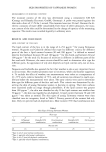
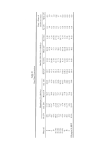
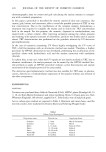
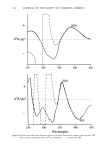
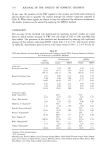
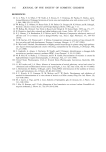
IN VIVO PHOTOPROTECTIVE EFFECT OF CEG 311 4O 55 50 ß 25 15 10 0 I 0 20 30 40 50 60 70 h Figure 3. Mean AE.I. values vs time, obtained treating skin sites with formulations containing CEG after skin exposure to UVB radiation: (•') control (O) CEG aqueous solution (O) CEG solution containing Ar- Iasolve DMI (V) water:DMI 50:50. rapid depletion of the active compound within the skin, and (b) poor in vivo percuta- neous absorption of CEG, which could lead to an amount of active compound within the skin too small to exert any activity in the following inflammation process. In order to assess if the lack of CEG photoprotective activity was due to poor CEG in vivo skin permeation we tested CEG aqueous formulations containing DMI, a compound used by Table I AUC Values Obtained Treating the Skin With Formulations Containing CEG Before or After UVB Irradiation Posttreatment Pretreatment Subject Control CEG a CEGDMI b DMI c CEG a CEGDMI b DMF A 1482.17 1789.42 1665.15 1765.42 1263.77 1000.93 1402.37 B 1539.05 1526.39 960.96 1530.22 1004.39 854.71 1605.41 C 1378.03 1502.89 905.47 1327.51 1223.43 905.27 1133.01 D 1299.01 1368.66 1250.23 1224.36 1338.51 726.18 1208.46 E 1584.78 1702.00 1409.71 1671.63 1500.93 944.33 1678.57 F 1451.36 1599.41 939.56 1594.31 1374.68 899.83 1303.61 Mean 1455.73 1581.46 1188.51 d 1518.91 d 1284.28 888.54 e 1388.57 e ñ S.D. 104.80 150.06 307.83 206.54 167.64 93.44 217.38 aSkin sites were treated with CEG aqueous solution. b Skin sites were treated with CEG solutions consisting of water:Arlasolve DMI 50:50. •Skin sites were treated with water:Arlasolve DMI 50:50 without CEG. dp 0.03. ep 0.002.
Purchased for the exclusive use of nofirst nolast (unknown)
From: SCC Media Library & Resource Center (library.scconline.org)