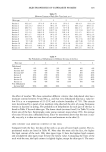
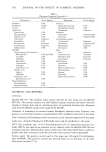
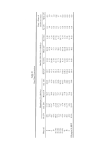
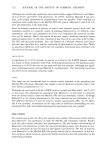
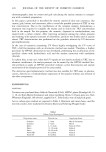
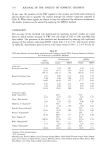
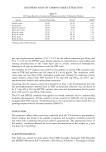
334 JOURNAL OF THE SOCIETY OF COSMETIC CHEMISTS In any case, the presence of the TRT signals in the second- and third-order derivative spectra allows one to quantify the analyte through the relative equations reported in Table II. When these signals are absent or they are influenced by whatever interference, the analyte presence can be assured by applying the HPTLC method. VALIDATION The accuracy of the methods was determined by applying recovery studies on cream bases to which known amounts of TRT over the range of 0.05 to 200 mg/100g had been added. The precision of the methods was determined by assaying five replicated analyses of the samples, obtaining RSD% values from 1.0 to 5.3%. The results, shown in Table III, demonstrate good recovery, with mean values of 99.3 +- 2.3% for the di- Table III TRT Assay Results in Cream Bases and Commercial Cosmetics, Spiked With Varying Amounts of Analyte, by UV-Derivative and HPTLC Methods UV-Derivative HPTLC Added (mg/100g) Found s RSD% Found RSD% Cream bases Restiva© cream base Resriva© ointment base Schering-Plough Essex© base 2.03 1.95 4.87 1.90 3.23 20.32 19.71 3.10 19.31 5.09 203.24 201.21 1.56 192.05 4.63 0.51 0.49 5.23 0.46 5.10 5.08 4.89 2.89 4.72 4.23 50.82 48.39 3.67 47.77 4.84 0.10 0.10 3.52 0.09 5.48 1.02 0.99 4.56 0.95 4.69 10.24 10.04 2.89 9.62 6.23 Commercial samples Korff "Antia 45 ©" N.E b -- N.E -- 0.55 0.53 3.25 0.51 5.23 Vichy "Day cream©" N.F. -- N.E -- 1.06 1.02 4.52 0.98 4.98 Medestea "S. Angelica©" N.E -- N.E -- 5.46 5.24 3.69 4.99 5.64 Rydelle "Ricerca Derm©" -- N.E -- N.E -- 10.65 10.33 2.89 10.12 3.89 Restiva "Angstrom©" -- N.E -- N.E -- 50.10 48.01 2.57 47.30 4.28 Phas "Exigence©" -- N.F. -- N.E -- 100.20 97.20 3.74 95.23 4.34 ROC "Myosphere ©" -- N. E -- N.E -- 2.73 2.62 5.65 2.51 5.82 L' O real "Plenitude ©" -- N.F. -- N. E -- 20.50 19.65 4.12 19.35 5.71 SAverage of five determinations. bN.E: not found. Manufacturers: Resriva (Milan, Italy) Schering-Plough (Milan, Italy) Korff (Vicenza, Italy) Vichy (Cosme- tique Active France, Levallois-Perret, France) Medestea (Turin, Italy) Rydelle (Johnson Wax, Racine, WI) Phas (Phas C.A.I., Paris, France) ROC (Colombes, France).

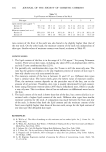
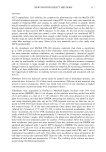
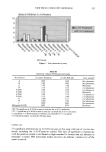
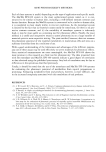
TRETINOIN ASSAY BY CARBON PHASE EXTRACTION 3 3 5 Table IV TRT Assay Results in Commercial Pharmaceuticals by UV-Derivative Method Sample Nominal (mg/100g) Found a RSD% Airol© cream 50.00 49.20 2.03 Airol lotion 50.00 51.02 2.41 Apsor© ointment 10.00 9.68 1.82 Retin-A© cream 10.00 9.70 2.25 Retin-A cream 25.00 24.53 1.96 Retin-A cream 50.00 48.45 3.15 Retin-A gel 25.00 25.58 2.63 Retin-A lotion 50.00 49.30 1.56 aAverage of five determinations. rect spectrophotometric analysis, 97.8 --- 4.2% for the carbon extraction procedure, and 95.4 + 5.2% for the HPTLC assay. Several substances, reported above, were added with varying concentrations to the cream bases and to several commercial formulations, showing in all cases no interference with the TRT assay. The linearity for UV analysis was carried out by analysis of twenty TRT standard solu- tions in THF and pyridine over the range of 0.3 to 60 p•g/ml. The correlation coeffi- cients were not less than 0.998. Analogous results were obtained by analyzing twenty cream samples, spiked with TRT between 0.1% and 200 mg/100 g, by direct spec- trophotometric analysis and carbon phase extraction. Assuming that the signal-to-noise ratio should be at least 3, the determination limit for the spectrophotometric method both in THF and pyridine solutions was calculated to be 0.1 mg/100 g. For the HPTLC method, detection and determination limits proved to be 0.05 and 0.1 mg/100 g, respectively. The UV and HPTLC methods were applied to several cosmetics and to commercially available pharmaceutics. All the cosmetics tested, reported in Table III, did not present an appreciable TRT amount. For pharmaceutics, the concentration values found were in good agreement with the declared amounts (Table IV). CONCLUSION The proposed carbon phase extraction combined with the UV-derivative spectrophoto- metric analysis was found to be suitable to separate and determine tretinoin accurately and selectively in pharmaceutical and cosmetic preparations. The appropriate choice of the analytic conditions allowed for an accurate determination of the analyte at a very low limit (0.1 mg/100 g). ACKNOWLEDGMENTS This work was carried out with grants from CNR (Consiglio Nazionale delle Ricerche) and MURST (Ministero dell' Universit• e della Ricerca Scientifica e Tecnologica) of Italy.
Purchased for the exclusive use of nofirst nolast (unknown)
From: SCC Media Library & Resource Center (library.scconline.org)