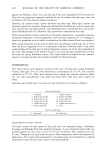
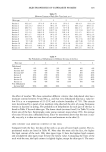
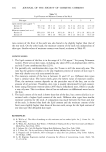
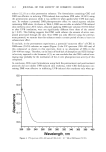
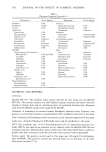
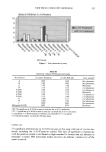
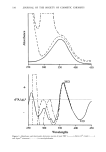
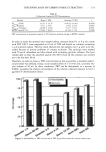
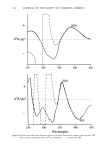
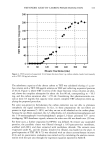
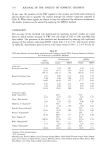
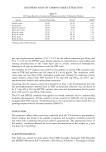
312 JOURNAL OF THE SOCIETY OF COSMETIC CHEMISTS others (12,13) as a skin penetration enhancer. The formulation containing CEG and DMI was effective in reducing UVB-induced skin erythema (PIE value 38.96%) using the pretreatment protocol, while it was ineffective when applied after UVB skin expo- sure. To evaluate a potential DMI photoprotective effect we tested aqueous solution containing DMI alone. As shown in Table I, DMI was not able to inhibit UVB-induced skin erythema since AUC values, obtained applying DMI:water solution (50:50) before or after UVB irradiation, were not significantly different from those of the control (p 0.05). This finding suggests that DMI could enhance the amount of active com- pound penetrated through the skin. Since DMI was only effective using the pretreat- ment protocol, we surmise that this enhancer needs a certain period of time to exert its enhancement effect. To exclude, in the pretreatment experiments, a potential "sunscreen effect" of CEG in DMI:water (50:50) solution we report (Figure 4) the UV spectrum (200-400 nm) of this compound: as shown in this spectrum, there is no absorption of CEG in the 290-400-nm range. Therefore, on the basis of both lack of absorption and CEG biologi- cal activity reported in the literature (4,5), we can conclude that the CEG's radical scav- enging may probably be the mechanism of the i, vitro photoprotection activity of this compound. In conclusion, CEG water formulations using both the pretreatment and posttreatment protocols did not inhibit UVB-induced skin erythema, while CEG formulations con- taining DMI were effective in inhibiting UVB-induced skin erythema only when ap- 0.5 0.4 (D 0.3 o I:: .1:30. 2 O 0.0 ,, 200 220 240 ' I ' I ' I ' I ' I ' I ' I 260 280 300 320 340 360 380 400 Wavelength, nm Figure 4. UV spectrum (200-400 nm) of CEG (3.01 ß 10 • M) in DMI:water (50:50).

IN VIVO PHOTOPROTECTIVE EFFECT OF CEG 313 plied before skin exposure to radiation. We conclude that topical application of CEG formulations containing DMI could be used for skin care products containing radical scavengers. Further in vivo studies are planned in order to compare radical scavenger activity of CEG with that of others generally used in cosmetics and to assess the effect of different skin penetration enhancers on CEG photoprotection. REFERENCES (1) D. L. Bissett, R. Chaterjee, and D. P. Harmon, Photoprotective effect of superoxide-scavenging anti- oxidants against ultraviolet radiation-induced skin damage in the hairless mouse, Photodermatol. Pho- toimmunol. Photoreed, 7, 56-62 (1990). (2) J. R. Trevithick, Topical composition containing tocopherol esters of p-carotene for treating sunburns, PCT Int. AppL WO 93 03,720 1-27. (3) C. Duval, P. Lange, and M. C. Podman, Inhibition of cutaneous inflammation by free radical scav- engers. Proceedings of the 17th IFSCC Congress, Yokohama, 1992, pp. 453-461. (4) C. Guyomard, C. Chesne, I. Morel, and J. Cillard, Activite antiradicalaire du sesquioxyde de germa- nium, Parrums, Cosmdtiques, Aromes, 113, 45-46 (1993). (5) Test report by BIOPREDIC 1993: Protection de cellules diff•renci•es par des d•riv•s du germanlure vis-a-vis des m•tabolites toxiques de l'oxyg•ne (hydroperoxyde formation and lipid diene formation in rat hepatocyte cell cultures). (6) L. Montenegro, E Bonina, L. Rigano, S. Giogilli, and S. Sirigu, Protective effect evaluation of free rad- ical scavengers on UVB induced human cutaneous erythema by skin reflectance spectrophotometry, Int. J. Cosmet. Sci., 17, 91-103 (1995). (7) J. B. Dawson, D. J. Barker, D. J. Ellis, E. Grassam, J. A. Carterill, G. W. Fisher, and J. W. Feather. A theoretical and experimental study of light absorption and scattering by "in vivo" skin, Phys. Med. BioL, 25,696-709 (1980). (8) H. S. Black, Potential involvement of free radical reaction in ultraviolet light-mediated cutaneous damage, Photothem. PhotobioL, 46, 213-221 (1987). (9) E Urbach and P. D. Forbes, "Photocarcinogenesis," in Dermatology in General Medicine, T. B. Fitz- patrick, A. Z. Eisen, K. Wolff, I. M. Freedberg, and K. E Austen, Eds. (McGraw Hill, New York, 1987), pp. 1475-1480. (10) J. P. Cesarini, P. Miska, and M. C. Podman, The effect of antioxidants on human's erythema and sun- burn cells., Photothem. PhotobioL, 47, 73S (1988). (11) D. Dart, S. Coombs, S. Dunsrant, T. Manning, and S. Pinnell, Topical vitamin C treatment inhibits ultraviolet radiation-induced damage to porcine skin,J. Invest. Dermatol., 96, 353 (1991). (12) S. Kumar, A. W. Malick, N.M. Meltzer, J. D. Mouskountakis, and C. R. Behl, Studies of in vitro skin permeation and retention of a leukotriene antagonist from topical vehicles with hairless guinea pig model, J. Pharm. Sci., 81,631-634 (1992). (13) C. R. Behl, H. Char, S. B. Patel, D. B. Mehta, D. Piemontese, and W. Malick, "In Vivo and In Vitro Uptake and Permeation Studies," in Topical Drug Bioavailability, Bioequivalence, and Penetration, V. P. Shah and H. I. Maibach, Eds. (Plenum Press, New York, 1993), pp. 225-259.
Purchased for the exclusive use of nofirst nolast (unknown)
From: SCC Media Library & Resource Center (library.scconline.org)