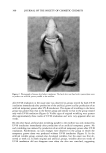
ABSORPTION OF CARVONE 279 oil was spread on a defined skin area of the lower abdomen (376 cm 2) of a female subject (body weight 56 kg, height 165 cm, age 25 years, non-smoker). Starting a week prior to the massage, all food and cosmetics containing carvone were avoided. The subject put on a breathing mask before the massage to avoid a possible uptake of the fragrance compound by inhalation. To study the penetration of carvone, the following three different massage techniques were used. Each experiment was repeated three times. Normal massage. For ten minutes the oil was gently massaged into the skin, and the remaining oil was completely removed. Blood samples (5.0 ml) were drawn from the left cubital vein 0, 5, 10, 15, 20, 25, 30, 40, 55, 70, 85, and 100 minutes after finishing the massage and collected in heparinized tubes. Blood samples were centrifuged at 4øC (4500 rpm/5 min) and the plasma separated and stored at 4øC until chromatographic and spectroscopic investigations. Between the blood drawings a physiological sodium chloride solution was injected into the veinflow to prevent clogging of the needle. As previous experiments showed that terpenes might accumulate in body fat, only one massage per week was applied to the female subject. Massage with an occlusion wrap. The massage oil was gently massaged into the skin for one minute. Then a plastic film (0.5 x 1 m) was tightly wrapped around the body to cover the massaged skin area. Finally, after putting a hot poultice on the lower abdomen, the area was covered with a thick woollen blanket. After 20 minutes this occlusive wrap was removed and the remaining oil was washed off. Time intervals for blood drawing were the same as described above. Irradiation massage. After spreading the massage oil for one minute over the above- defined skin area, the stomach was irradiated with an orange light for 20 minutes. Then the oily residue was removed and blood drawing was continued as described. Cosmeti- cians frequently apply this method in the treatment of wrinkles and for relaxation (12). Orange light is recommended to raise the skin temperature in order to increase the absorption of different compounds (e.g., terpenes), although no evidence for this specific application exists in the literature. EXTRACTIONS After adding piperitone as the internal standard (200 ng/ml) 2 ml of plasma was extracted by using solid-phase extraction cartridges, equilibrated with 3 ml of methanol and 3 ml of water. The cartridges were washed with 2 ml of water and (-)-carvone, and the internal standard was eluted with 0.5 ml of methanol (recovery: 94.3 _+ 2.17%). Extracted plasma samples were immediately analyzed by gas chromatography (GC) and by gas chromatography coupled with mass spectroscopy (GC/MS). All steps of the sample preparations were done on ice or in a cold room to prevent loss of the volatile compounds. GC-ANALYSIS OF CARVONE An HRGC Mega 2 Series instrument with a flame ionization detector (FID) was used (Fisons Instruments S.p.A., Rodano, Italy). Separation of carvone from piperitone was performed on a 10 m x 0.25 mm Permabond SE-30-DF-0.25 fused silica column (Machery & Nagel, Germany), operated with an oven temperature of 65øC. The carrier

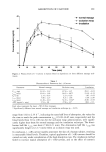
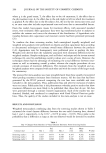
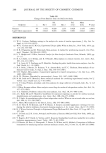
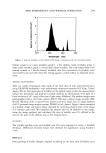
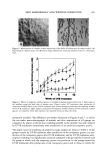
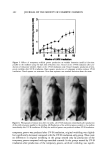
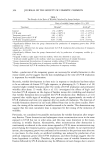
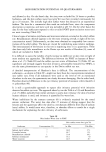
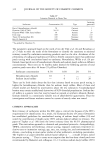
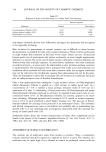
280 JOURNAL OF THE SOCIETY OF COSMETIC CHEMISTS gas was nitrogen (75 kPa) and that for the FID was hydrogen (60 kPa air: 80 kPa make-up gas: 70 kPa). Samples were introduced onto the column by split injection (split ratio = 1:10) whereby the injector temperature was set at 260øC and the detector temperature at 220øC, respectively. The injection volume was 1.5 tal. The limit of quantitation was 5 + 1.23 ng/ml (n = 5) of plasma by spiking drug-free human plasma with carvone to give a concentration of 5 ng/ml. GC/MS ANALYSIS For GC/MS analyses, a QP-1000EX-GC/MS-system (Shimadzu, Kyoto, Japan) was used. The GC-column was a 50 m x 0.25 mm i.d. capillary with a 0.25-mm film thickness (Machery & Nagel, Germany), operated at a temperature program of 60øC for two minutes, and then increased at 3øC/min to 250øC. The helium carrier gas flow rate was 1 ml/min. Samples were introduced onto the column by splitless injection (the split was opened 30 s after the injection injection port temperature 250øC. The column effluent was introduced directly into the ion source, which was held at 180øC. Electron impact spectras were introduced at 50-600 amu/2 s, with ionization energy of 70 eV and with a vacuum pressure of 8.10 -6 torr. Chemical ionization spectra were recorded with ammonia as the reactant gas (prepressure 1 bar, vacuum pressure 5.10 5 torr, ionization energy 200 eV, ion source 180øC). KINETIC ANALYSIS OF CARVONE The data sets were fitted via nonlinear iterative least square regression analysis. Curve modeling was performed using a two-compartment open pharmacokinetic model with the program MW-Pharm, Version 3.0 (Mediware, Groningen, The Netherlands), in which AUC represents the area under concentration-time curve tl/2tx, tl/2[3, the distri- bution and elimination half-lives, respectively ka, the absorption rate constant t .... the time to peak and c .... the peak concentration. Results were expressed as the mean _+ standard deviation (SD). The significance of differences (p 0.05) was evaluated by the Student's t-test. RESULTS AND DISCUSSION (-)-Carvone was quantified in plasma and urine samples by GC-FID well separated from the internal standard piperitone (t R = 7.65 min and 8.21 min, respectively). To confirm the results of the GC-FID measurements, analyses were carried out by GC/MS with retention time and mass spectra comparison exhibiting identical main fragments for carvone (m/z at 82 amu, 93 amu, 108 amu, and 150 amu) and for piperitone (82 amu, 110 amu, 137 amu, and 152 amu), respectively. Carvone quickly penetrated the skin of the female subject and could be detected in blood ten minutes after starting the massage, with peak plasma concentrations of 24-32 ng/ml. The resulting mean plasma levels of (-)-(R)-carvone are shown in Figure 2 the corresponding pharmacokinetic parameters from the fitted curves are summarized in Table I. Dependent on the massage technique, some pharmacokinetic parameters sig- nificantly changed. While the values for the absorption rate constant k a were in a close
Purchased for the exclusive use of nofirst nolast (unknown)
From: SCC Media Library & Resource Center (library.scconline.org)