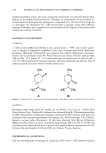
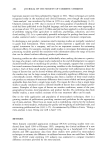
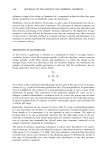
308 JOURNAL OF THE SOCIETY OF COSMETIC CHEMISTS substance triggers the release or formation of a compound within the skin that upon further permeation (or via feedback) causes the hyperemia. Erythema-•even in the absence of urticaria--is also a sign of sensitization, but this is a reaction that is distinct from that of irritation. The elicitation of immune responses can be the result of the presence of epidermal immunocompetent cells or may take place only after systemic processing of the allergen. Immune responses to the application of qua- ternaries to the skin will not be discussed since they are evidently rare. Skin irritation in this review is, therefore, defined as a dermal reaction to topical administration. It is unrelated to dermal manifestations resulting from systemic administration of an irritant or to systemic toxicity. DEFINITION OF QUATERNARY In this review a quaternary is defined as a compound in which a nitrogen atom is covalently bound to four alkyl groups reg,•rd/ess ofpH and, therefore, carries a positive charge reg,•rd/ess of pH. Thus amines and amphoterics, in which the charge on the nitrogen atom varies as a function of pH, are excluded. Despite this limitation, the number of cosmetically useful quaternaries is well over 500. For clarification, the de- fining quaternary structure is shown below: R• I R 2-N +-R 3 I R 4 Up to three of the covalently bonded R groups may be part of the same cyclic or aromatic system, as, e.g., in the well-known pyridinium salts. The hydrophobicity of quaternaries can be modified by the inclusion of a (poly)oxyethylene group in one or more of the substituent R groups. The counterion to the positively charged N- atom can be a halogen, a sulfate (ethosoulfate), a carboxylic acid, or, in fact, any species that can form an anion. In some cases, the anion-forming group may be part of one of the alkyl groups. A typical example of this is a betaine in which a zwitterionic species can be formed over a limited pH range. Quaternary molecules are not unusual in nature. The N- atom in phosphatidylcholine is a true quaternary, and lecithin is a ubiquitous constituent of animal and plant tissue. Even though it is a quaternary, it is not regarded as toxic or irritant. The safety of lecithin leads to its use in parenteral nutrition. On the other hand, most of the cos- metically or pharmaceutically useful quaternaries are synthetic substances. Their inges- tion or injection into mammals has elicited some toxic responses, especially at the dosages commonly employed by toxicologists. The purity of synthetic quaternary substances is almost never described in the toxico- logical literature. In the early toxicological literature, identification was by (commercial) trade name (3). In retrospect, it is likely that most substances tested during this period included some amines and remnants of the alkylating agents. Unfortunately, details of this type are irretrievably lost, even though their significance to any skin irritation potential could be important.

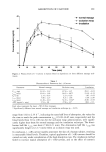
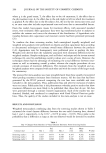
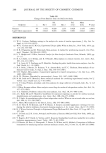
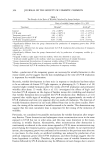
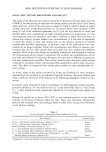
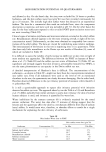
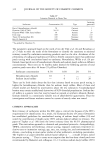
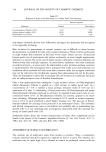
SKIN IRRITATION POTENTIAL OF QUATERNARIES 309 EARLY SKIN TESTING PROCEDURES AND RESULTS The study of the skin and eye irritation potential of quaternaries began about the time of WW II, and the ranking of surfactants was based primarily on the results of the Draize rabbit skin test. A few of the early data are shown in Table I, which is based on results of rabbit skin tests, as described by Draize (1). The data in Table I were obtained in 1967 using 0.5 ml of the undiluted quaternary (or 0.5 g of the dry) material on intact and abraded rabbit skin, establishing the high irritation potential of quaternaries (3). The concentrations tested are unrealistic and make it difficult to assess their pertinence to human skin irritancy at more modest (use) concentrations. It is also next to impossible to relate the results of these and similar tests to the irritancy potential of modern commercially available quaternaries in addition, some of the trade-named test com- pounds are no longer available. These early investigators were forced to examine qua- ternaries that did not differ greatly from each other but were produced by different suppliers. Much of the early testing was probably tendentious and designed to confirm the innocuousness of the sponsor's compound. The excellent and comprehensive review by Cutler and Drobeck (3) shows the divergence of results due to differing test protocols that were inadequately controlled. Their review correctly notes that most studies concern irritation by accidental contact with antimicrobial quaternaries used in high concentra- tions. The efforts to categorize these results often resulted in some unexplainable irri- tancy ratings. As noted, many of the studies reviewed by Cutler and Drobeck (3) were company- sponsored and not recorded in the published (journal) literature. Retrieval of these data today is difficult, and much of the material in the following paragraphs is based on their review. In another study reviewed by Cutler and Drobeck (3), dihydrogenated tallow benzyldi- monium chloride at 5% was rated as mild. It is also noteworthy that in a third study C•2_•6 alkyl dimethyl benzyl ammonium chloride (0.3%) was found only mildly irri- tating. During the period up to about 1965-1970, it was common practice to rate dermal irritancy on the basis of (Draize) rabbit eye tests. These tests sometimes followed the protocol and included seven-day readings, while at other times scoring was terminated at the 48-hour reading. Table I Irritancy Ratings of Quaternaries (Draize Rabbit Skin Test)* Test material Irritancy rating Di Cs_•o alkyl benzyl methyl ammonium chloride (53.5%) Di Cs_•o alkyl dimethyl ammonium chloride (50.6%) Didecyl dimethyl ammonium chloride (55.7%) C•2_•6 alkyl dimethyl benzyl ammonium chloride (50%) C•2_•6 alkyl dimethyl benzyl ammonium chloride (92.6% powder, i.e., Zephiran ©) C•2_•s alkyl dimethyl ethylbenzyl ammonium chloride plus C•246 alkyl dimethyl benzyl ammonium chloride (50%) Severe Severe Severe Severe Moderate Severe * Reported by Cutler and Drobeck (3), based on data by Duprey and Hoppe (1970).
Purchased for the exclusive use of nofirst nolast (unknown)
From: SCC Media Library & Resource Center (library.scconline.org)